
Introduction
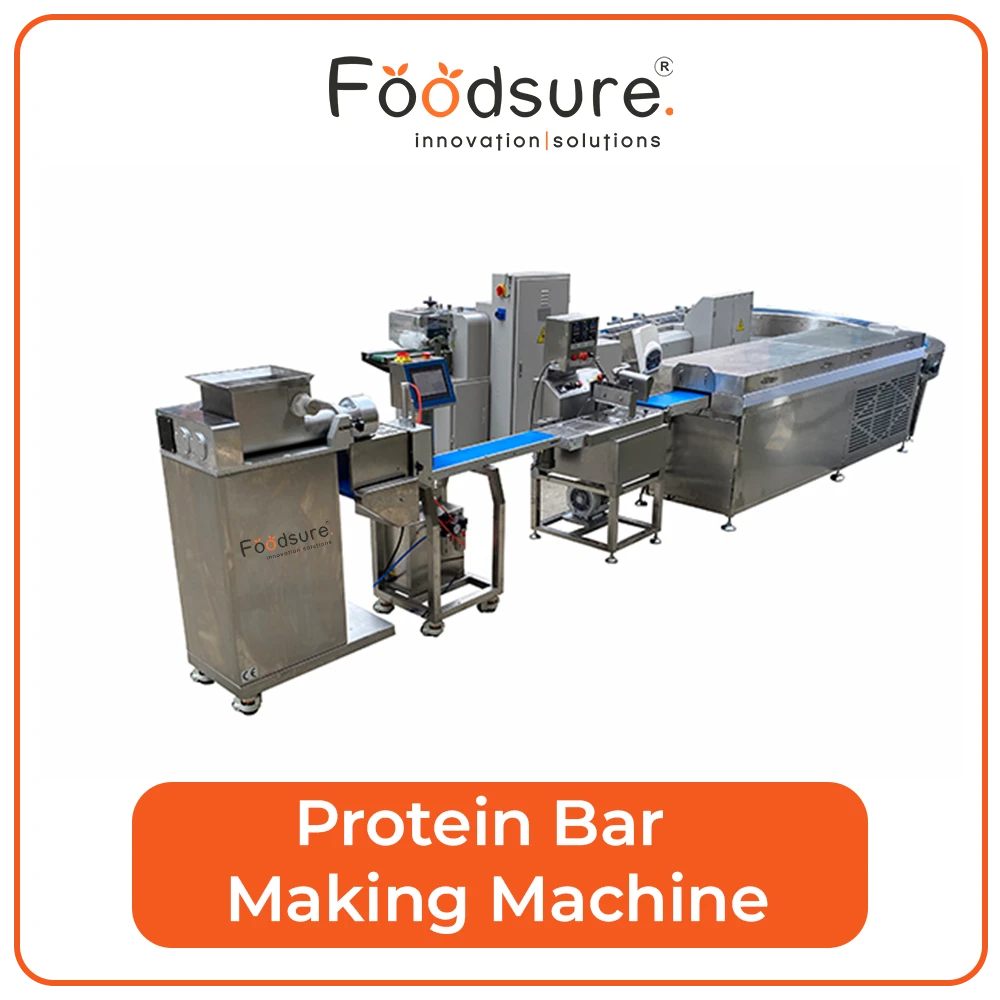
Protein bars have become a common snack for people who want quick energy and nutrition. These bars are easy to carry, simple to eat, and available in many flavors. But have you ever thought about how they are made? Behind every protein bar, there is a well-organized process that includes careful mixing, forming, and packaging. A big part of this process is done by a protein bar manufacturing machine.
In this post, we will understand how these machines work in simple words. We will go step by step through the process, from ingredients to final packaging. The goal is to help readers, even those without a technical background, learn how these machines make protein bars in an easy and clean way.
Step 1: Preparation of Ingredients
The first step in making protein bars is preparing the ingredients. Common ingredients include protein powder, oats, honey, nuts, dried fruits, and natural sweeteners. All these items are measured properly and mixed in a large container.
In many setups, a mixing machine is used to combine the ingredients evenly. This helps make sure that every bar has the same taste and nutrition.
Each ingredient plays a special role. For example, oats give fiber, honey binds the mixture, and protein powder adds the main nutrient. When the ingredients are ready, they move to the next stage — forming.
Step 2: Mixing and Blending
The mixing and blending process is important for getting a smooth texture. The protein bar manufacturing machine includes a part that mixes both dry and wet ingredients together until they reach the right consistency.
Temperature control is also very important at this stage because it helps in blending sticky ingredients like syrup and chocolate without burning them.
Uniform mixing makes sure that the bars are soft, chewy, and balanced in flavor. Once the mix is complete, it moves to the section where bars start taking shape.
Step 3: Forming and Shaping
After mixing, the mixture goes through the forming section. In this part, the machine shapes the mixture into bars of equal size.
This shaping process is done using rollers and cutters. The rollers press the mix into a flat sheet, and the cutters divide it into bar shapes.
The machine ensures that every bar has the same size and weight so they can be packed easily later.
This process helps reduce manual work and saves time. It also ensures hygiene because less hand contact is needed.
Step 4: Cooling and Setting
Once the bars are formed, they are still warm and soft. The next step is cooling. Cooling helps the bars to set properly and hold their shape.
Many machines have a built-in cooling conveyor belt that slowly brings the temperature down. This step also helps improve the texture and taste of the bars.
Cooling is not rushed because quick cooling can make the bars hard. The bars are allowed to cool at a steady speed to keep their chewy and soft texture.
Step 5: Cutting and Sizing
After cooling, bars may be cut again to get the perfect shape and size. The machine uses sharp and clean blades for this step. Some bars are cut into small bite sizes, while others are kept larger for meal replacement bars.
Modern protein bar machines allow adjustment of the size depending on the requirement. This helps maintain uniformity and reduces wastage.
Step 6: Wrapping and Packaging
The final step in the process is packaging. After cutting, the bars move to a packaging section. Here, each bar is wrapped in clean food-grade material.
Good packaging helps keep the bars fresh for a long time and also protects them from moisture or damage.
Some setups use automatic packaging machines that can handle high volumes of bars. These machines wrap, seal, and label the bars in one line, making the process more efficient.
Step 7: Quality Checking
Before the bars are sent out, quality checking is done. This includes checking the size, weight, texture, and packaging. Any defective bars are removed.
Quality checking helps maintain hygiene and ensures that the final bars are safe and tasty.
Each stage of this process needs care and proper setup. Machines help reduce mistakes and maintain uniform results.
Understanding the Role of Machines in the Process
The protein bar manufacturing machine brings together all these steps in a continuous and controlled way. Instead of doing everything by hand, machines help keep the process clean, fast, and balanced.
They also help maintain food safety, which is very important in any food production setup.
If you want to read more about how such machines work and what parts they include, you can explore simple details .
This link includes information about machines used in food processing setups. You can read it to understand the process better — not for promotion, but just for general learning .
Conclusion
The process of making protein bars is simple to understand when explained step by step. From mixing ingredients to final packaging, every stage plays an important role.
The protein bar manufacturing machine helps make this process easy, clean, and more organized. It combines many steps into one continuous process, ensuring that each bar is uniform and safe to eat.
Understanding how these machines work gives a clear picture of how modern food production maintains quality and hygiene. It also helps people appreciate the effort and care that go into making the small bars they eat every day.



























Sign in to leave a comment.