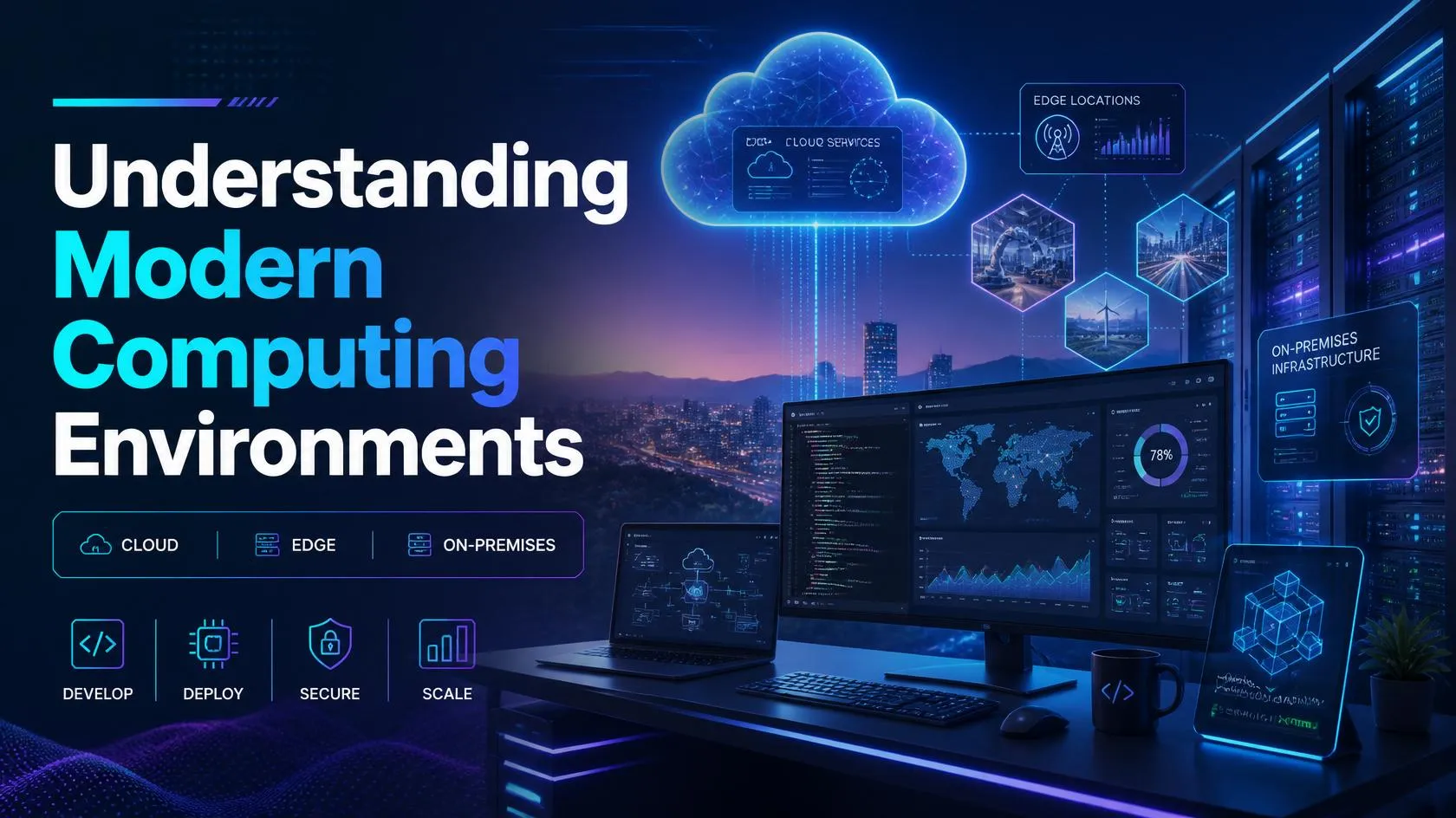

If you have ever wondered what actually happens behind the scenes when you open an app, stream a video, or make an online purchase, the answer involves something called a computing environment. This term might sound technical, but once broken down, it becomes much easier to understand. Let's start from the basics and build up from there.
What Is a Computing Environment?
A computing environment refers to the combination of hardware, software, and network infrastructure that allows digital tasks to be carried out. This includes everything from the physical servers storing data to the software running on your device, and the networks connecting them all together.
Understanding this foundation is important because nearly every digital experience you have relies on some form of computing environment working quietly in the background.
The Shift from Local to Networked Computing
In the earliest days of computing, most tasks were handled locally, meaning a single computer processed and stored everything itself. If you wanted to share a file, you needed a physical disk or a direct cable connection.
As networks developed, computing environments evolved to allow multiple machines to communicate and share resources. This shift laid the groundwork for the internet as we know it today, where data can move seamlessly between devices anywhere in the world.
Introducing Cloud Computing
One of the most transformative developments in modern computing environments has been the rise of cloud computing. Instead of relying solely on a personal device's storage and processing power, cloud computing allows data and applications to be hosted on remote servers, accessible from anywhere with an internet connection.
This shift means you can start a task on one device and finish it on another, since your information lives in the cloud rather than being tied to a single machine. It also allows businesses to scale their computing needs up or down instantly, without needing to purchase and maintain physical hardware themselves.
Virtualization and Efficient Resource Use
Another key concept in modern computing environments is virtualization. This technology allows a single physical server to act as multiple separate, isolated systems, each running its own software independently. This makes computing resources far more efficient, since businesses no longer need a dedicated physical machine for every individual task or application.
Virtualization is part of what makes cloud computing possible at such a massive scale, allowing providers to serve millions of users from shared physical infrastructure.
Edge Computing and Faster Processing
As more devices became connected, a new challenge emerged: processing data quickly enough to keep up with real-time demands. This led to the development of edge computing, where data is processed closer to where it is generated, rather than sending everything back to a distant central server.
This approach reduces delays and is especially important for applications requiring instant responses, such as real-time video processing or interactive online services.
Security Considerations in Modern Environments
As computing environments have grown more complex and interconnected, security has become an increasingly important focus. Protecting data as it moves between devices, servers, and networks requires constant attention, encryption, verification systems, and ongoing monitoring for potential threats.
This is especially true in industries handling sensitive financial transactions. For example, platforms operating in the online gambling space, including those built around cryptocurrency, must maintain particularly strong security standards. Someone researching the best crypto casino is often looking for a platform that demonstrates strong security practices within its computing environment, ensuring that transactions and personal data remain protected.
How Different Industries Rely on These Environments
Nearly every industry today depends on some form of modern computing environment, whether it's healthcare systems managing patient records, retailers processing online orders, or entertainment platforms streaming content to millions of users simultaneously.
Even niche digital sectors reflect this reliance clearly. A well-run best crypto casino, for instance, depends on a robust computing environment that combines cloud infrastructure, strong security protocols, and real-time processing to deliver a smooth and trustworthy experience for its users.
Why This Matters for Everyday Users
Understanding modern computing environments helps explain why so many digital services feel fast, reliable, and secure today. It also highlights why certain online experiences, like instant transactions or real-time updates, are possible in the first place.
Looking Ahead
As computing technology continues to evolve, we can expect even faster processing, smarter resource allocation, and stronger security measures to become standard across industries. Emerging trends like edge computing and advanced virtualization are likely to keep pushing these environments forward.
By understanding these building blocks, from local computing to the cloud and beyond, you now have a clearer picture of the invisible systems powering nearly every digital experience you rely on today.
























Sign in to leave a comment.