
Summary
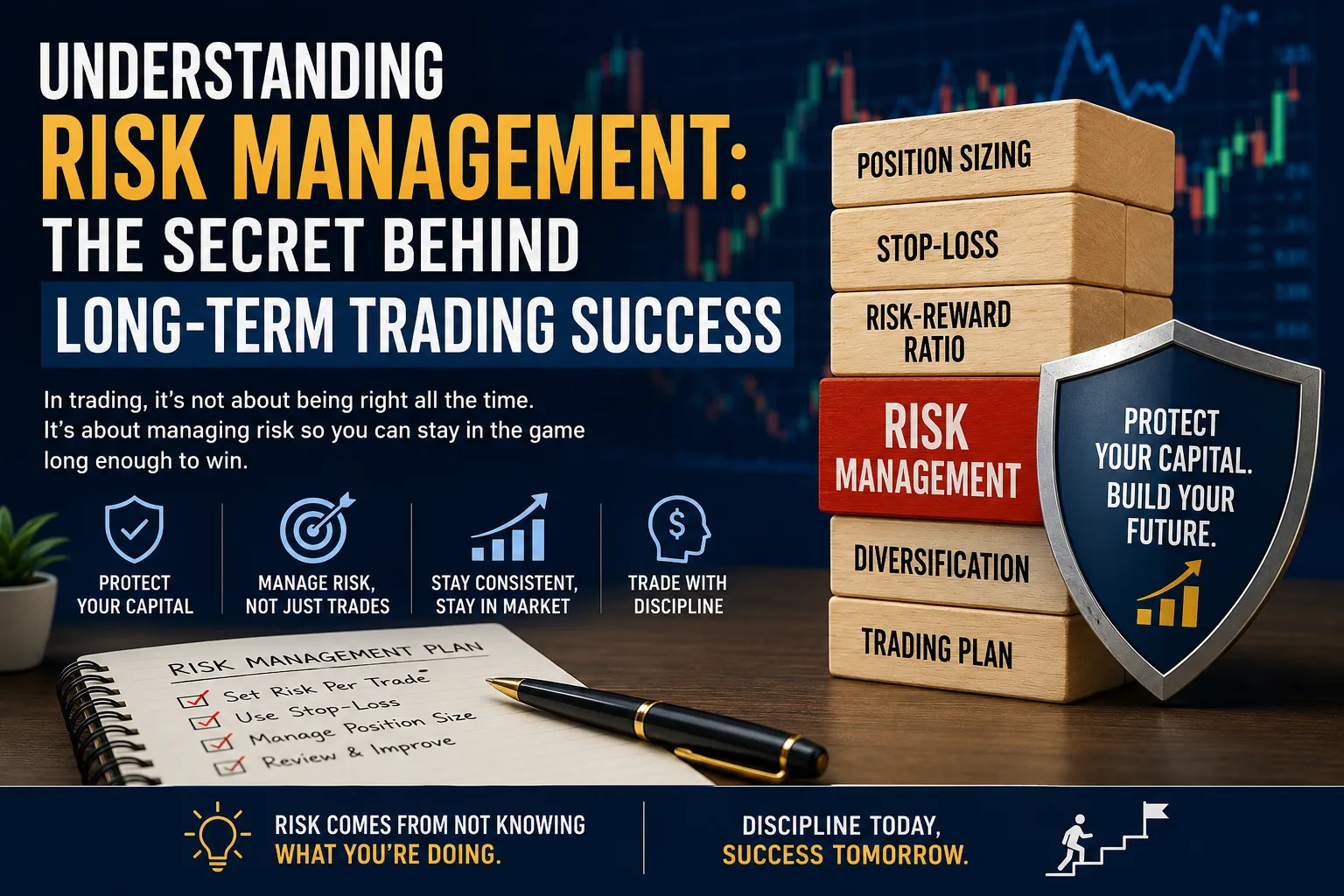
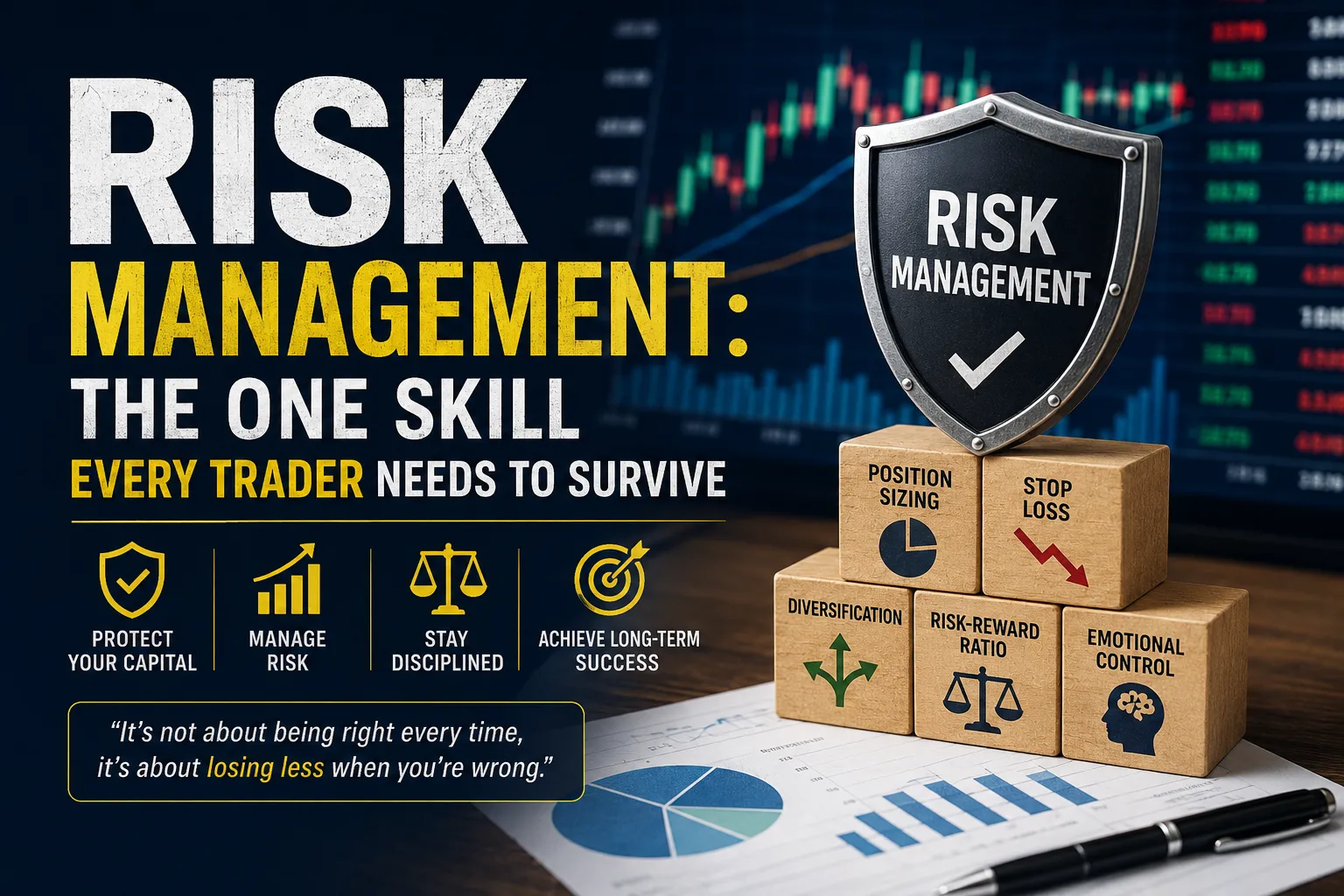
Many traders focus heavily on finding the perfect stock, timing the market, or predicting price movements. However, one factor consistently separates successful traders from unsuccessful ones: risk management. While profits are important, protecting capital is even more critical for long-term success. Effective risk management helps traders minimize losses, preserve their trading capital, and stay in the market long enough to benefit from future opportunities. In this article, we explore why risk management is essential and how traders can use it to build a sustainable trading journey.
Introduction
The stock market offers countless opportunities, but it also comes with significant risks. Every trade carry uncertainty, and even the most experienced traders encounter losses. The difference between those who succeed and those who fail is often not their ability to predict the market but their ability to manage risk effectively.
Many beginners enter the market with a profit-first mindset. They focus on how much they can earn while ignoring how much they could lose. Unfortunately, this approach can lead to substantial losses and emotional decision-making.
Risk management provides a framework for protecting capital, controlling losses, and maintaining discipline. It is the foundation upon which successful trading strategies are built.
What Is Risk Management?
Risk management refers to the process of identifying, assessing, and controlling potential losses in trading and investing. Its primary goal is not to eliminate risk entirely but to ensure that losses remain manageable and do not significantly impact overall capital.
A trader who understands risk management accepts that losses are a natural part of trading and develops strategies to limit their impact.
Why Risk Management Matters
1. Protects Trading Capital
Your trading capital is your most valuable asset. Without proper risk management, a few large losses can wipe out months or even years of gains.
By limiting the amount of capital risked on each trade, traders can withstand losing streaks and continue participating in future opportunities.
2. Reduces Emotional Trading
Fear and greed are two of the biggest challenges traders face. Large losses often trigger emotional decisions, such as revenge trading or holding losing positions for too long.
A clear risk management plan helps traders remain disciplined and make decisions based on strategy rather than emotions.
3. Supports Long-Term Consistency
Successful trading is not about making one big winning trade. It is about generating consistent returns over time.
Risk management allows traders to survive difficult market conditions and remain focused on long-term growth.
4. Helps Preserve Profits
Many traders earn substantial profits but lose them due to poor risk control. Risk management techniques such as trailing stop-loss orders and position sizing help protect gains and reduce unnecessary losses.
Key Risk Management Strategies
Set a Stop-Loss for Every Trade
A stop-loss is a predetermined price level at which a trade will be exited if it moves against your position.
Benefits include:
- Limits potential losses
- Removes emotional decision-making
- Creates a clear trading plan
- Protects capital during market volatility
Use Proper Position Sizing
Position sizing determines how much capital is allocated to a single trade.
Many professional traders risk only 1% to 2% of their total trading capital on any individual trade. This approach ensures that a series of losses does not significantly damage the overall portfolio.
Maintain a Favorable Risk-Reward Ratio
Before entering a trade, evaluate the potential reward compared to the potential risk.
For example:
- Risk: ₹1
- Potential Reward: ₹3
This creates a 1:3 risk-reward ratio, meaning successful trades can offset multiple small losses.
Diversify Your Exposure
Avoid concentrating all capital in a single stock, sector, or asset class.
Diversification helps reduce the impact of adverse movements in any one investment and creates a more balanced portfolio.
Avoid Overtrading
Taking too many trades can increase transaction costs and expose traders to unnecessary risks.
Focus on high-quality opportunities rather than attempting to trade every market movement.
Common Risk Management Mistakes
Many traders understand risk management in theory but fail to apply it consistently.
Some common mistakes include:
- Trading without a stop-loss
- Risking too much capital on a single trade
- Ignoring position sizing rules
- Chasing losses after a losing trade
- Overleveraging positions
- Making impulsive decisions during volatile markets
Recognizing and avoiding these mistakes can significantly improve long-term trading performance.
How Research Supports Better Risk Management
Effective risk management is closely linked to quality market research. Understanding market trends, technical indicators, and risk factors helps traders make informed decisions.
Research-based trading reduces uncertainty and improves the ability to identify favorable risk-reward opportunities.
At Invesia Research, the focus is on providing research-driven market insights, helping traders make disciplined decisions while maintaining a strong emphasis on risk management principles.
Building a Risk Management Plan
A practical risk management plan should include:
- Maximum risk per trade
- Daily and weekly loss limits
- Stop-loss strategy
- Position sizing rules
- Risk-reward criteria
- Portfolio diversification guidelines
Having a written plan helps traders stay consistent and avoid emotional decision-making during market fluctuations.
Conclusion
Risk management is not the most exciting aspect of trading, but it is undoubtedly one of the most important. While profits attract attention, capital preservation creates longevity. Traders who prioritize risk management are better positioned to navigate market volatility, survive losing periods, and achieve sustainable growth over time.
The most successful traders understand a simple truth: protecting capital comes first, and profits follow. By implementing disciplined risk management practices and relying on research-based decision-making, traders can build a stronger foundation for long-term success in the financial markets.
Frequently Asked Questions (FAQs)
1. What is risk management in trading?
Risk management is the process of controlling potential losses through strategies such as stop-loss orders, position sizing, diversification, and disciplined trade planning.
2. Why is risk management important for traders?
Risk management helps protect capital, reduce emotional trading, improve consistency, and increase the chances of long-term success.
3. How much should I risk on a single trade?
Many professional traders limit risk to 1%–2% of their total trading capital per trade.
4. What is a stop-loss order?
A stop-loss order automatically exits a trade when it reaches a predetermined loss level, helping limit downside risk.
5. Can good risk management guarantee profits?
No. Risk management cannot guarantee profits, but it helps minimize losses and improve overall trading discipline.
6. How does research improve risk management?
Research helps traders identify market trends, assess potential risks, and make informed decisions with better risk-reward opportunities.


























Sign in to leave a comment.