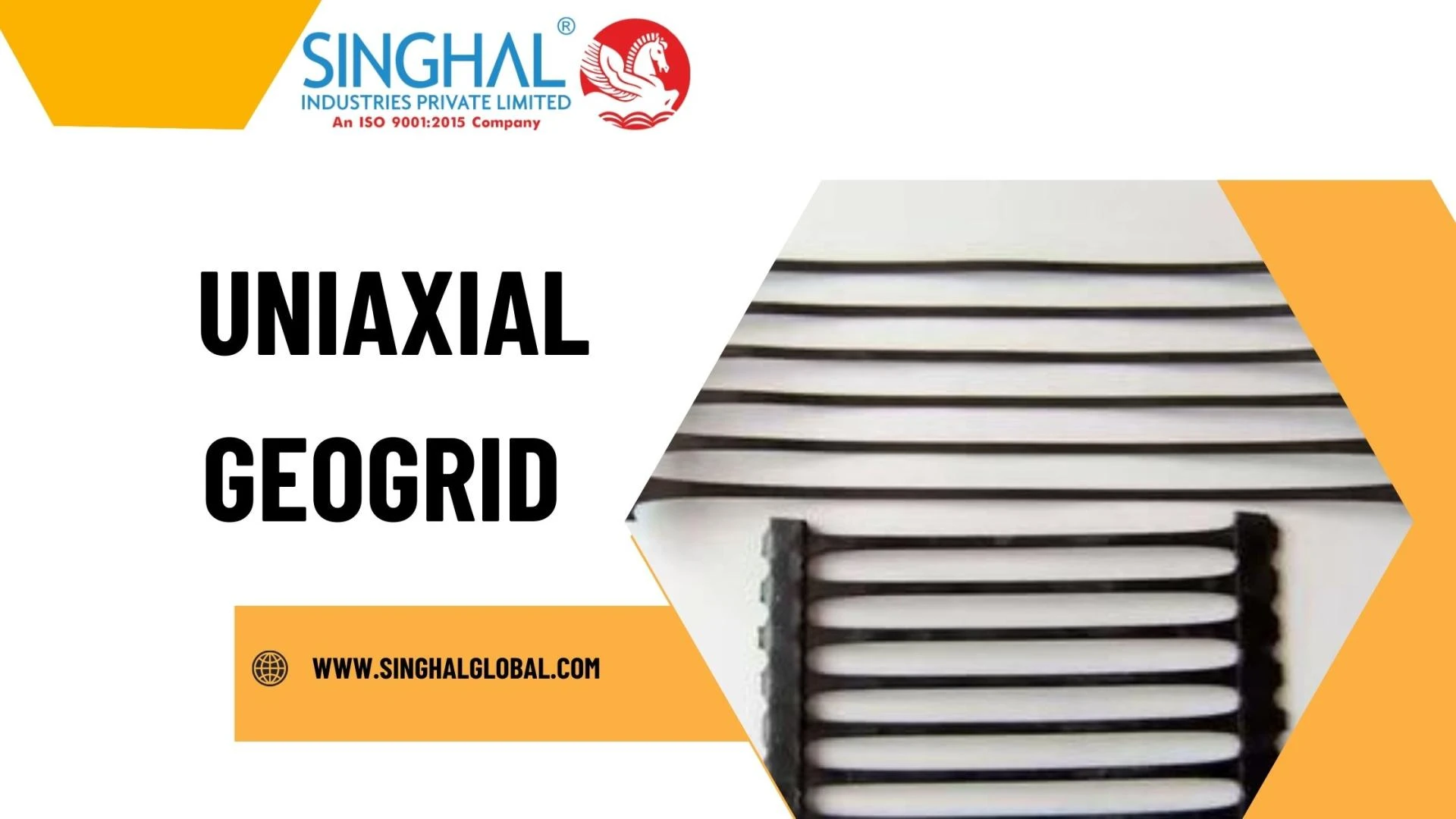

Uniaxial geogrids are essential components in modern civil engineering and construction, offering significant advantages in soil reinforcement and stabilization. This article explores the various applications, construction methods, and benefits of uniaxial geogrids, with a focus on their relevance in infrastructure projects worldwide.
Introduction to Uniaxial Geogrid
Uniaxial geogrids are specialized geosynthetic materials used primarily for soil reinforcement applications. Unlike biaxial geogrids that provide strength in two directions, uniaxial geogrids are designed to offer high tensile strength in one principal direction. This characteristic makes them ideal for applications where reinforcement is primarily needed along one axis, such as in retaining walls, slope stabilization, and road construction.
What is a Uniaxial Geogrid?
A uniaxial geogrid is typically manufactured from high-density polyethylene (HDPE) or polyester (PET) polymers. These materials are extruded into a grid-like structure with apertures that allow soil or aggregate to interlock with the grid, enhancing its effectiveness in stabilizing the soil mass.
History of Uniaxial Geogrids
The development of uniaxial geogrids dates back several decades, evolving alongside advancements in geosynthetic engineering. Initially used in military and aerospace applications, their adaptation to civil engineering has revolutionized construction practices globally.
Applications of Uniaxial Geogrid
Uniaxial geogrids find extensive use in various civil engineering applications due to their versatility and effectiveness in enhancing soil stability and load-bearing capacity.
Road Construction
One of the primary applications of uniaxial geogrids is in road construction. They are used to reinforce the subbase and base layers of roads, preventing the lateral spread of aggregate and increasing the structural integrity of pavements. This application helps in extending the service life of roads and reducing maintenance costs.
Railways and Highways
In railway and highway infrastructure, uniaxial geogrids are employed to improve the bearing capacity of embankments and subgrades. By distributing loads more evenly, they reduce settlement and deformation of the track or road surface, thereby enhancing safety and performance.
Retaining Walls
Uniaxial geogrids are integral to the construction of retaining walls, providing stability to earth structures by confining the backfill material. This application prevents soil erosion and ensures the structural integrity of walls, especially in challenging terrain conditions.
Slope Stabilization
In slope stabilization projects, uniaxial geogrids are used to reinforce steep slopes and prevent landslides. By reinforcing the soil mass, these geogrids increase slope stability and minimize the risk of erosion, making them crucial for infrastructure built in hilly or mountainous regions.
Construction of Uniaxial Geogrid
The manufacturing process of uniaxial geogrids involves several stages to ensure high-quality products that meet specific engineering requirements.
Manufacturing Process
Uniaxial geogrids are typically manufactured through an extrusion process where polymer resins are melted and extruded into flat sheets. These sheets are then punched and stretched to create a grid-like structure with uniform openings. The stretching process imparts high tensile strength to the geogrid in the longitudinal direction, which is crucial for its performance in applications requiring reinforcement.
Types of Materials Used
High-density polyethylene (HDPE) and polyester (PET) are the most commonly used materials for manufacturing uniaxial geogrids due to their excellent mechanical properties and durability. These materials are resistant to biological degradation, chemical exposure, and UV radiation, ensuring long-term performance in diverse environmental conditions.
Quality Control in Production
Quality control measures during production include rigorous testing of raw materials, monitoring of extrusion parameters, and conducting mechanical tests on finished geogrids. Manufacturers adhere to international standards and specifications to ensure that their products meet the required strength, durability, and dimensional stability criteria.
Benefits of Using Uniaxial Geogrid
The adoption of uniaxial geogrids in civil engineering projects offers several distinct benefits that contribute to sustainable infrastructure development and cost-effective construction practices.
Enhancing Soil Stability
Uniaxial geogrids improve soil stability by confining the aggregate particles and preventing lateral movement. This confinement increases the shear resistance of soils, making them suitable for supporting heavy loads without significant deformation.
Improving Load Distribution
By distributing loads more evenly across the reinforced soil mass, uniaxial geogrids reduce localized stress concentrations and minimize settlement. This improves the overall performance and longevity of pavements, embankments, and retaining structures.
Durability and Longevity
The robust construction and high-quality materials used in uniaxial geogrids contribute to their durability and long-term performance. They are resistant to chemical degradation, biological attack, and environmental stressors, ensuring reliable performance over the design life of infrastructure projects.
Cost-effectiveness
Uniaxial geogrids offer cost-effective solutions by reducing the need for extensive excavation, aggregate replacement, and maintenance. Their installation results in significant savings in construction time and materials, making them economically viable for both public and private sector projects.
Factors to Consider When Choosing Uniaxial Geogrid
Several factors influence the selection of uniaxial geogrids for specific engineering applications, ensuring optimal performance and Uniaxial Geogrid Price.
Project Requirements
Understanding the project requirements, including soil conditions, loading conditions, and environmental factors, is crucial for selecting the appropriate type and strength of uniaxial geogrid.
Environmental Factors
Consideration of environmental factors such as exposure to UV radiation, temperature fluctuations, and chemical exposure helps in choosing geogrids with suitable resistance properties.
Installation Conditions
The method of installation, including soil preparation, anchoring techniques, and compatibility with other construction materials, affects the effectiveness and performance of uniaxial geogrids in the field.
Comparison Between Uniaxial Geogrid and Other Geosynthetics
Uniaxial Geogrid vs. Biaxial Geogrid
While uniaxial geogrids offer strength primarily in one direction, biaxial geogrids provide strength in two orthogonal directions. The choice between the two depends on the specific requirements of the project, such as the need for multidirectional reinforcement or cost considerations.
Uniaxial Geogrid vs. Geotextiles
Geotextiles are permeable fabrics used for filtration, drainage, and separation in civil engineering applications. In contrast, uniaxial geogrids provide structural reinforcement and stabilization by confining soil particles and distributing loads. Both materials complement each other in various construction scenarios based on their specific functions.
Challenges in the Application of Uniaxial Geogrid
Despite their numerous benefits, the application of uniaxial geogrids in construction projects may pose certain challenges that require careful consideration and planning.
Installation Challenges
Proper installation techniques are critical for maximizing the effectiveness of uniaxial geogrids. Challenges such as ensuring adequate overlap between geogrid panels, achieving proper anchorage, and maintaining alignment during backfilling can impact performance if not addressed correctly.
Maintenance Issues
While uniaxial geogrids are designed for long-term durability and minimal maintenance, periodic inspections and maintenance activities may be necessary to ensure continued performance over the design life of the infrastructure.
Future Trends in Uniaxial Geogrid Technology
Ongoing research and development efforts in geosynthetic engineering are driving innovations in uniaxial geogrid technology aimed at enhancing performance, sustainability, and cost-effectiveness.
Innovations in Materials
Advancements in polymer chemistry and material science are leading to the development of new geogrid materials with enhanced strength, durability, and environmental resistance properties. These innovations are expected to expand the application range of uniaxial geogrids in challenging construction environments.
Sustainable Practices
The adoption of sustainable manufacturing practices and recycling initiatives is gaining traction in the geosynthetics industry. Uniaxial Geogrid Manufacturers are exploring ways to incorporate recycled materials and reduce the environmental footprint of production processes while maintaining product quality and performance.
Case Studies: Successful Implementations of Uniaxial Geogrid
Real-world examples highlight the effectiveness of uniaxial geogrids in overcoming engineering challenges and delivering sustainable infrastructure solutions.
Road Construction in Urban Area
In a major urban road construction project, uniaxial geogrids were used to stabilize expansive soils and reinforce the road base. The geogrids helped in minimizing soil settlement and pavement deformation, ensuring a smooth and durable road surface.
For a railway embankment located in a high-traffic corridor, PP Geogrid India were employed to improve the load-bearing capacity of the subgrade. This application enhanced the stability of the embankment and reduced maintenance costs associated with track alignment and ballast settlement.
Conclusion
Uniaxial geogrids play a pivotal role in modern construction practices by providing effective solutions for soil reinforcement and stabilization. Their applications in road construction, railways, retaining walls, and slope stabilization demonstrate their versatility and contribution to sustainable infrastructure development. With ongoing advancements in material science and engineering practices, uniaxial geogrids are expected to continue evolving as indispensable components of civil engineering projects worldwide.
FAQs
1. What is the difference between uniaxial and biaxial geogrids?
Uniaxial geogrids provide strength primarily in one direction, whereas biaxial geogrids offer strength in two orthogonal directions, making them suitable for different types of soil reinforcement applications.
2. How does the quality of materials impact the performance of a uniaxial geogrid?
High-quality materials such as HDPE and polyester ensure durability and long-term performance, critical for sustainable infrastructure development.
3. What are the typical costs associated with using uniaxial geogrids?
Costs can vary based on project specifications and geographical location, but overall, uniaxial geogrids are considered cost-effective due to their durability and performance benefits.
4. Are there environmental benefits to using uniaxial geogrids?
Yes, uniaxial geogrids reduce environmental impact by minimizing excavation and material replacement, promoting sustainable construction practices.
5. Where can I find reliable uniaxial geogrid manufacturers like Singhal Industries?
Singhal Industries and other reputable manufacturers can be found online, offering a range of uniaxial geogrid products tailored to specific project requirements



























Sign in to leave a comment.