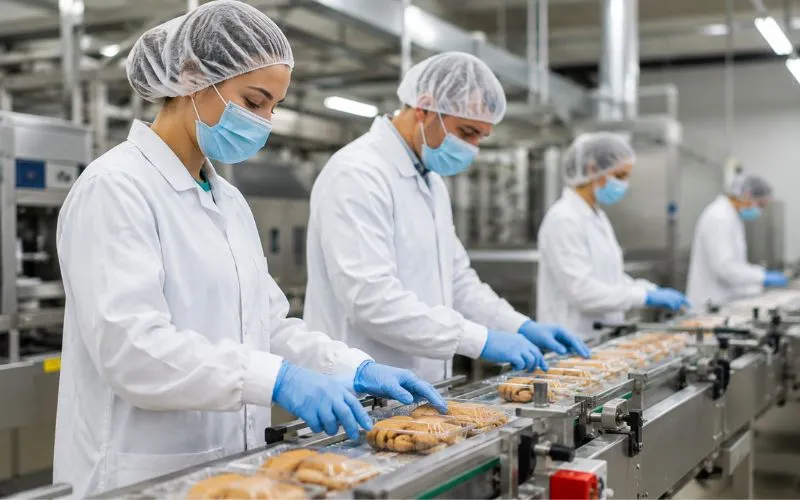

Food manufacturing is one of the most sensitive industries when it comes to hygiene, safety and quality control. All the products which reach the consumer undergo several processes of handling, processing and packaging. Even the slightest slip in the cleanliness at every stage can result in the risk of contamination. It is the reason why employee clothes are a much more significant factor than simply a dress code. It serves as a preventive measure of safety in the whole production system.
Collaborating with a trusted Uniform supplier in UAE like Futuremind Uniforms assists food companies to have uniformity in work attire. Good quality clothing provides durability, hygiene and comfort to people who work in a challenging environment. In this guide we look at how Uniform Requirements in Food Manufacturing Facilities assist in ensuring safety, efficiency and regulatory compliance as well as facilitating smooth production processes.
Why Proper Workwear Matters in Food Manufacturing
The environment of food production must be highly controlled in case of contamination. The workers are transferred to various areas, work with raw materials and run machines. Lack of appropriate protective clothing exposes a significant risk of contaminating food items with bacteria, dust or foreign particles.
Professional clothing systems help create a controlled barrier between the worker and the product. They also make sure that the level of hygiene is maintained throughout the departments. This uniformity is necessary in order to pass food safety audits and keep up with the certifications of HACCP and GMP.
In addition to safety, good dressing also enhances discipline and accountability at the workplace. When employees adhere to uniform dressing rules it becomes more straightforward to keep things in order as well as minimizing risks in operations.
Core Uniform Requirements in Food Manufacturing Facilities
1. High-Quality Hygienic Fabric
One of the most important Uniform Requirements in Food Manufacturing Facilities is the use of food-safe fabric. It should be non-shedding, breathable and tough enough to withstand frequent washing in the industry. This guarantees sustainability in hygiene and performance even in harsh conditions.
2. Full Coverage Protective Clothing
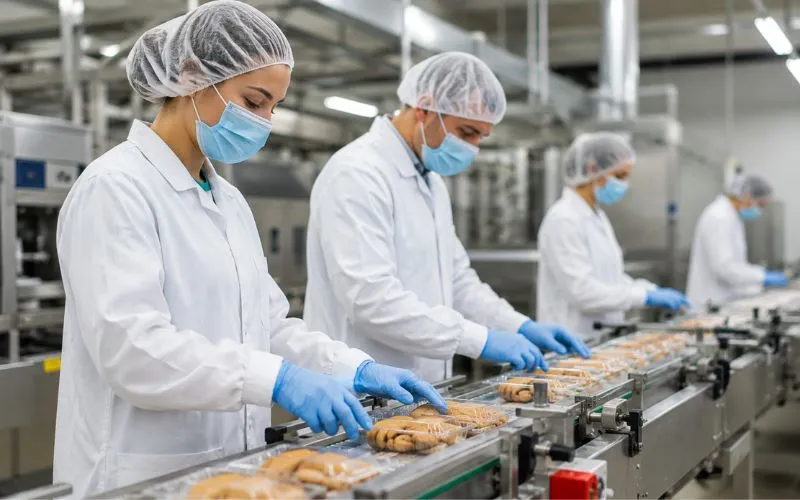
Food manufacturing workwear should be able to cover the entire body. This consists of long sleeves, full trousers and protective coats or gowns. This is aimed at reducing direct contact between the worker and the food products that are exposed. This minimizes the chances of contamination due to skin particles, sweat or external dust.
3. Hair and Beard Containment Systems
Hairnets, caps and beard covers are the necessary elements of food industry dresses. These prevent microscopic particles and loose hair to get to production lines. This is a prerequisite that is highly practiced in majority of the facilities to ensure integrity of hygiene.
4. Specialized Footwear for Production Areas
Workers are required to put on closed and slip-resistant footwear which is specifically designed to be used in industries. Shoes are confined to only inside production areas in most of the facilities. This will avoid external pollution like dirt or chemicals into clean places.
5. Strict No-Accessory Policy
Food manufacturing is not allowed to have jewelry, watches and loose accessories. Such objects may harbor bacteria or get accidentally dropped into food in processing. Their elimination is an important measure in ensuring hygiene.
6. Department-Based Color Coding
Modern facilities often use color-coded professional clothing systems to separate departments. An illustration is that the raw material handling team, processing team, packaging team and quality control team can be of different colors. This assists in avoiding cross contamination and enhances visibility of workflow.
7. Protective Gear and Additional PPE
Other protective materials like gloves, masks, aprons and disposable gowns might also be necessary depending on the area of production. These offer an added security on locations where food is in direct contact or of high sensitivity.
Compliance with Global Food Safety Standards
The Uniform Requirements in Food Manufacturing Facilities are well in line with the international safety system such as the HACCP and GMP. These models focus on hygiene management, risk avoidance and systematic operation practices.
Frequent checks will make sure that workers adhere to dressing codes. Failure to comply may lead to severe repercussions such as product recall, fines and certifications. This not only renders strict compliance important but also critical to survival of the business.
Benefits of Proper Attire Systems in Food Manufacturing
Properly executed attire system has various non-hygienic advantages. It enhances operational effectiveness by ensuring that there is a clear separation of the departments and minimization of confusion in the workflow processes.
It also helps in increasing employee comfort. Properly designed workwear can guarantee that employees do not experience fatigue and have enhanced mobility when working long hours. This has a direct impact of increased productivity and quality of products.
As well, uniformity in the dressing code enhances brand image. Strict hygiene practices can be interpreted by customers and auditors as an indication of reliability and professionalism.
Best Practices for Managing Food Industry Workwear
The food manufacturing companies ought to have well-organized workwear management systems. This involves routine washing plans, check-up plans and prompt replacement of worn-out clothes.
It is also crucial to train employees. Employees need to know the reasons why there are dress codes and the role they play in ensuring food safety. Compliance is an automatic effect of ensuring that the employees are informed.
Working with a trusted Uniform supplier ensures businesses receive durable, compliant and industry-specific solutions tailored for food production environments.
Conclusion
Uniform Requirements in Food Manufacturing Facilities are very strong in ensuring hygiene, safety and operational excellence. Fabric quality to protective accessories, all these details contribute to the prevention of contamination and integrity of products.
Through Futuremind Uniforms the companies are able to adopt effective and quality attire systems which are in line with the industry standards. The need to invest in appropriate workwear is not only the compliance but a long-term safety, efficiency and brand trust strategy in the food manufacturing sector.



























Sign in to leave a comment.