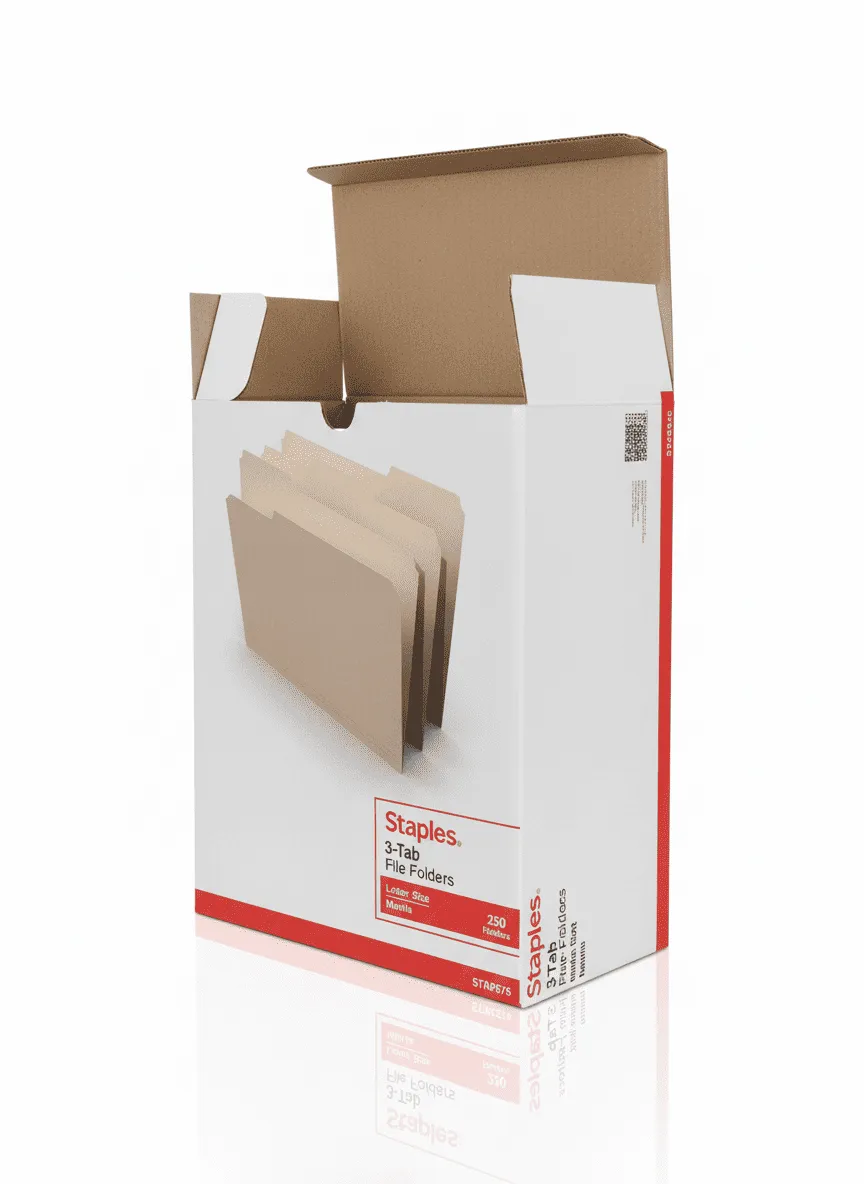

The selection of suitable corrugated boxes is an integral aspect of making packages that are safe, effective, and affordable. There are different types of packaging required depending on the weight, volume, fragility, transport, storage periods, and presentation needs of various products. While a package developed for lightweight retail products may lack the strength required to protect industrial products, the use of a stronger package than required for a light-weight product is costly in terms of packaging and transport.
One of the key considerations in the selection of suitable types of corrugated boxes includes understanding different Corrugated Box Flute Types.
Corrugated Box Flute Types Understanding
The flute is a wavy piece of paper situated between two flat liner sheets on corrugated cardboard. The flute size and shape affect various properties of the box, such as its thickness, cushioning capacity, stacking strength, crush resistance, and printability.
Popular flute types include A, B, C, E, and F, each designed to suit specific packaging needs.
A-Flute
A flute type is one of the largest flute profiles, which offers good shock absorption. It can be used for packaging fragile items that require extra protection.
B-Flute
This flute type has a thinner and denser structure compared to the A-flute type. It features decent crush resistance and an easy-to-print surface. B-flute is often used for packaging retail items, die-cut boxes, foods, etc.
C-Flute
C-flute is one of the most popular flute types due to its versatile usage for a wide range of purposes. It has good cushioning and stacking strength. C-flute is perfect for general packaging, e-commerce, consumer goods, master cartons, etc.
E-Flute
As compared to other flute types, E-flute has a very thin profile. In addition, it has a smooth surface. Therefore, this type of flute can be used if print quality, packaging size, and appearance are important factors.
F-Flute
F-flute is an even more refined flute profile that may come in handy where the appearance and printability of the package are essential. It may be useful for small retail packages and presentational packaging.
Choosing Boxes Depending on Product Weight
Product weight is one of the main things to consider when choosing a corrugated box. Lightweight products will not need the same box construction as heavyweight products.
Products that weigh little may be packed in thin flutes like E-flute or even F-flute without compromising protection since the package needs to be light enough.
In case of medium products, packing may be done in B-flute or C-flute boxes depending on transport and stacking needs. C-flute is especially helpful for standard shipping since it balances protection and strength.
Thick boards or even double-wall board may be needed for heavyweight products. Double-wall board contains two layers of flutes separated by a liner and therefore gives added strength for applications with higher demands. BC double-wall is among the flute profiles that could be used for heavy shipments and industrial products, including products with high stacking requirements.
Choosing Boxes for Fragile Products
Fragile products need to be packed in a way that can withstand shocks and minimize the risk of damaging them when moving them around. Glass products, ceramics, electronics, and other fragile products may need cushioning through appropriate flute choice and internal packing.
Flutes of larger sizes give added cushioning. Inserts, partitions, and cushioning materials can further minimize product movement within the package.
Nonetheless, flute choice should not be looked at in isolation from the rest of the box construction. Other things like box size, product fitting, liner quality, internal supports, and transport conditions should be taken into account.
Selection of Packaging for E-commerce
It is important that e-commerce packaging withstands several handling processes, such as handling within the warehouse, loading, transport, delivery and handling by consumers.
For light products sold via e-commerce, E-flute and B-flute may be appropriate in cases where appearance and compact construction is an important consideration. C-flute may be chosen for shipping cartons in cases where more cushioning and stacking strength is necessary.
Businesses must also ensure that there is not too much space in the box. Appropriate box size will limit movement of the product and might help optimize storage and transportation of the product.
Packaging of Print and Retail Products
In cases when packaging appearance plays an important role in customer experience, businesses must consider printability together with structural performance.
Smooth flute profiles such as E-flute and F-flute usually offer smooth surface which will allow printing of fine graphics, logos, product information and branding on them. The use of B-flute allows creating a good balance between print quality and structural performance.
As a result, retail packaging might require different box construction from a simple shipping carton even in cases when the products in both of them have equal weight.
Industrial and Heavy-Duty Packaging
Industrial products often require packages which are able to withstand increased load, stacking pressure, rough transport and long-term storage.
Thus, double and even triple wall corrugated constructions may be considered. Double wall BC is traditionally related to heavy shipments and industrial applications as it combines several flute layers to increase structural strength of packaging. Triple wall construction may be considered for very heavy and bulky products and some applications in which corrugated packaging is used as an alternative to wooden boxes.
The choice of board grade must be made depending on weight, stacking, transport route and protection requirements.
Think About Box Design and Box Dimensions
Box dimensions and design are just as crucial as selecting the right flutes when determining what box will be most appropriate.
The box needs to offer enough internal room for the goods and protection but not excess space. Length, width, and height should be based on the size of the goods and way of packaging.
It is also worth taking into consideration what kind of box might be most suitable for your application – it may be a standard slotted carton, die-cut box, mailer box or something different designed specially for you.
Universal Boxes Manufacturers may help businesses that need to package goods in boxes of various sizes.
Universal box designs offer flexibility for companies looking for packaging solution that will work for a variety of products and/or applications.
Think About Transportation and Storage Conditions
Conditions of storage and transportation are highly important factors when determining what packaging to use.
Stacked boxes need to withstand sufficient compression and stacking strength. Goods transported over long distances need to be protected because during long-distance transport goods can be handled multiple times and be subject to vibrations and changing storage conditions.
In case of export and heavy-duty packaging, the business needs to pay attention not to standard single-wall boxes, but to stronger board constructions and appropriate flute combinations.
Find Balance Between Protection, Appearance and Cost
The strongest packaging possible is not necessarily the best solution. Excessive box strength will increase usage of material, need for storage space and costs of transportation.
As well as, using a weaker box solely to save money on packaging may result in damaging the goods. It is crucial to find the right balance between protection and excess of material and design.
That's why the company needs to think about product weight, its fragility, need for stacking, printing requirements, transportation conditions, box dimensions and budget.
Corrugated Packaging Solution
There is not one universal type of corrugated box that is the perfect match for each and every application. In fact, the best solution is highly dependent upon the intended application as well as the protection necessary for the specific product.
It becomes easy to understand the types of flutes in a corrugated box. For instance, there are various types of flutes including A, B, C, E and F, among others. In addition, one should also be able to differentiate between the single, double and other kinds of constructions. Lightweight retail products may benefit from smaller flutes, while C-flutes will suit standard shipping products, while double wall construction may be needed in cases of tough applications.
Through consultations with Universal Boxes Manufacturers with regard to product specifications, transportation needs, print specifications, and packaging intentions, businesses can design corrugated packaging.



















Sign in to leave a comment.