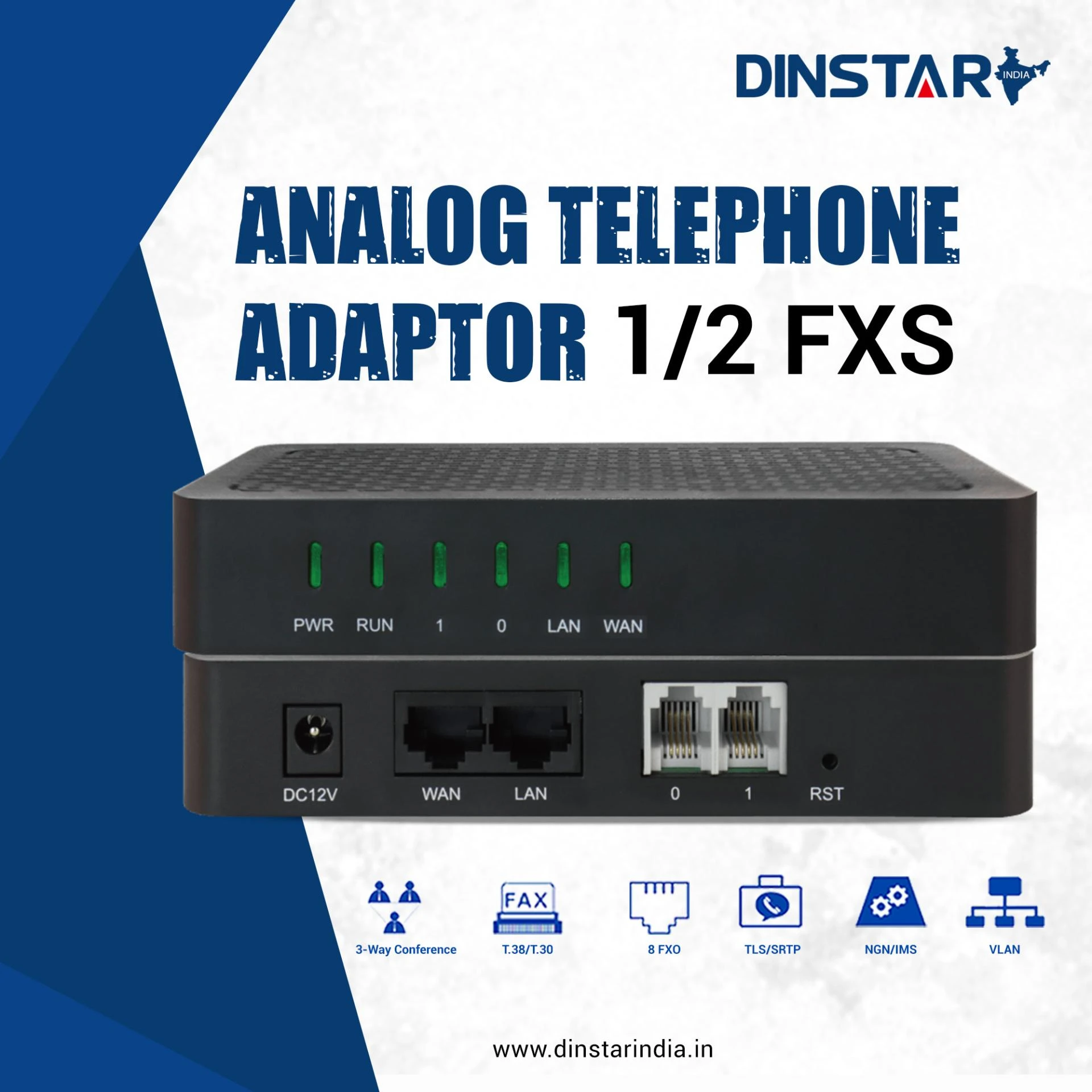
In today's fast-paced digital world, businesses are constantly evolving their communication systems to stay ahead. While IP-based communication is the new norm, many companies still rely on traditional analog telephony systems. This is where the 2 Port FXS Gateway plays a crucial role. Compact yet powerful, this small device acts as a bridge between analog telephones and modern VoIP networks, enabling seamless integration and cost-effective communication.
A 2 Port FXS Gateway is an ideal solution for small offices, remote branches, or residential setups that want to connect analog devices to VoIP networks without replacing their existing equipment. In this article, we will take a closer look at what a 2 Port FXS Gateway is, how it works, its key features, benefits, and how to choose the right one for your needs.
What is a 2 Port FXS Gateway?
A 2 Port FXS Gateway is a VoIP gateway device that features two FXS (Foreign Exchange Subscriber) ports. These ports allow analog devices such as telephones or fax machines to connect to a VoIP system using SIP (Session Initiation Protocol). The gateway converts analog voice signals into digital SIP packets and vice versa, enabling traditional phones to make and receive VoIP calls over the internet.
It is a cost-effective solution for businesses that want to retain their analog equipment while enjoying the benefits of VoIP communication, such as reduced call costs, enhanced flexibility, and easy scalability.
How Does a 2 Port FXS Gateway Work?
The working mechanism of a 2 Port FXS Gateway is simple yet highly effective. The analog telephone is connected to the FXS port of the gateway. The device is then connected to the IP network (usually via Ethernet) and configured with SIP account credentials provided by the VoIP service provider.
When a user dials a number from the analog phone, the gateway converts the analog voice signal into SIP format and routes the call over the IP network. Conversely, when a SIP call is received, the gateway converts the digital data into analog audio that the phone can understand. This two-way signal conversion ensures seamless communication between analog and digital systems.
Key Features of 2 Port FXS Gateways
When selecting a 2 Port FXS Gateway, it is important to evaluate its features to ensure it meets your communication needs. Some of the essential features to look for include:
SIP Protocol Support: Compatibility with SIP ensures the device works with most IP PBXs, softswitches, and hosted VoIP services.
Voice Codec Support: Common codecs such as G.711, G.729, G.723 allow for voice compression and optimization based on network conditions.
Fax Over IP (T.38 and G.711): Ensures reliable fax transmission over IP networks, ideal for businesses that still rely on fax communication.
Web-Based GUI and Remote Management: User-friendly configuration through a web interface makes it easy to manage settings and firmware updates.
QoS (Quality of Service): Prioritizes voice traffic on the network to ensure clear and uninterrupted calls.
SIP Trunking Support: Allows businesses to connect directly to SIP trunk providers for cost-efficient calling.
Security Features: Includes TLS, SRTP, firewall, and password protection to secure your voice communication.
Power Options: Available in both external power adapter and PoE (Power over Ethernet) options for flexible deployment.
Benefits of Using a 2 Port FXS Gateway
Cost Savings: One of the most obvious benefits is reduced communication costs. VoIP calls, especially international ones, are significantly cheaper compared to traditional telephony.
Preserve Existing Equipment: There's no need to discard working analog phones or fax machines. You can keep using them alongside modern IP systems.
Easy Integration: The device integrates effortlessly with IP PBX systems, SIP servers, and hosted VoIP platforms, making it a plug-and-play solution.
Ideal for Remote Locations: Perfect for remote branches or home offices that don’t have access to modern telephony infrastructure but want VoIP features.
Enhanced Flexibility: Add or move phones without rewiring or complex configurations.
Reliable Performance: Modern 2 Port FXS Gateways come with advanced features that ensure call clarity, echo cancellation, and robust security.
Common Use Cases
Small Businesses: Businesses with a couple of analog phones can use a 2 Port FXS Gateway to enable VoIP without replacing their hardware.
Hotels and Guesthouses: Many hospitality businesses continue using analog phones in rooms. A 2 Port FXS Gateway helps them adopt IP-based calling systems without complete rewiring.
Call Centers: Some call centers use analog phones for specific operations or agents. The gateway allows hybrid use without major changes.
Healthcare and Clinics: Analog phones used in clinics and hospitals for internal and external communication can be integrated into IP systems easily with this gateway.
Remote Working: Employees working from home can connect their analog phones to VoIP networks via a 2 Port FXS Gateway, ensuring professional communication from any location.
How to Choose the Right 2 Port FXS Gateway?
With several options in the market, choosing the right 2 Port FXS Gateway depends on a few key factors:
Compatibility: Ensure the gateway is compatible with your IP PBX or VoIP provider.
Scalability: Choose a device that fits your current needs but also offers scalability for future expansion.
Support and Warranty: Go with a reputed brand that offers good technical support, firmware updates, and warranty coverage.
Network Conditions: Consider gateways that support QoS and advanced codecs if your network bandwidth is limited.
Budget: While cost is important, don’t compromise on essential features for the sake of a cheaper device.
Some well-known brands in the VoIP hardware space include Dinstar, Grandstream, Cisco, Yeastar, and Sangoma. These companies offer reliable and feature-rich 2 Port FXS Gateways suitable for different use cases.
Final Thoughts
The 2 Port FXS Gateway is a smart and efficient solution for businesses looking to modernize their communication systems without replacing existing analog devices. It offers the best of both worlds—leveraging the cost and flexibility benefits of VoIP while still using your trusted analog phones and fax machines.
























Sign in to leave a comment.