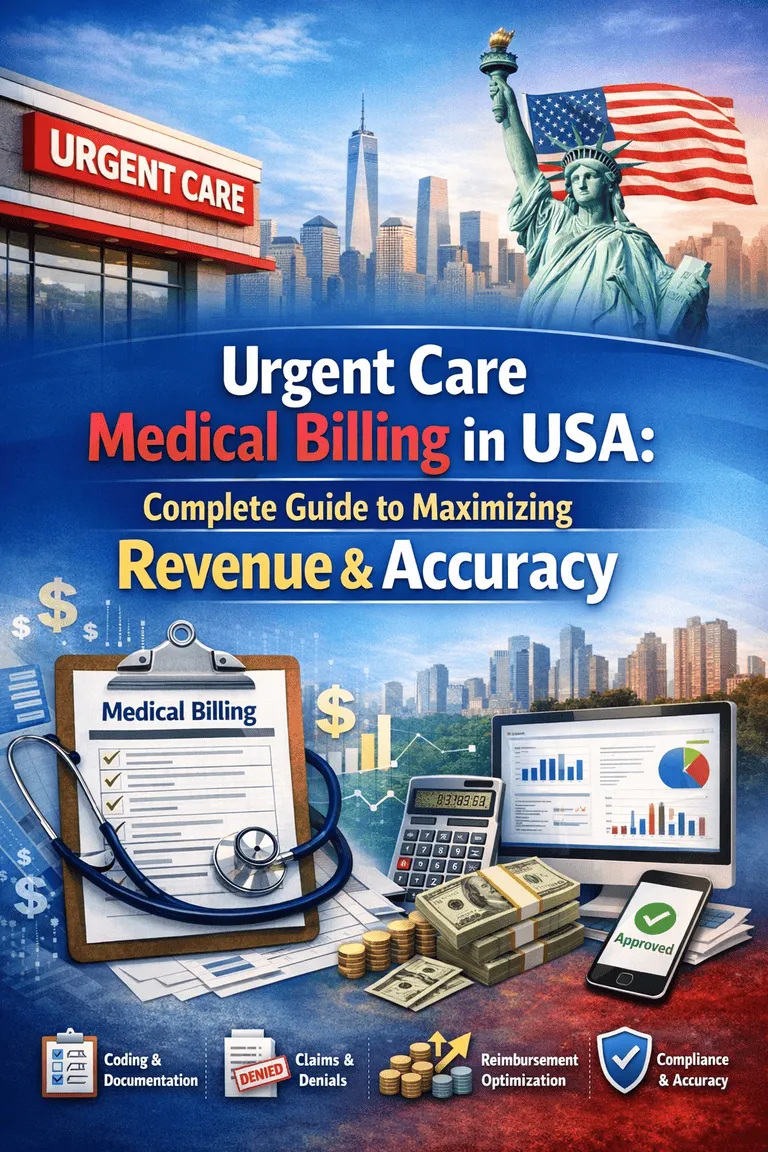

Walk into any urgent care center on a busy evening and you’ll see controlled chaos—patients coming in with everything from minor injuries to infections, clinicians moving quickly, and front-desk teams juggling registrations. What often goes unnoticed is the equally intense activity happening behind the scenes: billing.
For many urgent care operators, the real challenge isn’t just delivering care—it’s getting paid accurately and on time. Errors in documentation, incorrect coding, missed charges, and payer-specific rules can quickly turn high patient volumes into lost revenue. That’s where urgent care billing services come into play, bridging the gap between clinical efficiency and financial stability.
This article explores how specialized billing support can transform urgent care operations, reduce denials, and improve overall revenue cycle performance.
Why Urgent Care Billing Is Uniquely Complex
Unlike traditional primary care practices, urgent care centers deal with unpredictable patient volumes and a wide variety of cases. On any given day, a provider might treat a sprain, perform minor procedures, order lab tests, and administer injections—all within hours.
This diversity creates complexity in:
- Coding accuracy: Each visit may require multiple CPT and ICD-10 codes.
- Time-sensitive documentation: Providers must chart quickly without sacrificing detail.
- Payer variability: Insurance rules differ widely for urgent care settings.
- Walk-in billing challenges: Unlike scheduled visits, pre-verification is often limited.
Without a structured system for coding and billing for urgent care, revenue leakage becomes inevitable.
The Role of Specialized Urgent Care Billing Services
A dedicated urgent care billing services provider understands the nuances of this fast-paced environment. Instead of applying general billing practices, they tailor workflows specifically for urgent care centers.
What Makes These Services Different?
A typical urgent care billing services company offers:
- Real-time charge capture workflows
- Accurate coding aligned with urgent care visit types
- Insurance verification optimization for walk-in patients
- Denial management tailored to urgent care claims
- Faster claim submission cycles
For example, consider a patient visit involving a laceration repair and tetanus shot. If coding isn’t precise, either the procedure or the injection may be undercoded or missed entirely. Over time, these small errors add up to significant revenue loss.
A Day in the Life: Where Billing Breaks Down
Let’s take a simple scenario.
A patient visits an urgent care center with severe flu symptoms. The provider performs an exam, orders a rapid flu test, prescribes medication, and administers IV fluids.
Now imagine these common pitfalls:
- The IV administration is not coded separately
- The flu test is billed incorrectly
- Documentation lacks specificity for medical necessity
- Insurance rejects the claim due to missing modifiers
Multiply this by dozens of patients per day, and you’ll understand why many centers struggle with collections.
This is where urgent care billing solutions become essential—not just to fix errors, but to prevent them in the first place.
Regional Expertise Matters More Than You Think
Billing isn’t just about codes—it’s about understanding payer behavior in specific regions.
For instance:
- A florida urgent care billing services provider must navigate Medicaid nuances, hurricane-related coverage exceptions, and state-specific payer rules.
- A texas urgent care billing services provider deals with different reimbursement models, payer mixes, and regulatory expectations.
Local expertise ensures:
- Faster claim approvals
- Fewer compliance issues
- Better alignment with regional insurance trends
This is why many urgent care centers prefer outsourcing to firms with state-specific experience rather than generic providers.
Key Components of Effective Urgent Care Billing
1. Accurate Documentation Capture
Everything starts with documentation. If providers don’t capture detailed notes, even the best billing team cannot maximize reimbursement.
Best practice:
Encourage structured templates that align with coding requirements without slowing down providers.
2. Smart Coding Strategies
Urgent care billing and coding services rely heavily on correct code selection, including:
- Evaluation & Management (E/M) levels
- Procedure codes
- Modifier usage
Small adjustments—like using the correct modifier for a separately identifiable service—can significantly impact reimbursement.
3. Real-Time Eligibility Checks
Even in walk-in settings, quick insurance verification tools can reduce claim rejections.
A strong urgent care billing provider integrates systems that:
- Check eligibility instantly
- Flag coverage issues early
- Reduce front-end errors
4. Denial Management That Actually Works
Denials aren’t just rejections—they’re opportunities to improve.
Leading urgent care billing companies:
- Track denial patterns
- Identify root causes
- Implement corrective workflows
For example, repeated denials for a specific payer may indicate incorrect coding or missing documentation rather than random errors.
5. Transparent Reporting
You can’t improve what you don’t measure.
A reliable urgent care billing agency provides:
- Daily claim status updates
- Revenue cycle dashboards
- KPI tracking (AR days, denial rates, collection ratios)
This helps urgent care owners make informed decisions instead of guessing where money is being lost.
In-House vs Outsourced Billing: What Works Better?
Many urgent care centers start with in-house billing teams but eventually hit limitations.
In-House Challenges
- High staff turnover
- Training costs
- Limited expertise in complex cases
- Difficulty keeping up with payer changes
Outsourced Advantage
Partnering with an experienced urgent care billing services provider offers:
- Access to trained specialists
- Scalable operations during peak seasons
- Reduced overhead costs
- Faster collections
For growing centers, outsourcing often becomes less about cost-saving and more about revenue optimization.
Technology’s Role in Modern Urgent Care Billing
Billing today isn’t just manual work—it’s driven by technology.
Advanced urgent care medical billing systems include:
- AI-assisted coding suggestions
- Automated claim scrubbing
- Integration with EHR systems
- Predictive denial analytics
These tools help reduce human error while speeding up the billing cycle.
Common Mistakes in Billing for Urgent Care Services
Even well-run centers can fall into these traps:
- Under-coding visits to avoid audits
- Missing billable procedures
- Delayed claim submissions
- Poor documentation alignment with codes
- Ignoring payer-specific rules
Correcting these issues requires a structured approach to billing for urgent care services, not just reactive fixes.
Choosing the Right Billing Partner
Not all billing providers are created equal. When evaluating an urgent care billing services company, consider:
- Experience with urgent care centers specifically
- Knowledge of regional payer rules
- Transparency in reporting
- Proven denial reduction strategies
- Integration capabilities with your systems
The goal isn’t just to outsource work—it’s to gain a partner who improves your financial performance.
The Bigger Picture: Revenue Cycle Alignment
Billing is just one piece of the puzzle. True financial success comes from aligning the entire process—from patient intake to final payment.
That includes:
- Front-end verification
- Clinical documentation
- Coding accuracy
- Claims submission
- Follow-ups and collections
This holistic approach is what defines strong urgent care center medical billing services.
FAQs
What are urgent care billing services?
Urgent care billing services handle coding, claim submission, payment posting, and denial management specifically tailored for urgent care centers.
Why is urgent care billing more complex than regular billing?
Because of high patient volume, varied treatments, and limited pre-visit verification, urgent care billing requires faster and more accurate processes.
How can outsourcing improve urgent care billing?
Outsourcing provides access to experienced professionals, reduces errors, and speeds up reimbursements, ultimately improving revenue.
What should I look for in an urgent care billing provider?
Look for experience, transparency, strong reporting systems, and expertise in payer-specific rules.
How do billing errors impact urgent care centers?
Errors can lead to claim denials, delayed payments, and significant revenue loss over time.
Conclusion: Building a Strong Financial Backbone
Urgent care centers thrive on speed, accessibility, and efficiency—but without a solid billing system, even the busiest facility can struggle financially. Accurate coding, timely submissions, and proactive denial management aren’t optional anymore; they’re essential for survival and growth.
This is where comprehensive solutions that combine medical billing services, medical coding services, and integrated medical billing and coding services make a real difference. When supported by strong revenue cycle management and reliable credentialing services, urgent care centers can focus more on patient care and less on administrative burdens.
Providers like 247 Medical Billing Services understand this balance. By aligning operational efficiency with financial precision, they help urgent care centers not only recover lost revenue but build a sustainable, scalable future.




























Sign in to leave a comment.