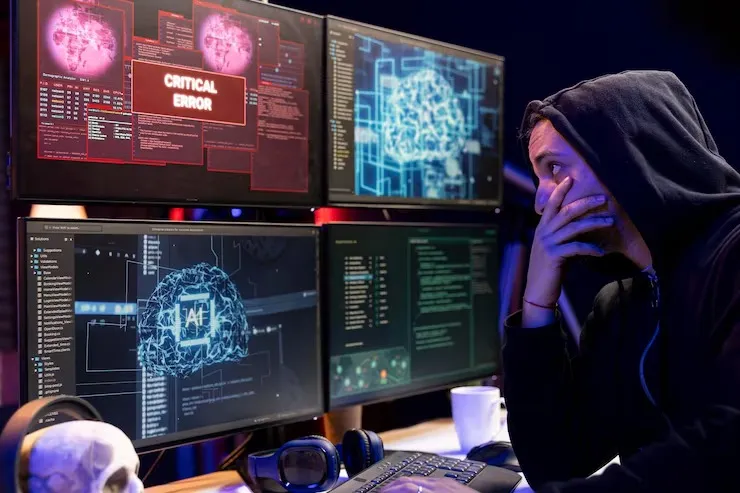

Ransomware has become one of the most disruptive and costly threats facing organizations of every size and sector. The reactive approach to ransomware defense, focused on backup strategies, detection tools, and incident response playbooks, is necessary but insufficient. Organizations that want to genuinely reduce their ransomware risk need to understand the human actors behind these attacks before those actors ever reach their networks.
Ransomware Is a Human Operation
Every ransomware attack begins with human decisions. Threat actors choose targets based on perceived value and vulnerability. They negotiate terms, coordinate operations, and adapt their tactics based on how defenders respond. That human decision-making layer is both the most important aspect of ransomware operations and the one that receives the least intelligence attention from most security teams.
Cyber HUMINT addresses this gap directly. By engaging individuals in online environments where ransomware operators communicate and operate, skilled Cyber HUMINT practitioners can gather intelligence about planned attacks, ransom amounts, and negotiation strategies before any of that information becomes apparent through technical means.
Modus Cyberandi's Ransomware Intelligence Expertise
Modus Cyberandi's founder, Cameron Malin, brings an extraordinary level of ransomware-specific expertise to this work. He created and team-led the Five-Eye Behavioral Consortium to Combat Ransomware, a select group of international government partners assembled to address ransomware threats through behavioral assessment and intelligence sharing. This consortium brought together the intelligence capabilities of multiple allied governments around a shared behavioral framework for understanding and countering ransomware actors.
Additionally, Cameron's work creating the FBI BAU's Cyber Behavioral Analysis Center gave him direct experience profiling the specific behavioral characteristics of ransomware operators, including their motivations, decision-making processes, and operational patterns. That expertise directly informs Modus Cyberandi's Cyber HUMINT services for organizations facing ransomware threats.
Intelligence That Changes Ransomware Outcomes
The intelligence gathered through Cyber HUMINT operations can fundamentally change ransomware outcomes in several ways:
- Pre-attack intelligence about targeting intentions allows organizations to harden specific systems before an attack begins
- Intelligence about malware capabilities and zero-day exploits enables defenders to implement mitigations in advance
- Understanding threat actor behavioral patterns improves negotiation strategies if an attack occurs
- Awareness of attacker motivations and financial expectations informs response decisions
Each of these intelligence outputs is genuinely unavailable through technical monitoring alone. They require human engagement with the communities where ransomware operators plan and coordinate their operations.
The Broader Behavioral Context
Cameron Malin's authorship of the Malware Forensics book series, Deception in the Digital Age, and the forthcoming Synthetic Media, Deep Fakes, and Cyber Deception reflects a career built at the intersection of behavioral science, cyber investigations, and intelligence work. That background informs a Cyber HUMINT methodology that is both scientifically grounded and operationally validated.
His recognition as a three-time recipient of the FBI's Medal of Excellence and multiple national intelligence awards from the Office of the Director of National Intelligence further speaks to the real-world impact of the work that shapes Modus Cyberandi's approach.
Conclusion
Ransomware defense requires more than technical preparation. It requires human intelligence about the people planning and executing ransomware operations. Cyber HUMINT gives organizations that intelligence in a way that no technical solution can replicate. Modus Cyberandi's deep expertise in ransomware behavioral analysis and human intelligence, developed through decades of FBI work and international intelligence collaboration, makes it the right partner for organizations looking to genuinely strengthen their ransomware defense posture.

























Sign in to leave a comment.