
Technology decisions have become business decisions. From cybersecurity and cloud investments to digital transformation and vendor management, organizations increasingly rely on technology to drive growth, efficiency, and competitive advantage.
However, many small and mid-sized businesses cannot justify the cost of hiring a full-time Chief Information Officer (CIO). This is where Virtual CIO Services provide significant value. A virtual CIO delivers executive-level technology leadership, strategic planning, and IT governance without the expense of a permanent executive hire. According to Wildnet Edge, virtual CIO services provide businesses with senior technology leadership, roadmap planning, vendor management, and risk oversight to support informed technology decisions at every stage of growth.
Whether you're planning infrastructure upgrades, modernizing operations, or aligning technology investments with business objectives, a virtual CIO can help create a clear and scalable technology strategy.
What Are Virtual CIO Services?
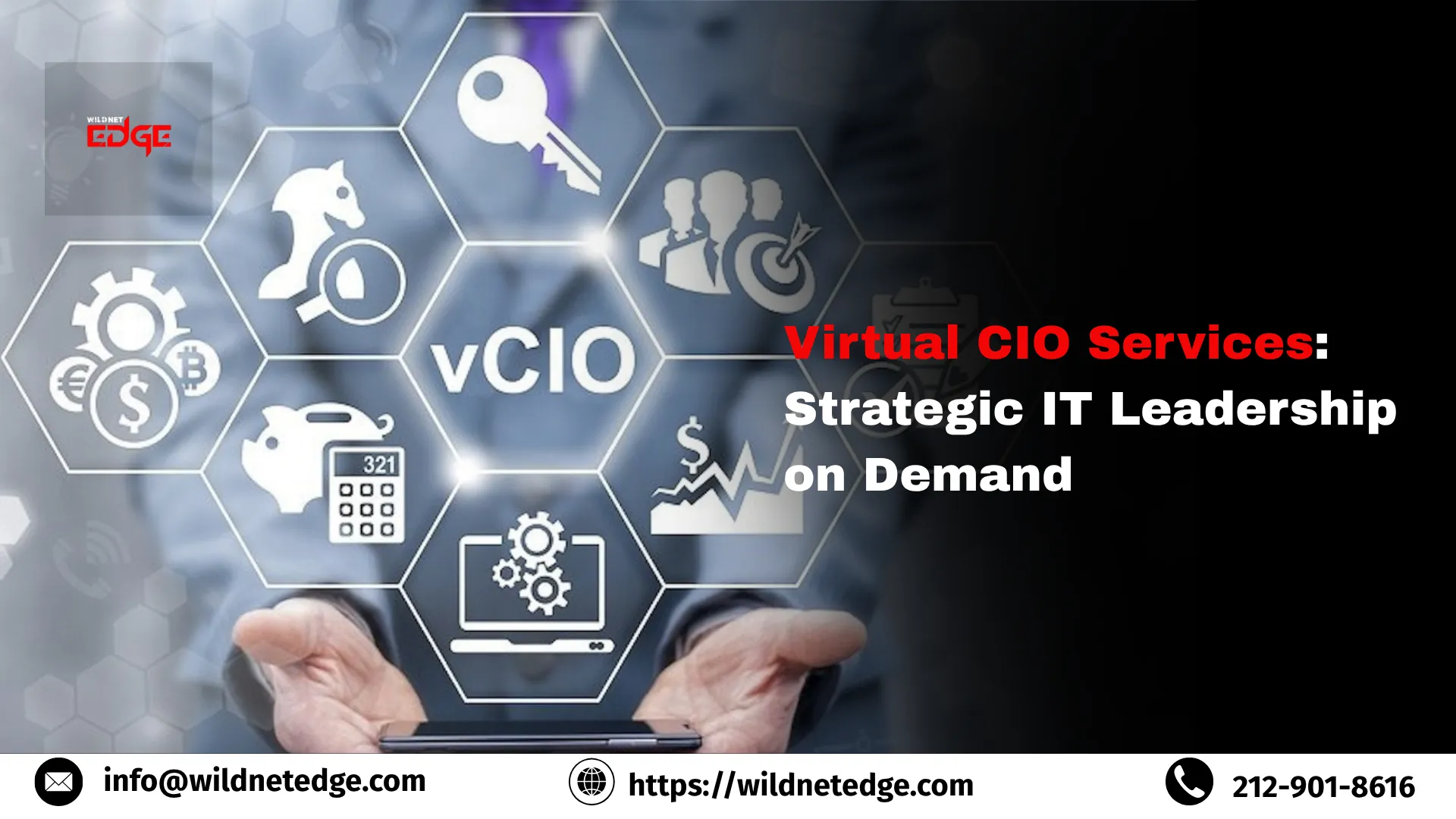
Virtual CIO (vCIO) services provide businesses with access to experienced technology leaders who guide IT strategy, technology investments, risk management, and digital transformation initiatives.
Unlike traditional IT support, a virtual CIO focuses on long-term business outcomes rather than day-to-day technical issues.
Common responsibilities include:
- IT Strategy Development
- Technology Roadmap Planning
- Budget and Cost Optimization
- Cybersecurity Oversight
- Vendor Management
- Digital Transformation Planning
- Risk Assessment and Governance
- Business Continuity Planning
- Executive Technology Consulting
The objective is to ensure technology investments support overall business goals while reducing risk and improving operational efficiency.
Why Businesses Need Virtual CIO Services
Technology Is More Complex Than Ever
Organizations now manage cloud platforms, cybersecurity threats, compliance requirements, software ecosystems, and remote work environments. Strategic oversight is critical to ensure these technologies work together effectively.
Cost-Effective Executive Leadership
Hiring a full-time CIO often requires a significant salary, benefits package, and long-term commitment. Virtual CIO services provide executive expertise at a fraction of the cost.
Better Technology Decisions
A vCIO helps organizations evaluate technology investments based on business value, risk, scalability, and long-term impact.
Stronger Business Alignment
Technology initiatives become more successful when they directly support organizational goals and growth strategies.
Core Responsibilities of a Virtual CIO
IT Strategy and Planning
A virtual CIO develops technology strategies that align with business objectives and future growth plans.
This typically includes:
- Technology assessments
- Gap analysis
- Roadmap development
- Investment prioritization
- Resource planning
Technology Roadmap Development
Roadmaps provide a structured plan for technology adoption, modernization, and optimization.
A well-defined roadmap helps businesses:
- Avoid unnecessary spending
- Improve scalability
- Reduce technology debt
- Support innovation initiatives
Budget Management
Technology investments should generate measurable business value.
Virtual CIOs help organizations:
- Optimize IT spending
- Evaluate vendor contracts
- Forecast technology costs
- Prioritize strategic investments
Vendor and Partner Management
Managing multiple technology vendors can be challenging.
A virtual CIO ensures vendors deliver value, maintain service quality, and align with organizational objectives.
How Virtual CIO Services Improve Business Performance
Better Operational Efficiency
Strategic technology planning helps eliminate inefficiencies and streamline operations.
Reduced Technology Risks
A virtual CIO evaluates security vulnerabilities, compliance requirements, and infrastructure risks before they become major issues.
Faster Digital Transformation
Organizations can accelerate modernization initiatives through expert guidance and strategic planning.
Improved ROI on Technology Investments
Technology decisions become more data-driven, reducing waste and improving long-term business outcomes.
Wildnet Edge notes that virtual CIO leadership often focuses on identifying operational bottlenecks, automation opportunities, and technology improvements that create measurable business value.
Virtual CIO vs Traditional CIO
| Feature | Virtual CIO | Full-Time CIO |
| Cost | Lower | Higher |
| Flexibility | High | Limited |
| Strategic Leadership | Yes | Yes |
| Long-Term Commitment | No | Yes |
| Access to Expertise | Broad | Individual Dependent |
| Scalability | High | Moderate |
For many growing businesses, virtual CIO services provide enterprise-level leadership without enterprise-level costs.
Signs Your Business Needs a Virtual CIO
You may benefit from virtual CIO services if:
- Technology decisions lack strategic direction
- IT spending continues increasing without measurable ROI
- Cybersecurity concerns are growing
- Digital transformation projects are stalled
- Vendor management has become complex
- Business growth is outpacing technology capabilities
- Leadership lacks dedicated technology expertise
How Virtual CIO Services Support Digital Transformation
Successful modernization initiatives require both strategic planning and execution oversight.
Organizations pursuing modernization initiatives often combine Digital Transformation Services with virtual CIO leadership to create technology roadmaps, prioritize investments, and ensure transformation projects align with business objectives.
Why Strong IT Operations Matter
Strategic planning must be supported by reliable operational infrastructure.
Comprehensive IT Services provide the operational foundation required to execute strategic technology plans, maintain infrastructure reliability, strengthen cybersecurity, and support long-term business growth.
The Role of Managed IT Support in Virtual CIO Engagements
Strategy alone is not enough. Businesses also require proactive operational support.
Many organizations pair virtual CIO leadership with Managed IT Support Services to ensure technology environments remain secure, optimized, and aligned with strategic business goals while receiving ongoing monitoring and maintenance.
How IT Outsourcing Complements Virtual CIO Services
Virtual CIOs often help organizations determine which functions should remain internal and which should be outsourced.
Partnering with an experienced IT Outsourcing Company allows businesses to execute strategic initiatives efficiently while benefiting from specialized expertise and scalable technology resources.
Best Practices for Working with a Virtual CIO
Define Business Objectives
Technology strategies should support measurable business outcomes.
Establish Clear KPIs
Track metrics such as:
- IT spending efficiency
- System availability
- Security incidents
- Project success rates
- Operational productivity
Conduct Regular Strategic Reviews
Technology priorities evolve as businesses grow. Quarterly reviews help ensure alignment between business goals and technology investments.
Focus on Long-Term Value
Avoid short-term technology decisions that create future complexity and technical debt.
Future Trends in Virtual CIO Services
The role of the virtual CIO continues expanding as technology becomes increasingly central to business success.
Emerging trends include:
- AI Strategy and Governance
- Multi-Cloud Optimization
- Cybersecurity Leadership
- Technology Cost Management
- Data-Driven Decision Making
- Business Process Automation
- Digital Workforce Transformation
Modern virtual CIOs are increasingly expected to bridge business strategy, cybersecurity, cloud transformation, and emerging technologies while delivering measurable ROI.
Conclusion
Virtual CIO services provide businesses with executive-level technology leadership without the cost and commitment of a full-time CIO. By aligning technology investments with business objectives, improving governance, reducing risk, and supporting digital transformation, a virtual CIO helps organizations make smarter technology decisions and achieve sustainable growth.
For businesses navigating complex technology environments, a virtual CIO can serve as the strategic advisor needed to transform technology from a cost center into a competitive advantage.
FAQ
What are virtual CIO services?
Virtual CIO services provide businesses with outsourced executive-level technology leadership, strategic planning, and IT governance.
How is a virtual CIO different from IT support?
IT support focuses on operational issues and technical maintenance, while a virtual CIO focuses on strategy, planning, budgeting, and business alignment.
Are virtual CIO services suitable for small businesses?
Yes. Small and mid-sized businesses often benefit the most because they gain executive-level expertise without hiring a full-time CIO.
What does a virtual CIO help with?
A virtual CIO assists with technology strategy, cybersecurity planning, vendor management, budgeting, digital transformation, and IT governance.
Can a virtual CIO support digital transformation?
Absolutely. Virtual CIOs often lead technology modernization initiatives, roadmap development, and transformation planning to ensure successful implementation.
























Sign in to leave a comment.