Why Floor Flatness Matters for VNA Trucks: Wire Guidance, Rail Guidance and Floor Specs

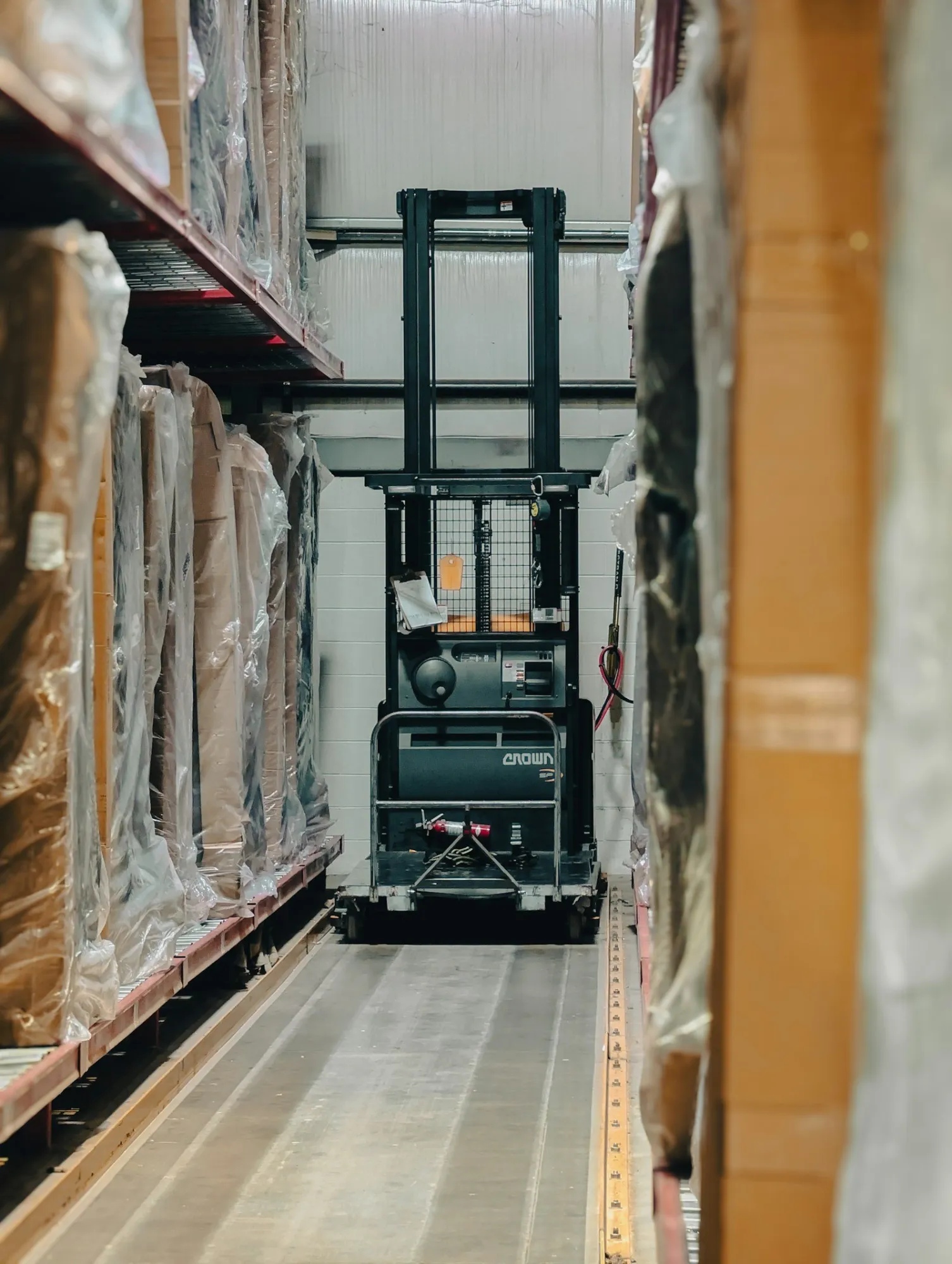
For a VNA truck to perform properly in a warehouse, the floor must be very flat. When the mast is raised to 15 m, irregularities of just a few millimetres in the floor surface make the truck unstable. That is why VNA floor flatness is so important. Below we explain why, and how the different guidance types relate to floor requirements.
Why VNA Trucks Need Flat Floors
VNA trucks, such as man-up order pickers and turret trucks, commonly work at heights of 12, 15 or 17 m, so floor flatness matters far more for them than for ordinary forklifts. Counterbalance forklifts and reach trucks can cope with relatively rough floors because they work at lower heights. With VNA trucks, the operator and load are raised very high, so a small bump or dip in the floor causes significant tilting and sway in the raised mast. This makes the truck less stable, slows the operator down, reduces positioning accuracy and can pose a serious safety risk. The higher the lift, the flatter the floor needs to be.

VNA Floor Flatness Requirements
VNA floors must be very flat and level to meet strict tolerances, such as DIN 15185 for defined-aisle systems. The floor must be surveyed to confirm that the truck's wheel paths are within tolerance. A floor can look flat and still be unsuitable for a high-bay VNA system. For the truck to perform to its design specification, an extremely flat floor is required.
Guidance Options: Wire vs Rail
Because the aisles are so narrow, VNA trucks are not steered by hand inside them. They use one of two guidance types: wire or rail. With wire guidance, an induction wire is laid in a shallow slot in the floor. The truck detects the wire and follows it, so it stays centred in the aisle. The aisle stays clear, which makes wire guidance ideal for very high installations. With rail guidance, the truck runs between steel guide rails fixed along both sides of the aisle. Rails can be simpler and cheaper to install than wire guidance, but they take up more aisle width and are prone to being hit. Rail guidance is therefore usually chosen for lower or less intensive operations, while wire guidance is preferred for high, intensive operations.
Guidance Still Needs a Flat Floor
Whatever the guidance type, the floor still has to meet the requirements. Wire guidance keeps the truck centred, but if the floor is not flat the mast will not be vertical at height. Rail guidance controls the truck from both sides, but a dip where a wheel runs will still tilt the load. Both guidance types help a very tall, heavy truck work accurately and stably, but if the floor is out of specification, performance and safety will be compromised even with guidance.
Frequently Asked Questions
Why do VNA trucks require very flat floors?
VNA trucks can raise loads and operators very high, up to 17 m. At these heights, any irregularity in the floor causes significant problems. A slight dip or bump where the wheels run causes noticeable tilting and sway in the mast, which means less stability, slower operation and a potential danger. Ordinary trucks can run on relatively rough floors because they work at low heights, but VNA trucks need extremely flat, surveyed floors to perform at their designed height and speed.
What is the difference between wire guidance and rail guidance?
With wire guidance, a wire is laid in a slot in the floor and sensors on the truck follow its electromagnetic field, so the truck stays accurately centred in the aisle without touching anything. The aisle is left clear, which makes it ideal for very high installations. With rail guidance, guide rollers on the truck run along rails fitted to both sides of the aisle. It is cheaper and simpler than wire guidance but takes up aisle space, and the rails are prone to impact. Rail guidance is typically used for lower, less intensive operations, while wire guidance is preferred for very high, intensive systems.
Can an existing warehouse floor be upgraded for VNA trucks?
It can be possible, depending on the current floor. Have the floor surveyed first to find out how flat it is. If it is only slightly out of tolerance, the high spots can be ground down or a levelling topping applied to bring it within tolerance. If it is significantly out of tolerance, especially for high-level operations, more extensive work may be needed, and in some cases a new floor or topping makes more sense. Because the required flatness rises sharply with lift height, an existing floor is often not flat enough for a tall VNA truck without modification, so get the survey done before committing.
Photo: Ashley on Unsplash.





Sign in to leave a comment.