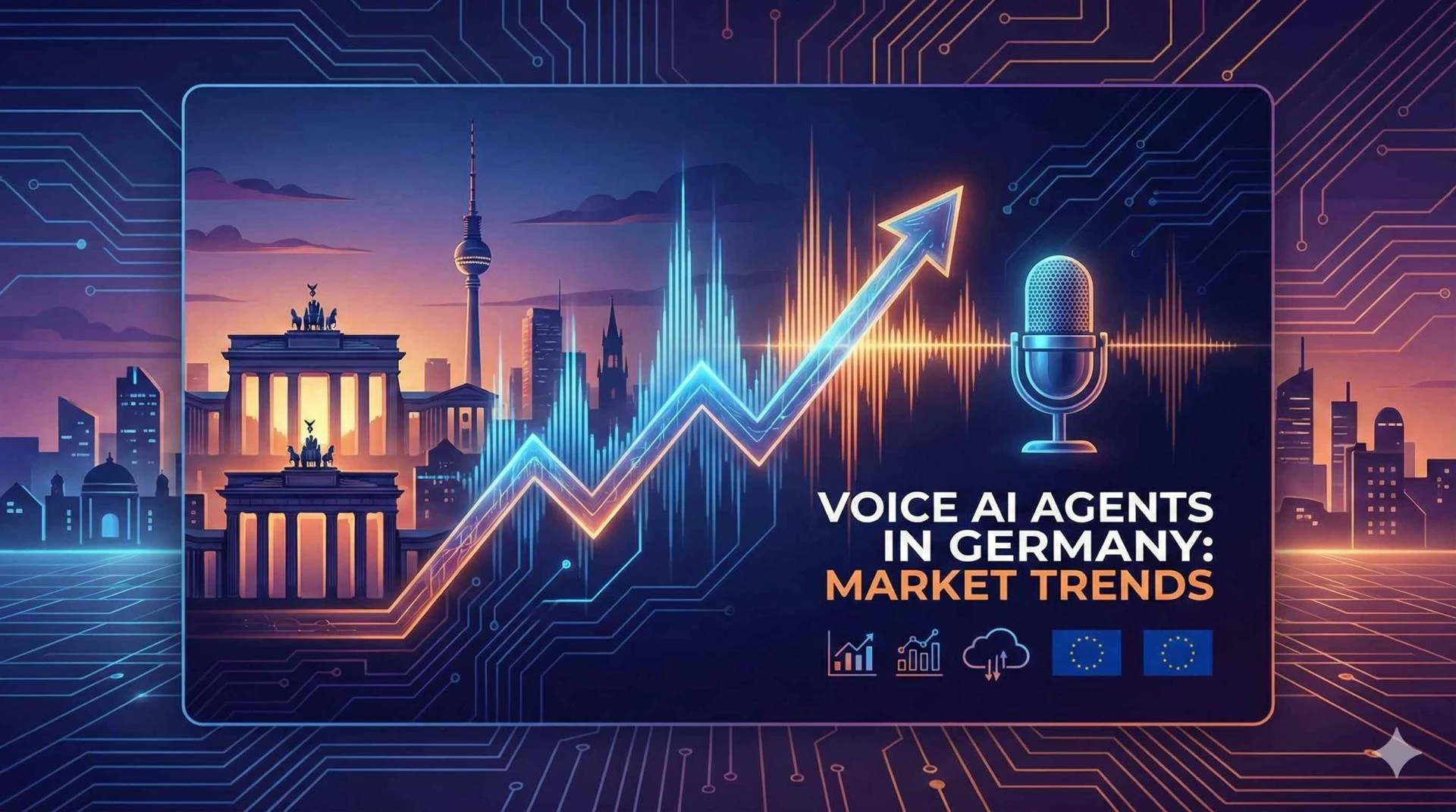

Germany has long been known for its strong industrial base, engineering excellence, and structured business processes. In recent years, the country has also emerged as a major adopter of advanced digital technologies. One area seeing rapid growth is Voice AI Agents in Germany, especially across enterprise customer service, finance, healthcare, and telecom sectors.
German enterprises are increasingly moving away from traditional call centers and rigid IVR systems toward intelligent voice automation. Voice AI agents are helping organizations improve efficiency, reduce operational costs, and meet rising customer expectations—while staying compliant with strict data protection regulations.
This blog explores the key market trends shaping the adoption of voice AI agents in Germany and why enterprises are investing in this technology.
Why Voice AI Agents Are Gaining Momentum in Germany
Several factors are driving the adoption of voice AI agents in the German market.
High Focus on Operational Efficiency
German enterprises prioritize structured workflows and cost efficiency. Voice AI agents help automate repetitive voice interactions, reducing manual workload without compromising service quality.
Rising Customer Expectations
Customers in Germany expect fast, accurate, and professional support. Long wait times and confusing IVR menus are no longer acceptable. Voice AI agents provide instant, natural responses, improving overall customer experience.
Labor Challenges
Hiring and maintaining large call center teams is becoming increasingly expensive. Voice AI helps enterprises manage high call volumes with fewer human resources.
Strong Push for Digital Transformation
Germany’s push toward Industry 4.0 and enterprise digitalization has accelerated the adoption of AI-driven communication tools, including voice AI.
Industries Leading Voice AI Adoption in Germany
Banking and Financial Services
German banks and financial institutions are using voice AI agents to handle balance inquiries, transaction status, and customer verification securely and efficiently.
Healthcare
Hospitals and healthcare providers use voice AI for appointment scheduling, reminders, and patient support—reducing administrative pressure on staff.
Telecom
Telecom companies deploy voice AI agents to manage billing queries, service disruptions, and plan upgrades, especially during peak call periods.
E-commerce and Retail
Retailers use voice AI agents to automate order tracking, delivery updates, and return requests, improving customer satisfaction.
Public Services and Utilities
Voice AI helps manage citizen inquiries, service updates, and support requests at scale.
Key Market Trends for Voice AI Agents in Germany
Enterprise-First Adoption
Unlike some markets that focus on consumer voice assistants, Germany’s adoption is largely enterprise-driven. Businesses are investing in robust, scalable voice AI agents built for complex workflows.
Compliance and Data Privacy
GDPR compliance is a major factor in Germany. Enterprises prefer voice AI platforms that offer strong data security, transparent processing, and compliance-ready infrastructure.
Multilingual Capabilities
While German is the primary language, enterprises increasingly require multilingual voice AI agents to support international customers.
Integration With Enterprise Systems
Voice AI agents in Germany are expected to integrate seamlessly with CRM, ERP, and ticketing systems, enabling real automation rather than surface-level interactions.
Focus on Reliability and Accuracy
German enterprises value precision. Voice AI solutions must deliver high accuracy, consistent performance, and minimal error rates.
Voice AI Agents vs Traditional Call Centers in Germany
Traditional call centers rely heavily on human agents and scripted IVR systems. These approaches often struggle with scalability and cost efficiency.
Voice AI agents offer a modern alternative by allowing customers to speak naturally and get instant assistance. They reduce call handling time, improve first-call resolution, and lower operational costs—without sacrificing quality.
This shift is pushing enterprises toward the best enterprise voice AI solutions that can meet Germany’s high standards.
How Voice AI Supports Human Agents
Voice AI agents are not designed to replace human teams. Instead, they work alongside them by handling repetitive and high-volume tasks.
Human agents can then focus on:
- Complex problem-solving
- Sensitive customer issues
- High-value interactions
This balanced approach improves productivity and job satisfaction.
The Future of Voice AI Agents in Germany
The German voice AI market is expected to grow steadily over the next few years. Future developments may include:
- Emotion-aware conversations
- More natural and localized German speech models
- Advanced analytics and reporting
- Deeper personalization
- Broader adoption across regulated industries
As enterprises continue to modernize, voice AI agents will become a core part of customer communication strategies in Germany.
Final Thoughts
The adoption of Voice AI Agents in Germany reflects a broader shift toward intelligent, scalable, and compliant enterprise communication. From banking and healthcare to telecom and retail, organizations are leveraging voice AI to improve efficiency and customer experience.
As demand grows, enterprises will increasingly look toward the best enterprise voice AI solutions to stay competitive in a rapidly evolving digital landscape.
Voice AI is no longer a future concept in Germany—it’s becoming a practical standard for enterprise communication.
























Sign in to leave a comment.