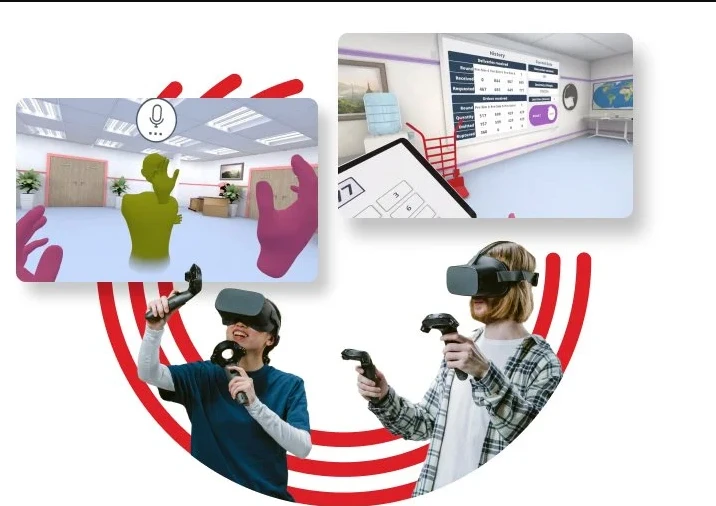

In today’s fast-paced corporate environment, traditional training methods often fall short in engaging employees or providing practical, hands-on experience. This is where VR simulations come into play, revolutionizing how organizations approach onboarding, safety, and skill development.
Immersive Onboarding Experiences
Onboarding new employees can be a complex and time-consuming process. VR simulations allow new hires to step into a virtual representation of their workplace, enabling them to explore processes, policies, and workflows in a controlled, interactive environment. This not only accelerates learning but also increases retention and confidence, giving employees the tools they need to succeed from day one.
Enhancing Safety Training
Safety is a top priority for any organization, and traditional methods such as manuals or classroom sessions often fail to provide realistic experiences. VR simulations offer a safe space to practice high-risk scenarios without real-world consequences. Employees can interact with machinery, navigate emergency procedures, and respond to potential hazards, all within a virtual environment. This hands-on practice significantly improves awareness, decision-making, and overall workplace safety.
Developing Soft Skills
While technical skills are important, soft skills like communication, leadership, and teamwork are equally critical. VR simulations provide realistic scenarios where employees can practice interactions, negotiations, and presentations. By immersing participants in lifelike situations, these simulations help improve emotional intelligence, problem-solving abilities, and collaborative skills, resulting in more effective and confident employees.
Measurable Business Results
One of the standout advantages of VR simulations is their ability to deliver measurable outcomes. Companies can track engagement, performance, and progress in real-time, allowing trainers to fine-tune programs for maximum impact. This data-driven approach ensures that training not only feels immersive but also translates into tangible improvements in productivity and efficiency.
Conclusion
VR simulations are no longer a futuristic concept—they are a practical, effective tool for modern corporate training. From onboarding and safety to soft skills development, immersive VR experiences provide employees with hands-on learning that is engaging, safe, and measurable. Businesses that adopt this technology gain a competitive edge by cultivating skilled, confident, and well-prepared teams.

























Sign in to leave a comment.