
Vulnerability Assessment and Penetration Testing Services: Complete Guide for Businesses
Introduction
In today's connected corporate environment, evolving digital threats pose serious financial and reputational risks to businesses worldwide. A single breach of data can easily damage years of customer trust and lead to large financial penalties. Therefore, modern companies must move from reacting to threats to building strong, proactive defense strategies. Investing in professional Vulnerability Assessment and Penetration Testing Services has become a key operational need to protect corporate infrastructure.
This guide explains how structured security evaluations help find technical weaknesses, improve network security, and maintain the strength of your critical digital systems against advanced attacks.
What is VAPT? Understanding the Core Concepts
To defend an enterprise properly, leadership needs to understand the different roles of automated scanning and active security testing. Although often treated as a single solution, vulnerability assessments and penetration testing serve separate but related purposes.
Vulnerability Assessment: The Automated Scan
A vulnerability assessment is a systematic, automated process that checks for security weaknesses in an information system. It reviews the entire system to find, classify, and rank potential security gaps. Think of it as a complete check-up for your digital systems. It creates a detailed list of known, unpatched issues. Regular scanning helps teams track their overall security status over time.
Penetration Testing: The Simulated Exploitation
On the other hand, penetration testing goes beyond scanning by simulating real attacks. Ethical hackers attempt to exploit security flaws as cybercriminals would. Using these controlled tests, specialists assess how much damage a real attacker could cause. This practical approach gives a clear picture of how deeply an unauthorized user could access your network.
Why Modern Enterprises Need Vulnerability Assessment and Penetration Testing Services
Reliance on standard firewalls and basic antivirus software is no longer enough to stop new types of attacks. Using expert Vulnerability Assessment and Penetration Testing Services ensures your defenses can handle complex, multi-layered digital threats.
Proactive Threat Mitigation
Waiting until a breach happens before improving security is an expensive mistake. Using a dedicated penetration testing guide allows IT teams to find hidden security weaknesses before attackers do. Proactive testing changes the approach from dealing with incidents to managing risks in a controlled way.
Ensuring Regulatory Compliance
Many industries must follow strict data privacy laws, including PCI-DSS, HIPAA, SOC 2, and GDPR. A thorough, independent network security audit provides the necessary proof that regulatory bodies require. Failing to show regular security testing can result in heavy fines, legal action, and loss of operating licenses.
Preserving Brand Reputation and Stakeholder Trust
Beyond legal issues, maintaining good security helps keep customer confidence. Clients are more likely to share sensitive data when they know the company takes security seriously. Regular testing shows investors, partners, and customers that information security is a top priority.
Key Phases of an Enterprise VAPT Lifecycle
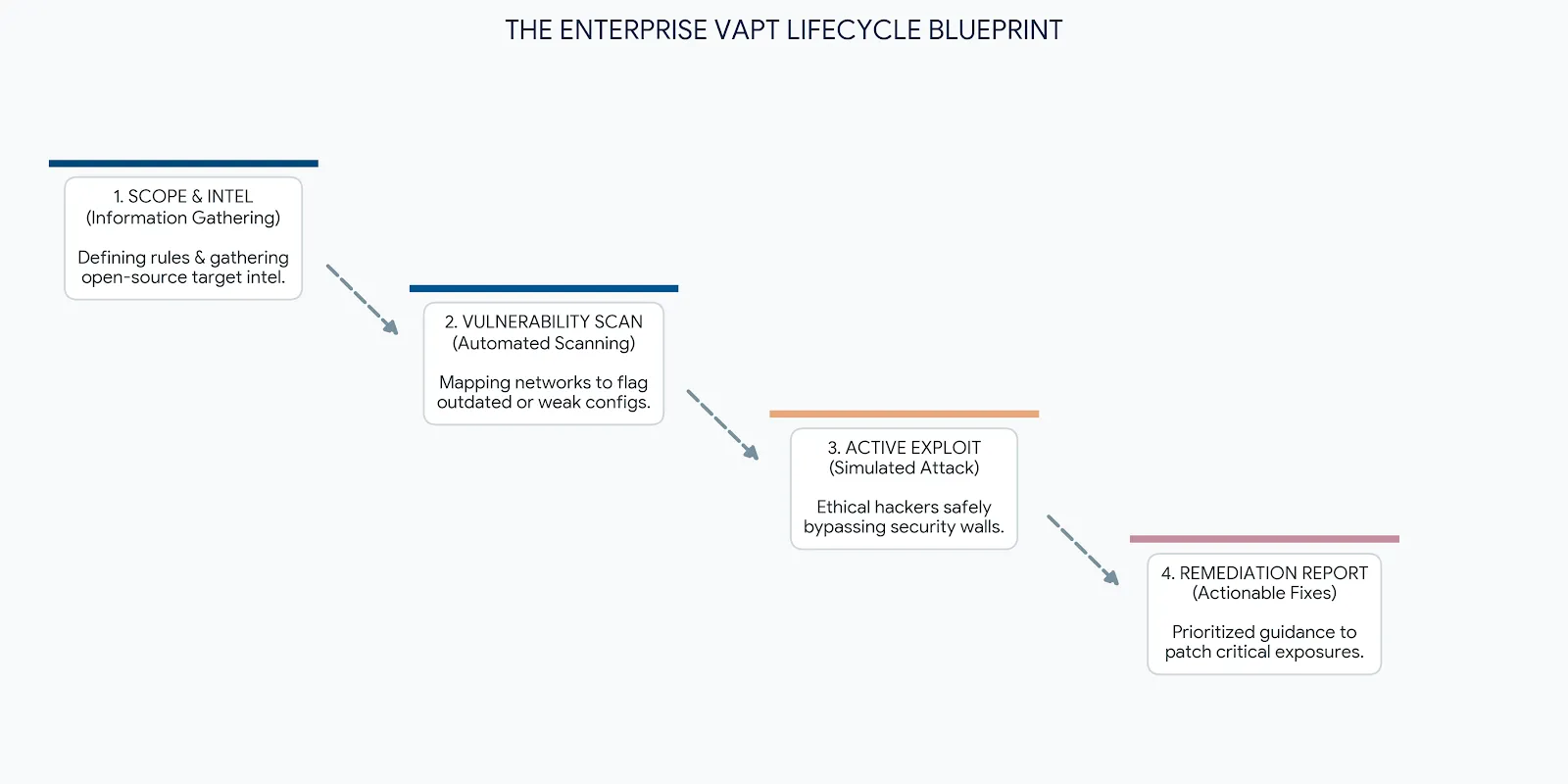
A structured security evaluation follows a detailed, multi-step process to ensure full visibility and minimal disruption to business operations.
1. Scope Definition and Information Gathering
Each successful project starts with detailed planning. Security experts work with internal team members to define the goals, limitations, and schedule for the evaluation. Testers then collect technical information about the target systems, networks, and web applications using open-source intelligence.
2. Vulnerability Scanning and Analysis
Next, engineers run advanced scanning tools to map the network and find active weaknesses. This phase identifies out-of-date software, weak settings, and improper access permissions.
3. Active Exploitation and Privilege Escalation
During this phase, ethical hackers try to bypass security measures. They manually use the flaws found earlier to gain higher access levels. This process helps determine the real impact of security issues and distinguishes between theoretical risks and real threats.
4. Reporting and Actionable Remediation
The final step involves creating a detailed report for executives. This document presents complex findings in a way that prioritizes necessary actions based on their impact on the business. Developers and administrators can then use this guide to quickly fix security issues.
Implementing Robust Vulnerability Management
A single evaluation only shows the current state of security. Because new software bugs appear daily, businesses must set up a continuous vulnerability management program.
Combining regular automated scans with periodic manual penetration testing ensures a strong, resilient defense. This mixed approach lets IT teams address new threats quickly while keeping an eye on changes in system configurations across cloud environments.
Choosing the Right Cyber Defense Partner
Finding the right security provider involves more than looking at basic certifications. Companies should choose a provider that understands their unique business environment.
When selecting a provider, look for teams with recognized industry qualifications like CEH (Certified Ethical Hacker) or OSCP (Offensive Security Certified Professional). Also, ensure that their team uses up-to-date frameworks, such as the CISA Cybersecurity Standards, to guarantee high-quality testing. Partnering with experienced professionals ensures your VAPT for businesses delivers clear, measurable benefits.
Conclusion
Protecting digital infrastructure requires continuous effort, smart planning, and expert guidance. Using comprehensive Vulnerability Assessment and Penetration Testing Services gives leadership the clear view needed to stop cyberattacks before they occur. Instead of waiting for a major breach to reveal network weaknesses, take control of your company's security now. Work with certified cybersecurity professionals to conduct a full cybersecurity assessment and keep your organization secure.
Secure Your Business Infrastructure Today
Do not wait for a security incident to uncover weaknesses in your network.
Frequently Asked Questions
What is the difference between vulnerability assessment and penetration testing?
Vulnerability assessment is an automated process that identifies and ranks security weaknesses in a system, essentially providing a comprehensive overview of potential risks. In contrast, penetration testing involves ethical hackers simulating real attacks to exploit these vulnerabilities and assess the actual impact an attacker could have.
Why do businesses need vulnerability assessment and penetration testing services?
Businesses need these services to proactively identify and mitigate security threats before they can be exploited by cybercriminals. Regular assessments help ensure compliance with data privacy regulations and maintain customer trust by demonstrating a commitment to robust security measures.
How often should a company conduct vulnerability assessments?
It is recommended that companies conduct vulnerability assessments regularly, ideally on a quarterly basis, to stay ahead of emerging threats. In addition, organizations should perform assessments after significant changes to their systems or following the discovery of new vulnerabilities.
What are the key phases of a vulnerability assessment and penetration testing lifecycle?
The key phases include scope definition and information gathering, vulnerability scanning and analysis, active exploitation and privilege escalation, and finally, reporting and actionable remediation. Each phase is crucial for providing a thorough evaluation of the organization's security posture.
How do I choose the right provider for vulnerability assessment and penetration testing?
When selecting a provider, look for industry-recognized qualifications like Certified Ethical Hacker (CEH) or Offensive Security Certified Professional (OSCP). Ensure they have experience in your specific business environment and use up-to-date cybersecurity frameworks for effective testing.
What are the consequences of not conducting regular vulnerability assessments?
Failing to conduct regular vulnerability assessments can lead to significant risks, including data breaches, financial penalties for non-compliance with regulations, and damage to brand reputation. Organizations may find themselves vulnerable to cyberattacks that could have been prevented with proactive measures.
Can vulnerability assessments and penetration testing help with regulatory compliance?
Yes, comprehensive vulnerability assessments and penetration testing can provide necessary documentation and proof that your organization is meeting data privacy regulations like PCI-DSS, HIPAA, and GDPR. Regular testing demonstrates due diligence in protecting sensitive information, which can help avoid legal repercussions.

















Sign in to leave a comment.