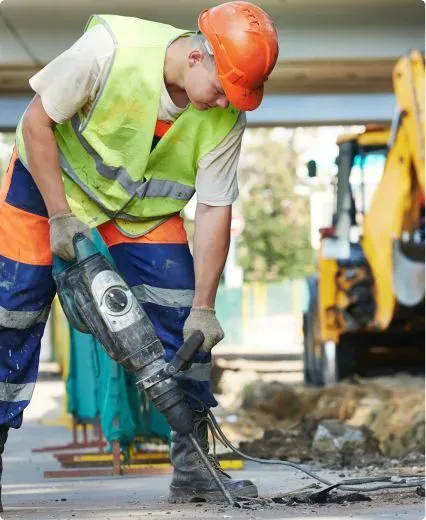

The construction, renovation, and demolition (CRD) sector is one of the largest contributors to the solid waste stream in Canada, generating approximately 4 million tonnes of waste annually. Historically, the industry followed a linear "take-make-waste" model, where buildings were deliberately destroyed to make room for new structures, and the resulting debris was hauled directly to landfills. However, a fundamental shift is occurring as the sector transitions toward a circular economy—a closed-loop model where products and materials are collected, reused, or remade into new resources. In this modern landscape, a professional demolition company is no longer just a provider of destruction services but a critical partner in resource recovery and environmental stewardship.
The Strategic Shift: From Demolition to Deconstruction
A hallmark of modern waste management is the growing preference for deconstruction over conventional demolition. While traditional demolition uses heavy machinery like cranes and grapples to destroy a structure quickly, deconstruction involves the selective dismantling of building components to maximize their reuse and recycling potential. Modern practices require a building to be assessed for specialty materials such as hardwood floors, architectural moulding, and structurally sound timbers before any work begins.
The case for deconstruction is bolstered by significant social and economic incentives. For example, deconstruction generates approximately six jobs for every one job created by traditional demolition, providing a massive boost to local employment. Furthermore, demolition specialists can divert up to 50 tons of waste and salvage 10 tonnes of lumber from a single large-scale project. By choosing theconstruction, a demolition company helps keep high-quality lumber out of landfills and reduces the need for freshly cut wood, thereby decreasing deforestation and the embodied carbon associated with new materials.
The Regulatory and Policy Framework
To drive these sustainable practices, federal, provincial, and municipal governments have implemented various policy levers. In Ontario, Regulation 102/94 requires detailed on-site waste audits and the implementation of waste reduction workplans for large-scale projects. Complementary to this, Regulation 103/94 mandates soursource separation programs, ensuring that reusable and recyclable materials are collected and handled appropriately rather than being commingled into a single waste stream.
Municipalities are also using financial incentives and penalties to influence behaviour. Many jurisdictions have implemented landfill bans on readily recyclable materials like clean wood, concrete, and cardboard. Furthermore, differential tipping fees are often applied at waste facilities; for instance, source-separated loads of concrete or metal may be accepted at a lower cost—or even for free—compared to mixed waste, which incurs much higher disposal charges. These policies ensure that waste follows the highest-value pathway for recovery rather than the lowest-cost pathway for disposal.
On-Site Waste Management Best Practices
Successful waste management in modern demolition depends on rigorous planning and coordination. A central best practice is the creation of a waste reduction workflow during the initial phase of a project to minimize the volume of materials destined for disposal. On the job site, utilizing multiple, clearly labelled bins allows for the efficient source separation of materials such as metal, wood, and drywall.
Establishing a designated "reuse area" on-site can also facilitate the immediate recovery of lumber, bricks, and forming materials. To protect the value of these recovered assets, materials must be stored properly; for example, lumber should be kept off the ground and covered with waterproof tarps to prevent damage from weathering and rot. By maintaining accurate inventory records and ordering materials only as needed for new builds, a demolition company or contractor can reduce waste allowances from the traditional 10% to a more responsible 5% or less.
Recycling Pathways for Key Materials
Modern demolition focuses on several high-volume material streams that offer significant recycling potential:
- Concrete and Masonry: Concrete represents the largest portion of CRD waste by weight, accounting for over 41% of total waste. It is relatively simple to divert, as it can be crushed and processed into recycled concrete aggregate for use in road bases, sidewalks, and foundation sub-bases.
- Metal: Both ferrous and non-ferrous metals are considered high-value materials due to their established resale markets. Metals like steel, copper, and aluminum can be remade into new products indefinite, and many urban cities accept scrap metal free of charge at recycling centers to encourage diversion.
- Wood: Wood accounts for roughly 14% of the waste stream and is categorized as "clean" (untreated) or "dirty" (painted or chemically treated). Clean wood is easily recycled into particleboard, livestock bedding, or mulch, whereas treated wood often requires safe disposal due to toxic preservatives like arsenic.
- Drywall: While drywall is complex to divert because it is easily contaminated with paint or wallpaper, clean gypsum scraps can be recycled back into new drywall products or used as a soil amendment in agriculture.
Economic and Environmental Impacts
The transition to advanced recycling practices offers compelling environmental benefits, most notably in the reduction of greenhouse gas (GHG) emissions. By recycling materials like steel and wood, the industry avoids the methane emissions caused by decaying waste in landfills and the significant energy consumption required for raw material extraction and processing. Nationally, it is estimated that achieving a 90% waste diversion rate by 2030 could add over $457 million to Canada's GDP and create more than 3,300 new jobs in the recovery sector.
In conclusion, waste management and recycling in modern demolition are essential components of a sustainable construction sector. Through the adoption of deconstruction standards, source separation, and adherence to evolving regulations, the industry can divert approximately 75% of materials away from landfills. As communities move toward a circular construction model, the role of the specialized demolition company will remain pivotal in transforming building "waste" into valuable secondary resources.






























Sign in to leave a comment.