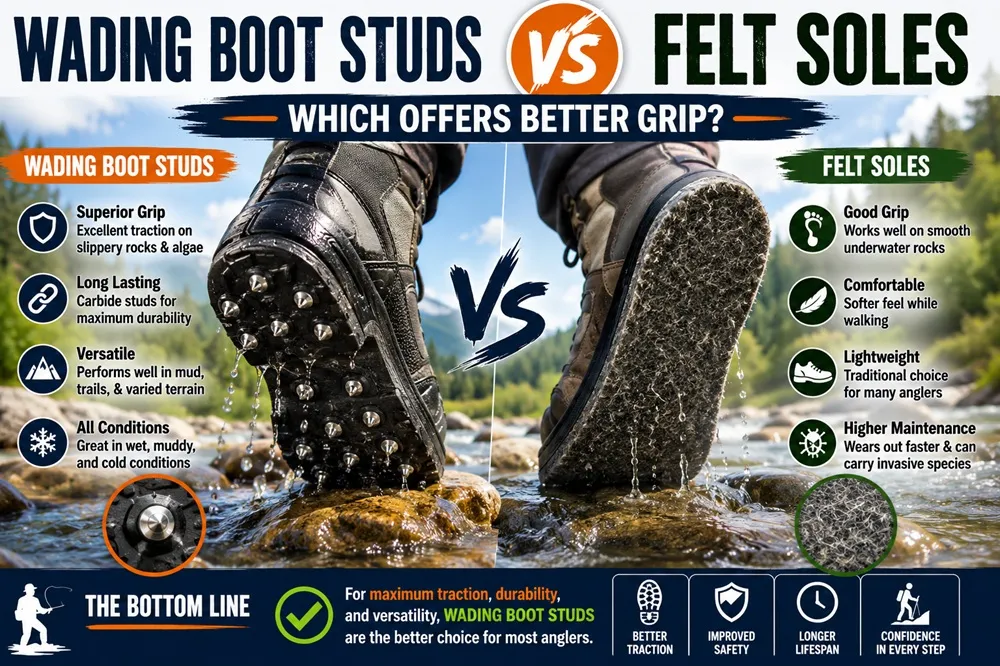

When fishing in rivers and streams, footing matters. Slippery rocks, algae covered surfaces, and uneven riverbeds can quickly lead to falls and injuries. Many anglers choose either wading boot studs or felt soles to improve traction. Both options help with grip, but they perform differently depending on water conditions, terrain, and maintenance needs.
This guide explains the differences between wading boot studs and felt soles, their advantages, limitations, and which option offers better grip for different fishing environments.
Why Traction Matters When Wading?
According to the U.S. Centers for Disease Control and Prevention, falls are one of the leading causes of injuries in outdoor recreational activities. Good traction helps anglers maintain balance and move safely through streams and rivers.
Poor footing can lead to:
- Slips on wet rocks
- Loss of balance in strong currents
- Equipment damage
- Serious injuries
Choosing the right traction system can improve safety and confidence while fishing.
What Are Wading Boot Studs?
Wading boot studs are metal traction devices installed into the sole of a wading boot. Most premium boot studs are made from carbide because carbide resists wear and maintains grip over time.
These studs dig into slippery surfaces and create multiple contact points between the boot and the riverbed.
Benefits of Wading Boot Studs
- Excellent grip on algae covered rocks
- Strong traction on uneven riverbeds
- Long lifespan, especially carbide studs
- Effective in wet and muddy conditions
- Suitable for various terrains
Limitations
- Can be noisy on hard surfaces
- May wear indoor flooring
- Require proper installation
What Are Felt Soles?
Felt soles use thick layers of felt material attached to the bottom of wading boots. The soft fibers conform to wet surfaces and create friction against rocks.
For decades, felt soles have been a popular choice among fly anglers.
Benefits of Felt Soles
- Good grip on smooth underwater rocks
- Comfortable while walking
- Lightweight design
- Easy to use without modifications
Limitations
- Reduced traction on muddy banks
- Wear faster than carbide studs
- Can collect invasive aquatic organisms
- Less effective on snow and ice
Wading Boot Studs vs Felt Soles: Side by Side Comparison
Wading Boot Studs
- Provide excellent grip on slippery rocks, making them ideal for algae covered and wet surfaces.
- Deliver excellent performance in muddy conditions where extra traction is needed.
- Offer very high durability, especially when made from carbide materials.
- Perform well on hiking trails and mixed terrain.
- Require low maintenance compared to other traction options.
- Have a low risk of spreading invasive species between waterways.
- Provide excellent traction in winter conditions, including snow and ice.
- Typically last for several fishing seasons with proper care.
Felt Soles
- Provide good grip on slippery rocks, particularly on smooth underwater surfaces.
- Deliver poor performance in muddy terrain, where mud can reduce traction.
- Offer moderate durability and generally wear faster than studded options.
- Perform poorly on hiking trails and dry terrain.
- Require moderate maintenance to keep them clean and effective.
- Carry a higher risk of transporting invasive species between waterways.
- Have limited effectiveness in winter conditions such as snow and ice.
- Often last for one season before replacement is needed, depending on usage.
Which Offers Better Grip?
On Wet Rocks
Felt soles perform well on smooth underwater rocks. However, studies and field testing from leading fishing gear manufacturers show that carbide boot studs often outperform felt when algae, moss, or loose gravel are present.
In Fast Moving Water
Studs provide extra bite into the riverbed. This additional grip helps anglers maintain stability in stronger currents.
On Muddy Banks
Felt soles tend to clog with mud and lose traction. Studded boots penetrate the surface and maintain better contact.
On Hiking Trails
Many anglers hike to remote fishing locations. Wading boot studs provide more reliable traction on dirt, gravel, and mixed terrain than felt soles.
Why Many Anglers Choose Studded Wading Boots?
Modern anglers often encounter changing terrain throughout the day. They may walk on:
- River rocks
- Muddy banks
- Gravel bars
- Forest trails
- Boat ramps
A single traction solution that works across all these surfaces is often the preferred choice.
This is one reason why many experienced fly fishers choose wading boot studs instead of relying solely on felt soles.
Are Felt Soles Becoming Less Popular?
Several states and regions have raised concerns about felt soles because they can carry invasive aquatic species between waterways.
The U.S. Fish and Wildlife Service recommends cleaning and drying fishing gear thoroughly to reduce the spread of invasive organisms.
Because of these concerns, many anglers are switching to rubber sole boots combined with boot studs for added traction.
How to Get the Best Performance from Wading Boot Studs?
To maximize grip and durability:
Install Studs Correctly
Place studs evenly across the sole. Focus on high contact areas such as the heel and forefoot.
Inspect Regularly
Check for loose or worn studs before each fishing trip.
Clean After Use
Remove mud, sand, and debris after every outing.
Replace Worn Studs
Even carbide studs eventually wear down. Replacing them helps maintain consistent traction.
Which Option Should You Choose?
Choose wading boot studs if you:
- Fish in different environments
- Need maximum traction
- Frequently walk on trails
- Fish during cold weather
- Want a longer lasting solution
Choose felt soles if you:
- Primarily fish on smooth rocky riverbeds
- Rarely hike long distances
- Prefer softer underfoot comfort
For most anglers, a rubber sole boot equipped with high quality boot studs offers the best combination of grip, durability, and versatility.
Frequently Asked Questions
Do wading boot studs damage rocks?
No. Studs may leave minor marks on some surfaces, but they generally do not cause significant environmental damage when used responsibly.
Are boot studs better than felt soles?
In many fishing conditions, yes. Boot studs provide better traction on slippery rocks, mud, gravel, and mixed terrain.
How long do carbide boot studs last?
Quality carbide studs can last several seasons depending on usage and terrain.
Can I add studs to existing wading boots?
Yes. Many anglers install aftermarket wading boot studs on rubber sole boots.
Are felt soles banned?
Some regions have restrictions on felt sole boots due to concerns about invasive species. Always check local regulations before fishing.
Final Thoughts
Both felt soles and wading boot studs can improve safety while fishing. Felt soles perform well on certain underwater surfaces, but they have limitations in mud, on trails, and in changing conditions. Studded boots provide stronger traction, longer durability, and better versatility for modern anglers.
If you want dependable grip across a wide range of fishing environments, high quality carbide boot studs are often the better investment. Carbide Traction Products offers durable traction solutions designed to help anglers stay stable and confident on slippery terrain throughout the fishing season.
Original Source:- https://shorturl.at/1VJwv

























Sign in to leave a comment.