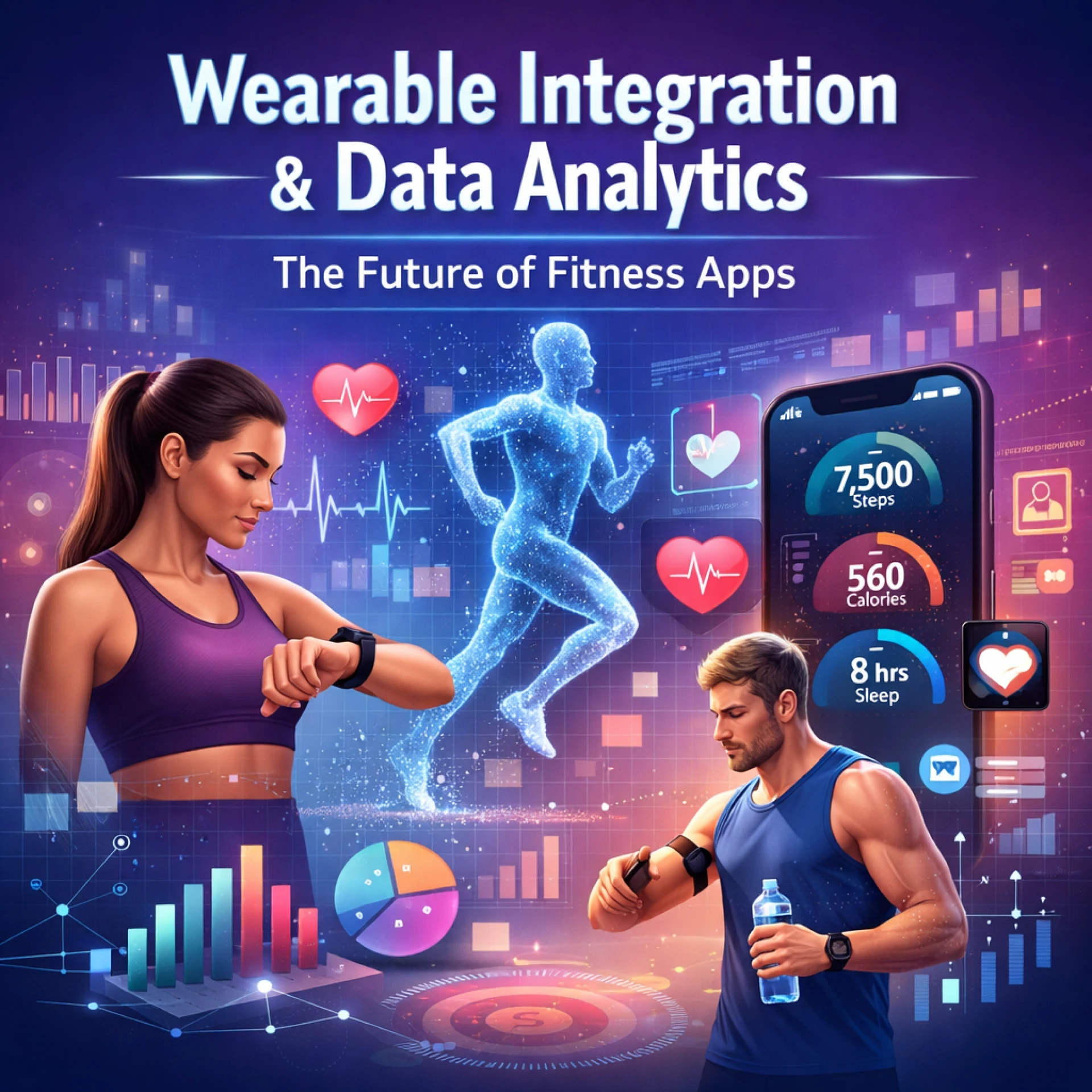

The fitness industry is undergoing a digital transformation driven by smart wearables, real-time tracking, and intelligent data processing. From smartwatches to heart rate monitors and smart rings, wearable devices are redefining how users track, measure, and improve their health. Combined with advanced analytics, these technologies are shaping the Future Of Fitness Apps in powerful ways.
As we move into the next phase of innovation, wearable integration and data-driven insights are no longer optional they are becoming essential pillars of modern fitness platforms.
The Rise of Wearables in the Fitness Ecosystem
Wearables collect real-time data such as:
- Heart rate
- Calories burned
- Step count
- Sleep cycles
- Oxygen levels
- Workout intensity
This continuous stream of data allows fitness apps to provide highly personalized experiences. Instead of relying on manual input, apps can automatically sync with devices and offer accurate performance tracking.
The integration of wearables represents one of the most important Fitness App Trends shaping the industry today.
Why Wearable Integration Is Transforming Fitness Apps
1. Real-Time Performance Monitoring
Wearables enable users to track workouts instantly. Whether running outdoors or lifting weights at the gym, users receive immediate feedback on their performance.
Real-time monitoring improves accountability and helps users adjust their training intensity to achieve better results.
2. Hyper-Personalization
The more data collected, the more accurate the recommendations. With wearable integration, apps can analyze historical patterns and tailor fitness plans accordingly.
Personalized dashboards, AI-driven workout suggestions, and adaptive goals represent some of the top fitness app trends in modern development.
3. Continuous Health Tracking
Unlike traditional fitness logs, wearable-connected apps provide 24/7 monitoring. Sleep tracking, heart rate variability, and stress levels can now be analyzed alongside workout data.
This holistic approach positions wearable-enabled apps among the best fitness app trends for long-term health management.
The Power of Data Analytics in Fitness Applications
While wearables collect data, analytics transforms it into actionable insights. Without data processing, raw numbers provide limited value.
Advanced analytics systems can:
- Identify performance plateaus
- Suggest recovery periods
- Predict injury risks
- Optimize calorie intake
- Detect irregular health patterns
This intelligence-driven approach defines the Future Of Fitness Apps, where technology becomes a virtual personal trainer.
Key Technologies Driving the Future
Artificial Intelligence (AI)
AI algorithms analyze user behavior and adjust fitness plans dynamically. For example, if a user consistently misses evening workouts, the system may recommend a morning routine.
Machine Learning
Machine learning models detect trends in user performance over time and continuously improve recommendations.
Cloud-Based Data Infrastructure
Secure cloud storage enables seamless synchronization across devices while maintaining data privacy.
IoT Connectivity
Wearables are part of the broader Internet of Things (IoT) ecosystem. IoT ensures smooth communication between devices and apps.
A professional fitness application development company integrates these technologies to build scalable, secure, and future-ready solutions.
Business Impact of Wearable Integration
For fitness businesses and startups, wearable integration offers multiple advantages:
Increased User Engagement
Automatic syncing reduces friction. Users are more likely to stay active when progress tracking is effortless.
Higher Retention Rates
Data-driven insights create measurable results. When users see improvement, they remain loyal to the app.
Premium Monetization Opportunities
Advanced analytics features, personalized coaching, and performance reports can be offered under subscription models.
These monetization strategies align with emerging Fitness App Trends and create sustainable revenue streams.
Wearable App Development: Key Considerations
Developing wearable-enabled fitness apps requires strategic planning.
Device Compatibility
The app must support multiple wearable brands and operating systems to maximize reach.
Data Security & Compliance
Health data is sensitive. Developers must implement encryption protocols and comply with data protection regulations.
Seamless User Experience
Data synchronization should be automatic and smooth, without connectivity disruptions.
Scalable Architecture
As user bases grow, backend systems must handle large volumes of real-time data.
Businesses partnering with an experienced fitness app development company ensure these technical challenges are addressed effectively.
Emerging Fitness App Trends for the Coming Years
As wearable technology evolves, several top fitness app trends are shaping the industry:
1. Predictive Health Analytics
Apps will increasingly predict health risks before they occur using biometric data.
2. Integrated Mental Wellness Tracking
Wearables can monitor stress and sleep, integrating mental health metrics into fitness plans.
3. Smart Recovery Systems
Recovery analytics based on heart rate variability and muscle fatigue will optimize workout intensity.
4. Personalized Nutrition Integration
Data from workouts can sync with meal plans for calorie optimization.
These innovations demonstrate how wearable integration defines the Future Of Fitness Apps beyond simple workout tracking.
Role of Development Companies in Driving Innovation
Building advanced fitness solutions requires expertise in mobile app development, wearable connectivity, and data engineering.
- Cross-platform compatibility
- Secure API integrations
- Advanced analytics dashboards
- Performance optimization
Similarly, a skilled fitness app development services ensures that wearable features align with business objectives while delivering high-quality user experiences.
Challenges in Wearable Integration
While the benefits are significant, certain challenges must be addressed:
- Device fragmentation
- Data synchronization delays
- Battery consumption optimization
- Complex data interpretation
- Regulatory compliance
Strategic planning and collaboration with a reliable health and fitness app development company minimize these risks.
The Road Ahead: Future of Wearable-Driven Fitness Apps
The next few years promise even greater integration of wearables and mobile apps. Smart rings, advanced biometric wearables, and artificial intelligence-powered health assistants are poised to revolutionize the way people manage their fitness.
Fitness apps are no longer just simple fitness trackers but rather intelligent health systems that provide predictive recommendations, coaching, and health alerts.
Companies that adopt wearables app development technology are likely to be at the forefront of the digital health revolution.
Conclusion
The pace at which wearable technology integration and data analytics are transforming the fitness industry has never been faster. By converting raw data into useful information, apps are able to provide users with unique, engaging, and effective experiences.
In the constantly evolving field of Fitness App Trends, wearable technology is no longer a luxury, but rather a necessity in the development of the Future Of Fitness Apps.
Working with a seasoned fitness app development agency ensures that wearable technology integration is done with precision, accuracy, and scalability in mind. By engaging in strategic companies are able to tap into new revenue streams.




























Sign in to leave a comment.