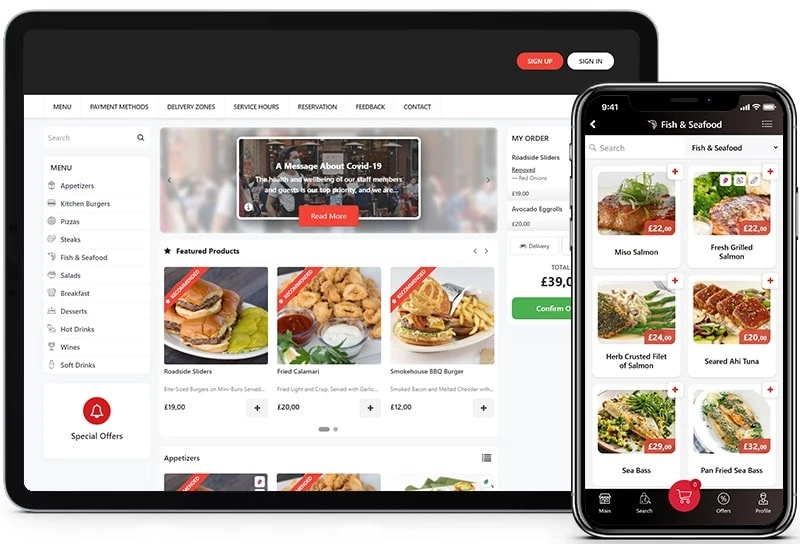

In today's digital age, technology plays a pivotal role in transforming various industries, and the restaurant sector is no exception. With the increasing demand for convenience and efficiency, restaurants are turning to web apps to streamline their ordering processes. In this article, we'll explore the significance of web apps for restaurant ordering, their benefits, key features, operational improvements, challenges, case studies, best practices, and future trends.
Introduction to Web Apps for Restaurant Ordering
Before delving into the specifics, let's first understand what a web app is and why it's becoming indispensable in the restaurant industry. A web app, short for web application, is a software application that runs on web servers and is accessed through a web browser over a network, typically the internet. In the context of restaurant ordering, a web app allows customers to browse menus, place orders, and make payments online, eliminating the need for phone calls or physical visits to the restaurant.
Benefits of Using a Web App for Restaurant Ordering
The adoption of web apps for restaurant ordering offers numerous benefits for both customers and restaurant owners. For customers, the primary advantage is convenience. They can place orders from the comfort of their homes or offices, at any time of the day, without having to wait in long queues or deal with busy phone lines. Additionally, web apps provide a seamless ordering experience, allowing customers to customize their orders according to their preferences and dietary restrictions.
For restaurant owners, web apps contribute to increased efficiency in order processing and management. By automating the ordering process, restaurants can minimize errors and reduce the time taken to fulfill orders. Moreover, web apps often integrate with point-of-sale (POS) systems and kitchen management software, enabling real-time order tracking and inventory management. This not only improves operational efficiency but also enhances the overall customer experience.
Key Features of a Web App for Restaurant Ordering
To deliver a superior ordering experience, a web app for restaurant ordering should incorporate several key features. Firstly, it should have a user-friendly interface that allows customers to navigate menus, select items, and place orders with ease. Additionally, the app should offer menu customization options, such as adding or removing ingredients and selecting portion sizes.
Security is another critical aspect of web apps for restaurant ordering, especially when it comes to handling sensitive information such as payment details. Secure payment gateways and encryption protocols ensure that customers' data is protected from unauthorized access or cyber attacks. Lastly, order tracking functionality provides customers with real-time updates on the status of their orders, including estimated delivery times and order confirmation notifications.
How Web Apps Improve Restaurant Operations
In addition to enhancing the customer experience, web apps for restaurant ordering also bring significant benefits to the operational side of the business. By streamlining the order management process, restaurants can eliminate manual errors and reduce the time and resources required to fulfill orders. With orders being processed electronically, there is less room for miscommunication or mistakes commonly associated with phone orders.
Furthermore, web apps provide valuable insights into customer preferences and ordering patterns, enabling restaurants to optimize their menus and promotional strategies accordingly. By analyzing data on popular items, peak ordering times, and customer feedback, restaurants can make informed decisions to improve their offerings and drive customer satisfaction.
Challenges in Implementing Web Apps for Restaurant Ordering
Despite the numerous advantages, implementing web apps for restaurant ordering comes with its own set of challenges. One of the primary challenges is the initial setup costs involved in developing and deploying a custom web app. Small or independent restaurants may find it financially prohibitive to invest in technology infrastructure and software development resources.
Another challenge is training staff to effectively use the web app and integrate it into their daily operations. Restaurant employees, particularly those who are not tech-savvy, may require training and support to familiarize themselves with the new system and its features. Additionally, technical issues such as software bugs, compatibility issues, and server downtime can disrupt operations and affect the user experience.
Case Studies: Successful Implementation of Web Apps in Restaurants
To illustrate the practical benefits of web apps for restaurant ordering, let's look at two real-world examples of successful implementation:
Example 1: XYZ Restaurant
XYZ Restaurant, a popular chain with multiple locations, implemented a custom web app for online ordering. By allowing customers to place orders through their website or mobile app, XYZ Restaurant saw a significant increase in order volume and customer satisfaction. The app's user-friendly interface and seamless payment process contributed to its success, attracting new customers and retaining existing ones.
Example 2: ABC Cafe
ABC Cafe, a small neighborhood cafe, partnered with a third-party web app platform to offer online ordering to its customers. Despite its limited resources, ABC Cafe was able to leverage the web app to expand its customer base and compete with larger chains. The app's integration with the cafe's POS system and order management software improved efficiency and accuracy, enabling ABC Cafe to fulfill orders quickly and efficiently.
Best Practices for Developing a Web App for Restaurant Ordering
When developing a web app for restaurant ordering, it's essential to adhere to best practices to ensure optimal performance and user satisfaction. Firstly, prioritize user experience by designing an intuitive interface and seamless navigation flow. Make it easy for customers to browse menus, customize orders, and complete transactions without encountering any obstacles.
Secondly, ensure compatibility with various devices and screen sizes, including smartphones, tablets, and desktop computers. A responsive design will provide a consistent experience across different platforms, allowing customers to access the web app from any device of their choice.
Lastly, commit to regular updates and maintenance to address any bugs or issues that may arise post-launch. Solicit feedback from customers and incorporate their suggestions for improvement to continuously enhance the app's functionality and user experience.
Future Trends in Web Apps for Restaurant Ordering
Looking ahead, the future of web apps for restaurant ordering is poised for further innovation and integration with emerging technologies. One of the most notable trends is the integration of AI and machine learning to personalize the ordering experience for customers. By analyzing past order history and preferences, web apps can offer personalized recommendations and promotions tailored to individual tastes.
Voice-activated ordering systems are also gaining traction, allowing customers to place orders using voice commands through smart devices such as Amazon Alexa or Google Home. This hands-free approach streamlines the ordering process further, particularly in busy or high-traffic environments where typing may be inconvenient.
Conclusion
In conclusion, web apps for restaurant ordering represent a transformative solution for enhancing the customer experience and improving operational efficiency in the restaurant industry. By leveraging the power of technology, restaurants can streamline their ordering processes, reduce errors, and gain valuable insights into customer preferences. While challenges such as initial setup costs and technical issues may arise, the benefits far outweigh the drawbacks, making web apps an essential tool for modern restaurants.
FAQs
How much does it cost to develop a custom web app for restaurant ordering?
The cost of developing a custom web app for restaurant ordering varies depending on factors such as features, complexity, and development time. On average, it can range from a few thousand dollars to tens of thousands of dollars.
Are third-party web app platforms suitable for small restaurants?
Yes, third-party web app platforms can be a cost-effective solution for small restaurants that may not have the resources to develop a custom app from scratch. These platforms offer pre-built templates and functionalities that can be customized to suit the restaurant's needs.
How can restaurants ensure the security of customer data in web apps?
Restaurants can ensure the security of customer data in web apps by implementing robust encryption protocols, using secure payment gateways, and regularly updating their software to patch any vulnerabilities. It's also essential to comply with data protection regulations such as GDPR.
What are some tips for promoting a web app for restaurant ordering?
Restaurants can promote their web apps through various channels, including social media, email newsletters, in-store signage, and collaborations with food bloggers or influencers. Offering exclusive discounts or promotions for online orders can also incentivize customers to download and use the app.
How can restaurants measure the success of their web app for ordering?
Restaurants can measure the success of their web app by tracking metrics such as order volume, customer satisfaction ratings, average order value, and repeat business. Analyzing these metrics over time can provide insights into the app's performance and areas for improvement.




















Sign in to leave a comment.