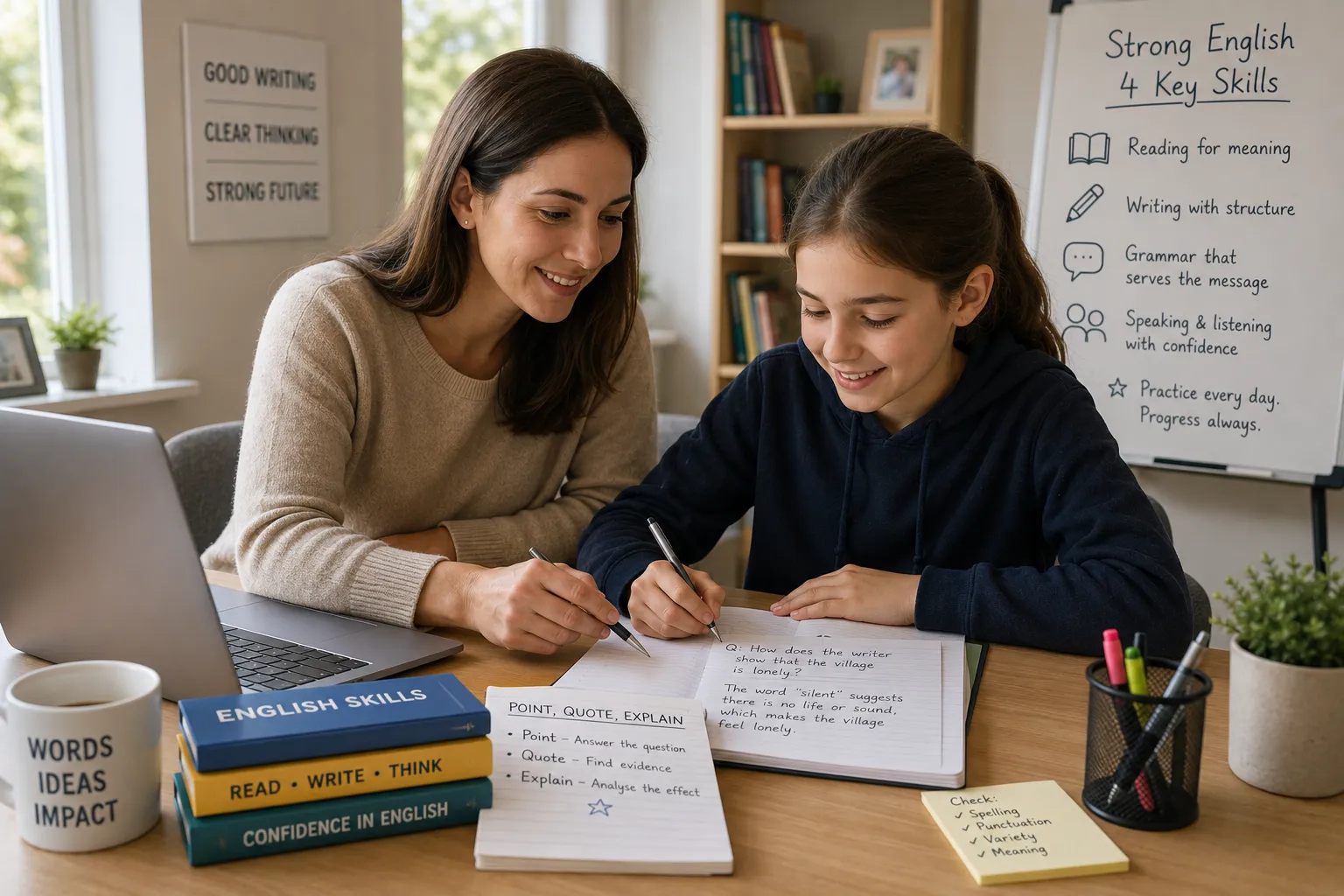

English looks simple from the outside. A child can read aloud, spell most words, and hand in homework. Then a longer essay or a tricky comprehension passage arrives, and the gaps show. This is where a 1 to 1 english tutor makes a real difference, because the help is shaped around one child, not a class of thirty. If you are a parent in the UK trying to decide whether private English help is worth it, here is a clear look at what it changes and how to make it count.
Why one to one beats a busy classroom
A class teacher has to move at the speed of the group. A quiet child who is unsure can hide at the back and never get asked. A confident child who is already ahead can get bored. Neither gets exactly what they need.
A 1 to 1 english tutor flips this. Every minute is about your child. The tutor can stop on the exact sentence that confused them, ask why, and wait for a real answer. That pause, the one a busy classroom rarely allows, is where understanding forms.
The four skills that matter most
Strong English rests on four skills. A good tutor checks all of them, not just the one that shows up in marks.
- Reading for meaning. Not just decoding words, but understanding what the writer means and why.
- Writing with structure. A clear opening, ideas in order, and a tidy close.
- Grammar that serves the message. Tenses, punctuation, and sentence types used on purpose.
- Speaking and listening. The confidence to explain an idea out loud, which feeds better writing.
When a child struggles, the cause is usually one weak skill dragging the others down. The tutor's first job is to find which one.
A short example of how a session works
Imagine a child who writes flat, one line answers in comprehension. A tutor does not just say "write more." They show the method.
Take the question, "How does the writer show that the village is lonely?"
The tutor walks through it:
- Find the word in the question that tells you the focus. Here it is "lonely."
- Hunt the passage for words that create that feeling, like "empty," "silent," or "no one."
- Quote one, then explain the effect. "The word silent suggests there is no life or sound, which makes the village feel lonely."
The child now has a repeatable pattern: point, quote, explain. With practice, this becomes automatic, and marks rise because the answers finally do what the question asks.
How a tutor builds writing confidence
Many children freeze at a blank page. A tutor breaks the wall down with planning. Before any essay, they spend five minutes mapping ideas, often on paper. Three or four bullet points become three or four paragraphs. The writing feels less like invention and more like joining the dots.
The tutor also gives feedback that a child can act on. Not "be more descriptive," which means nothing to a ten year old, but "add one sense detail here. What could you hear?" Specific feedback changes the next sentence. Vague feedback changes nothing.
How to tell it is working
Look past the grades for the early signs:
- Your child explains a story or article in their own words.
- Essays have a clear beginning, middle, and end.
- They reread their own work and catch small errors.
- They argue a point and back it with a reason or example.
These habits show the thinking has changed, which is what lasting progress looks like.
Common mistakes to avoid
- Treating English as only spelling and grammar. Mechanics matter, but meaning and structure carry the marks.
- Correcting every error at once. Too much red ink discourages. A good tutor fixes one or two things at a time.
- Skipping reading. Children who read for pleasure write better. A tutor should encourage reading, not just drill exercises.
- Measuring progress weekly. Writing improves over months, not days. Patience matters.
How often to schedule sessions
For most primary and secondary students, one session a week is enough to build steady progress, as long as the child reads and writes a little in between. Around exam time, two short sessions can help with timing and confidence. The aim is steady habit, not last minute cramming.
What to look for in a tutor
Choose someone who:
- Listens more than they talk, and asks your child to explain their thinking.
- Gives clear, small steps your child can act on.
- Links lessons to what your child is reading at school.
- Keeps you updated with short, honest notes on progress.
A warm, patient tutor who explains clearly will do more for your child than a strict one who only marks.
Quick recap
- A 1 to 1 english tutor shapes every minute around your child's exact gaps.
- Strong English needs reading, writing, grammar, and speaking, not just spelling.
- Methods like point, quote, explain turn flat answers into full ones.
- Specific feedback changes the next sentence. Vague feedback does not.
- Judge progress over months, by how your child thinks and writes.
FAQs
When should I get an English tutor for my child? As soon as you notice a steady struggle with reading or writing, or before a key exam year. Early help prevents small gaps from widening.
Can a tutor help a child who simply dislikes reading? Yes. A good tutor finds books and topics the child enjoys, which often turns reluctance into interest over time.
How long until writing improves? Most children show clearer structure within a few weeks. Richer vocabulary and stronger analysis build over a few months of steady work.
Is online English tutoring as effective as in person? Yes, when sessions are one to one and interactive. Shared screens and live feedback can make online sessions just as personal.
English rewards practice and patience. With focused, one to one help and a little reading each day, most children move from short, unsure answers to clear, confident writing. That confidence then spreads into every subject that asks them to read, think, and explain.




























Sign in to leave a comment.