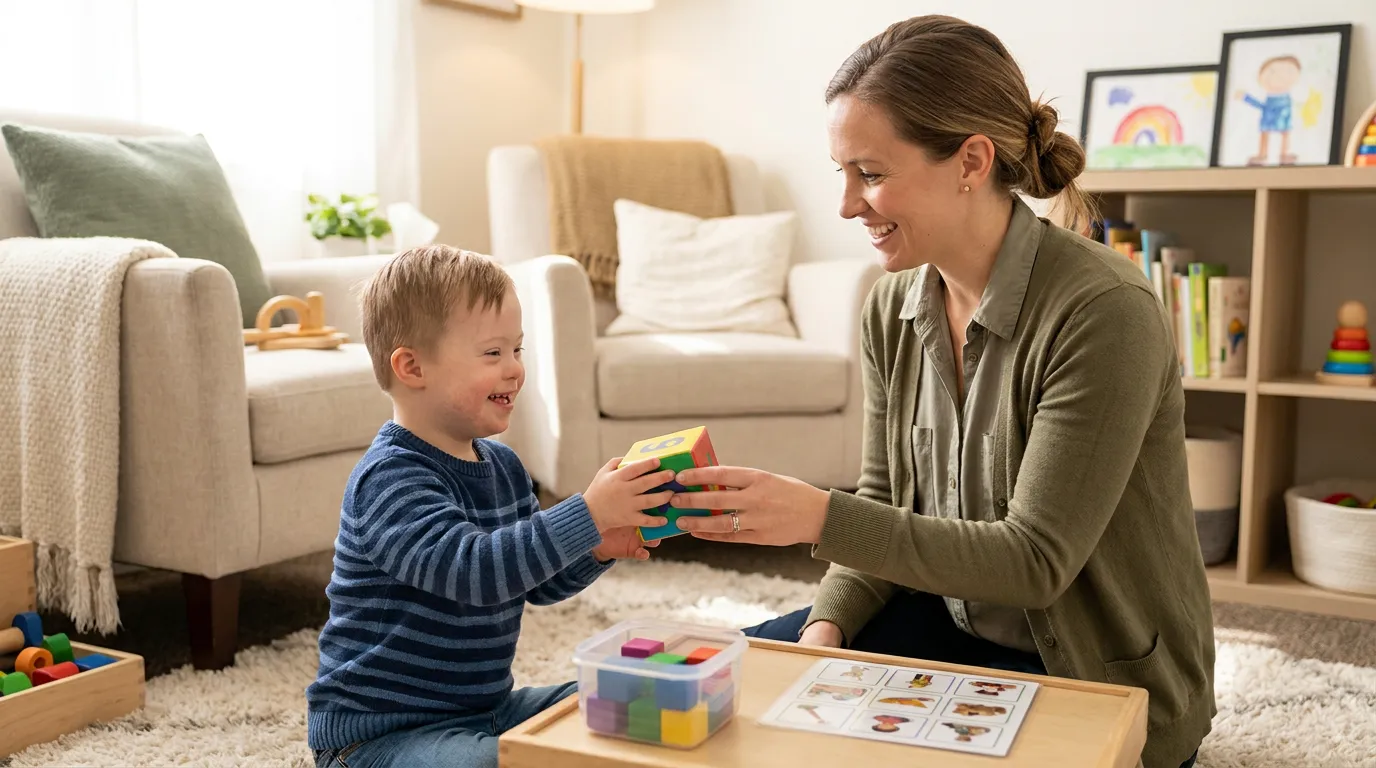

Children with Down syndrome are learners. They acquire skills, build routines, and grow socially when given structured, consistent support. Applied behavior analysis works well in this population precisely because it breaks complex skills into teachable steps, builds on what a child already does, and adjusts based on real data rather than gut instinct.
ABA is not a one-size program. For a child with Down syndrome, the goal areas a clinician targets will reflect that child's current developmental profile, the priorities the family identifies, and the contexts where skills matter most, whether that's home, a classroom, or the community. Most programs address several domains at once, advancing steadily as each skill is mastered.
Communication is usually a central focus. Many children with Down syndrome are highly motivated to connect socially, which makes that drive a powerful lever in therapy. Goals might start with requesting preferred items using pictures, signs, or words, then move toward labeling objects in the environment, following one- and two-step directions, and eventually holding back-and-forth exchanges. The emphasis is always on functional communication: saying or signaling something because it actually gets a child what they want or need.
Core Goal Areas in ABA for Children with Down Syndrome
Self-care skills are another major domain. Dressing, toileting, handwashing, and mealtime behaviors are areas where many families want real, lasting progress. ABA approaches these through task analysis, breaking "get dressed" into its individual component steps and teaching each one directly. Prompting strategies are faded systematically so the child builds independence rather than relying on adult cues indefinitely.
Social skills goals vary widely depending on age. For younger children, the work might focus on making eye contact during play, imitating peer actions, or joining a simple group activity. For older children, goals often involve turn-taking, initiating conversations, reading social cues, and managing group settings at school or in the community. Families interested in learning more about how these programs are built can find detailed information about aba for children with down syndrome at Rising Above ABA's site, including how goals are individualized at the start of every program.
Daily routines deserve their own mention. Children with Down syndrome often benefit from visual schedules and structured transitions. ABA therapists work on helping children move through morning routines, school arrival sequences, and after-school activities with less prompting and fewer challenging behaviors over time. When routines become predictable and the child understands what to expect, anxiety decreases and participation increases.
How Progress Is Measured and Sustained
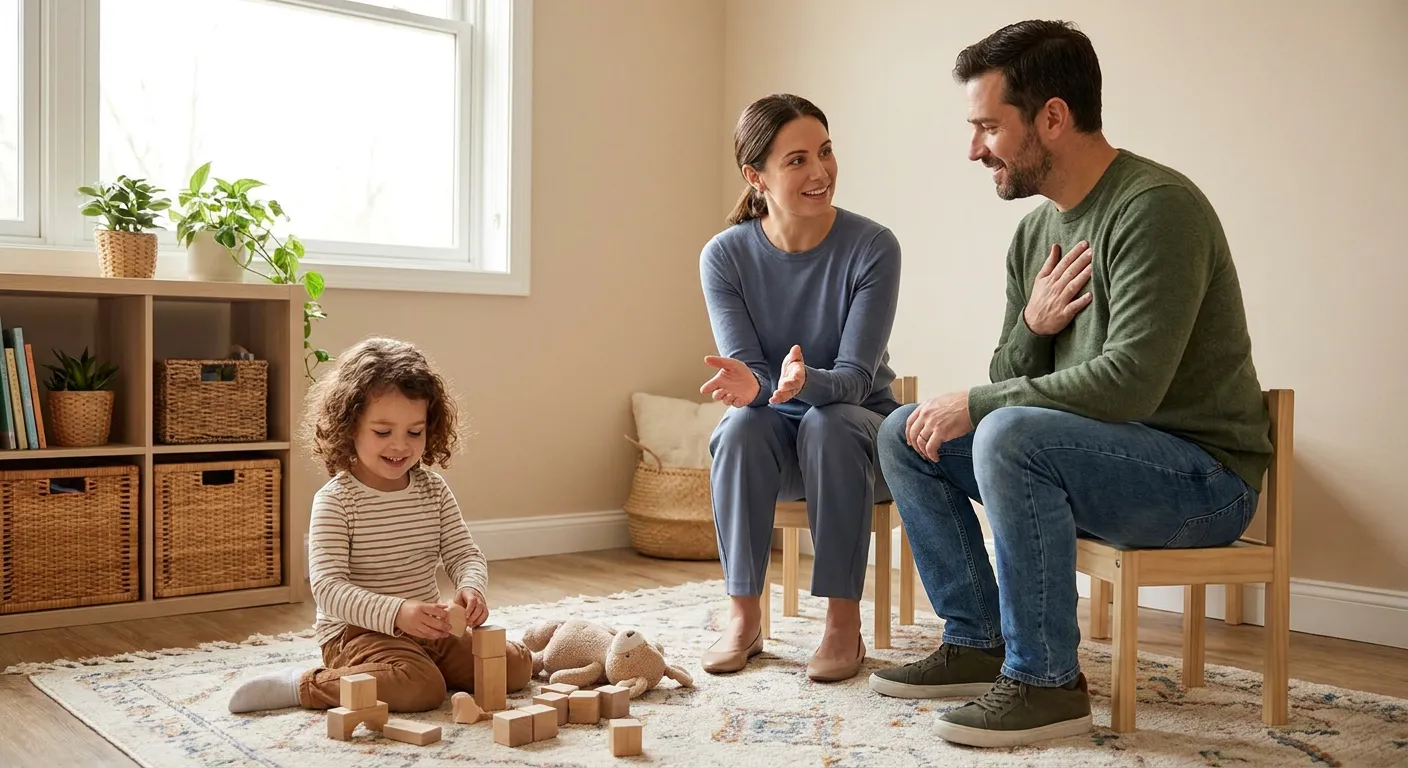
ABA is not impressionistic. Therapists collect data during every session, tracking how often a skill occurs, how much prompting is needed, and how consistently a child meets the target criterion. That data is reviewed regularly, and goals are updated when a skill is mastered or when a different approach is needed. Parents receive updates and are active participants in the process, learning to support generalization of skills across home and community settings.
The goal is not compliance. It is competence. When a child with Down syndrome learns to ask for what they need, manage their morning routine with minimal help, or join a conversation with a peer, those are real achievements with real consequences for quality of life. ABA, applied with care and individualized to the child, is one of the clearest paths to building that kind of competence, step by step, across the years.

























Sign in to leave a comment.