

For the international pharmacist who is preparing to become a registered pharmacist in Australia, this article is for them. Here we will provide the best tips that will help you crack the Australian pharmacist exam on your first attempt.

Use these evidence-based tips to prepare effectively for the Australian Pharmacist Exam. All information comes from the Australian Pharmacy Council (APC) and the Pharmacy Board of Australia.
1. Start With the Official Exam Guide
APC offers an exam guide covering format, scoring, question content, and content areas. It also includes sample content, so you can practice before exam day. Download the OPRA Exam Guide (PDF) directly from APC. For interns, the Intern Written Exam Guide covers similar ground.
2. Use Only Evidence-Based Study Materials
The content of APC exams is based on
- peer-reviewed journals
- clinical practice guidelines
- Textbooks
If you are a student, then you must depend on current and evidence-based learning resources during your preparation. Do not use older notes or question banks because they contain outdated info that is not relevant to current practices.
3. Practice With the Official Sample Papers
Pearson, the exam provider, offers an online sample test to try the exam software. This helps you experience question formats and timing before your real attempt. Familiarity with the interface reduces stress and saves time on exam day.
4. Strengthen Therapeutics and Patient Care Knowledge
Therapeutics and patient care make up almost half of the OPRA exam paper. Topics include dose calculations, primary health care, and safe medicine use in special populations. Practice BMI and creatinine clearance calculations until they become second nature.
| OPRA Content Area | Percentage of Questions |
| Biomedical sciences | 20% |
| Medicinal chemistry and biopharmaceutics | 10% |
| Pharmacokinetics and pharmacodynamics | 10% |
| Pharmacology and toxicology | 15% |
| Therapeutics and patient care | 45% |
6. Know the Exam-Day Rules in Advance
The OPRA exam is closed-book. So do not bring reference materials; they are not allowed inside the room. Your calculator must be scientific or standard, without internet or text storage capability. Check these rules before the exam, so nothing surprises you on the day itself.
7. Plan Your Exam-Day Logistics
See, sleep properly, and have a healthy meal so you can be active and feel very fresh for your exam. You will need to bring an identification with you, because having the wrong ID will affect your scores. Lastly, you have to make sure you turn off your phone and any alarm that would be on your phone.
8. Have a Plan if You Don't Pass
If you fail the OPRA exam, you can apply to sit another session. Each attempt requires a new registration and full exam fee payment. Intern candidates facing setbacks should seek guidance from their preceptor promptly.
FAQs
1. What is the OPRA exam?
The OPRA exam replaced the KAPS exam in March 2025. In this exam, it is checked that international pharmacists have knowledge as per the Australian standard.
3. Is the OPRA exam open-book or closed-book?
The OPRA exam is closed-book. No notes or references are allowed inside the room, so never bring them with you. Only a basic scientific or standard calculator is permitted inside the room. The calculator cannot connect to the internet or store text.
4. What is the Intern Written Exam?
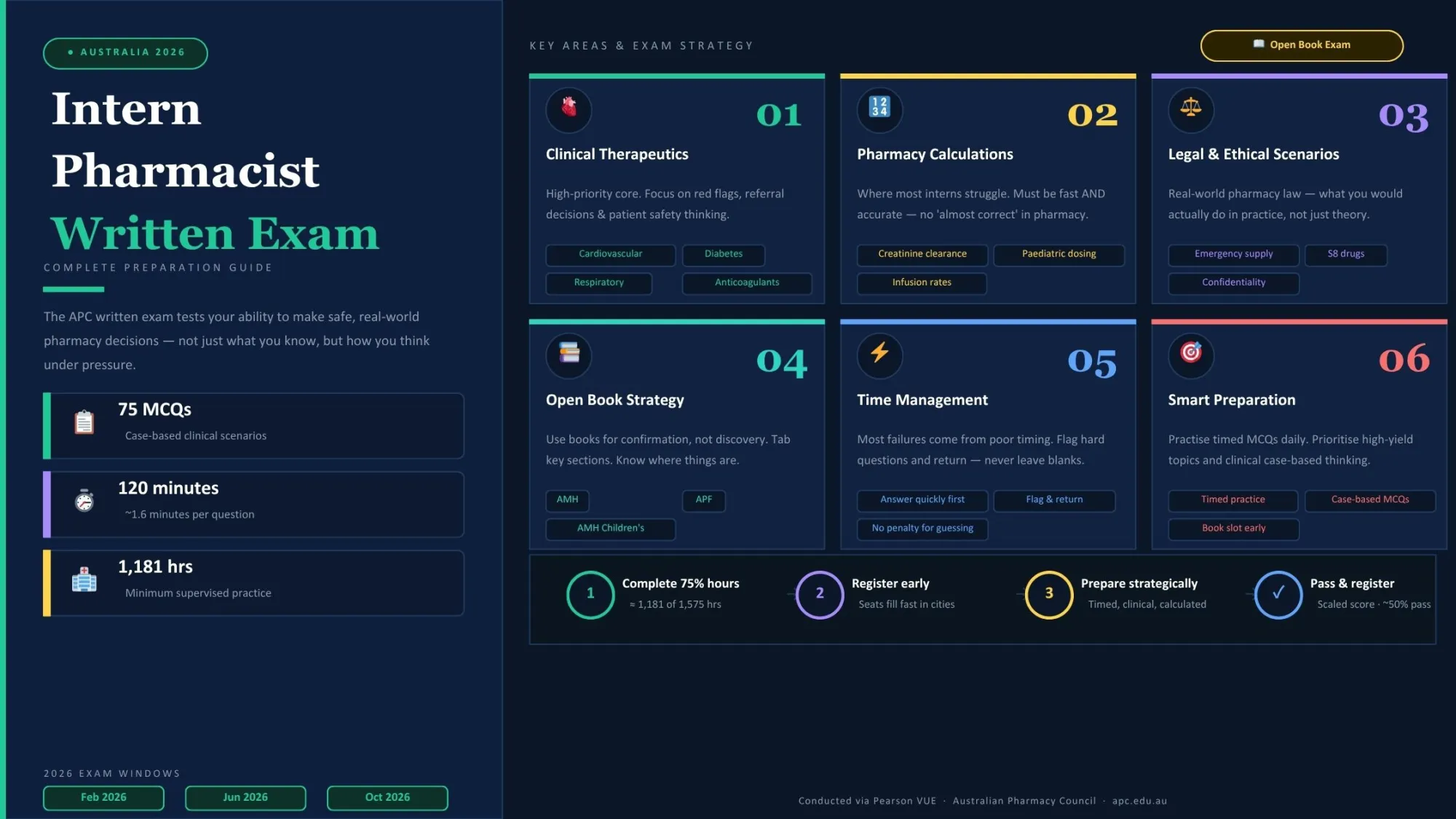
The Intern Written Exam is sat by Australian pharmacy interns nearing general registration. It evaluates readiness to practice safely and effectively in Australian healthcare settings. Passing it, alongside the Oral Exam, is required for general registration.
5. Where can I register for these exams?
You can register for the exam through the official ACP candidate portals. Always remember: never use a third-party tool for registration or payment.
6. What happens if I fail the exam?
You can register again and sit another exam session after a failed attempt. Each new attempt requires fresh registration and payment of the full exam fee. Interns should discuss next steps with their preceptor and training provider.
7. How soon will I get my results?
OPRA exam results are typically available within about four weeks of sitting. You will receive an email notification once your result is ready for viewing. Exact result release dates are published on the APC website.
8. Are coaching courses required to pass the exam?
No, professional development courses from PSA or similar bodies are entirely optional. APC does not endorse or require any specific external preparation programs. Official APC guides and sample papers remain the most reliable starting point.




























Sign in to leave a comment.