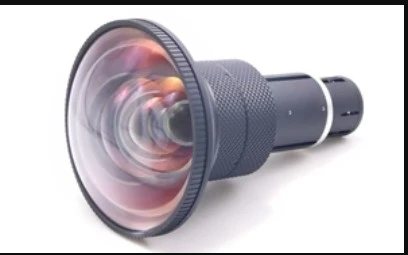
If you’re new to projectors—whether for home theaters, classrooms, offices, or large venues—you’ll quickly discover that the lens plays a major role in image size, clarity, and overall performance. While some projectors come with fixed lenses, many models support interchangeable lenses. This gives users the flexibility to choose a lens that fits their room size and projection needs.
As you start exploring lens options, you may come across the term “compatible lenses.” For beginners, it can be confusing to understand what this means and how these lenses differ from the ones made by the original projector manufacturer. This guide explains everything you need to know about compatible projector lenses and how they can help you get the most from your projector.
What Are Compatible Projector Lenses?
Compatible projector lenses are lenses made by third-party manufacturers rather than by the brand that made your projector. For example, if you own a projector from Epson, Panasonic, NEC, or Sony, a lens manufactured by a different company but designed to fit your projector model is considered a compatible lens.
These lenses are built to match the specifications of the projector’s lens mount and projection system so they can be used as a direct replacement or upgrade, just like the original manufacturer’s lens.
Why Compatible Lenses Are Used
Compatible lenses are popular for several reasons. The main advantage is cost. Original projector lenses from brands like Epson, NEC, or Panasonic can be quite expensive, especially zoom, long-throw, or ultra-short-throw models. Compatible lenses often offer the same functionality at a much more affordable price, making them attractive to schools, offices, churches, and businesses working within a budget.
Another reason is availability. Sometimes, original lenses may be discontinued or out of stock. Compatible manufacturers fill this gap by producing replacement lenses that keep your projector functional without requiring a brand-new projector.
Many compatible lenses also offer solid performance, making them practical choices for everyday use.
How Compatible Lenses Work with Your Projector
For a compatible lens to work properly, it must match the projector’s lens mount, throw ratio, and optical design requirements. Manufacturers design these lenses to fit securely into the projector’s lens bay so users can replace them without needing tools or special adjustments.
Once installed, a compatible lens allows you to adjust zoom, focus, and sometimes lens shift (depending on the model), just like an OEM projector lens. This ensures users can maintain the same level of control over image placement and size.
Most compatible lenses are designed to work seamlessly with standard projector features such as keystone correction, warping, and edge blending.
Types of Compatible Projector Lenses
Just like original lenses, compatible projector lenses come in several types. A standard-throw lens is the most common option, suitable for general projection distances. A short-throw lens allows large images to be projected from a short distance, making it ideal for classrooms or small meeting rooms. A long-throw lens helps project over long distances, making it useful for large halls, auditoriums, and event spaces. Some manufacturers also offer ultra-short-throw lenses, which can project extra-large images from just inches away from the screen. Each type is designed to meet specific room and installation requirements.
Are Compatible Lenses Lower in Quality?
Many beginners wonder whether purchasing a compatible lens means sacrificing image quality. Years ago, this may have been a valid concern, but modern optical technology has significantly improved. Today, many third-party projector lenses offer clear, sharp images suitable for both everyday use and professional environments.
Quality depends on the manufacturer. Reputable third-party brands use high-grade glass, durable construction, and carefully engineered optics to ensure the lens performs reliably. Some budget brands may offer cheaper lenses, but these may not provide the same level of sharpness or durability as more trusted manufacturers.
Pros and Cons of Compatible Projector Lenses
Pros: Compatible lenses provide several advantages. They are usually more affordable than original lenses, allowing users to save money without replacing the entire projector. They also offer a wider range of options when OEM lenses are unavailable or discontinued. For everyday use in schools, offices, and small venues, compatible lenses often deliver performance that is perfectly suitable.
Cons: On the other hand, some compatible lenses may not match the exact optical precision or build quality of original manufacturer lenses. Autofocus compatibility and lens shift ranges may also differ slightly depending on the projector model. In some cases, colours or brightness uniformity may vary compared to OEM lenses. For high-precision installations—such as cinema projection or advanced large-venue mapping—original brand lenses may still be preferred.
How to Choose the Right Compatible Lens
Choosing the right compatible projector lens begins with identifying your projector's exact model number. Each projector series typically has a specific set of lenses designed to fit it. Once you know your model, you can look for compatible lenses that list your projector as supported.
Next, determine the projection distance and screen size you need. If you are projecting in a small room, a short-throw lens is ideal. If you need to cover long distances in an auditorium or church hall, a long-throw lens will be more appropriate. For tight installations near walls, an ultra-short-throw lens may be the best solution.
Finally, consider the reliability of the manufacturer and check reviews or recommendations to ensure you’re choosing a lens that offers good performance and durability.
Are Compatible Lenses Good for Beginners?
Compatible projector lenses are a great option for beginners because they are easier on the budget while still offering solid performance. They allow new users to explore different projection setups without investing heavily in OEM lenses. For most common uses—such as business presentations, classroom teaching, or home entertainment—compatible lenses can provide excellent results.
Final Thoughts
Compatible projector lenses offer an affordable and practical alternative to original brand lenses. They give users more flexibility, keep older projectors running, and make it easier to achieve the perfect projection setup without overspending. As long as you choose a lens designed for your projector model and from a reliable AV products and supplier and manufacturer, you can expect good performance, clear images, and long-lasting value.
Understanding how compatible lenses work helps you make a confident choice, whether you're setting up a home theater or managing projection needs for schools, offices, or event spaces.






















Sign in to leave a comment.