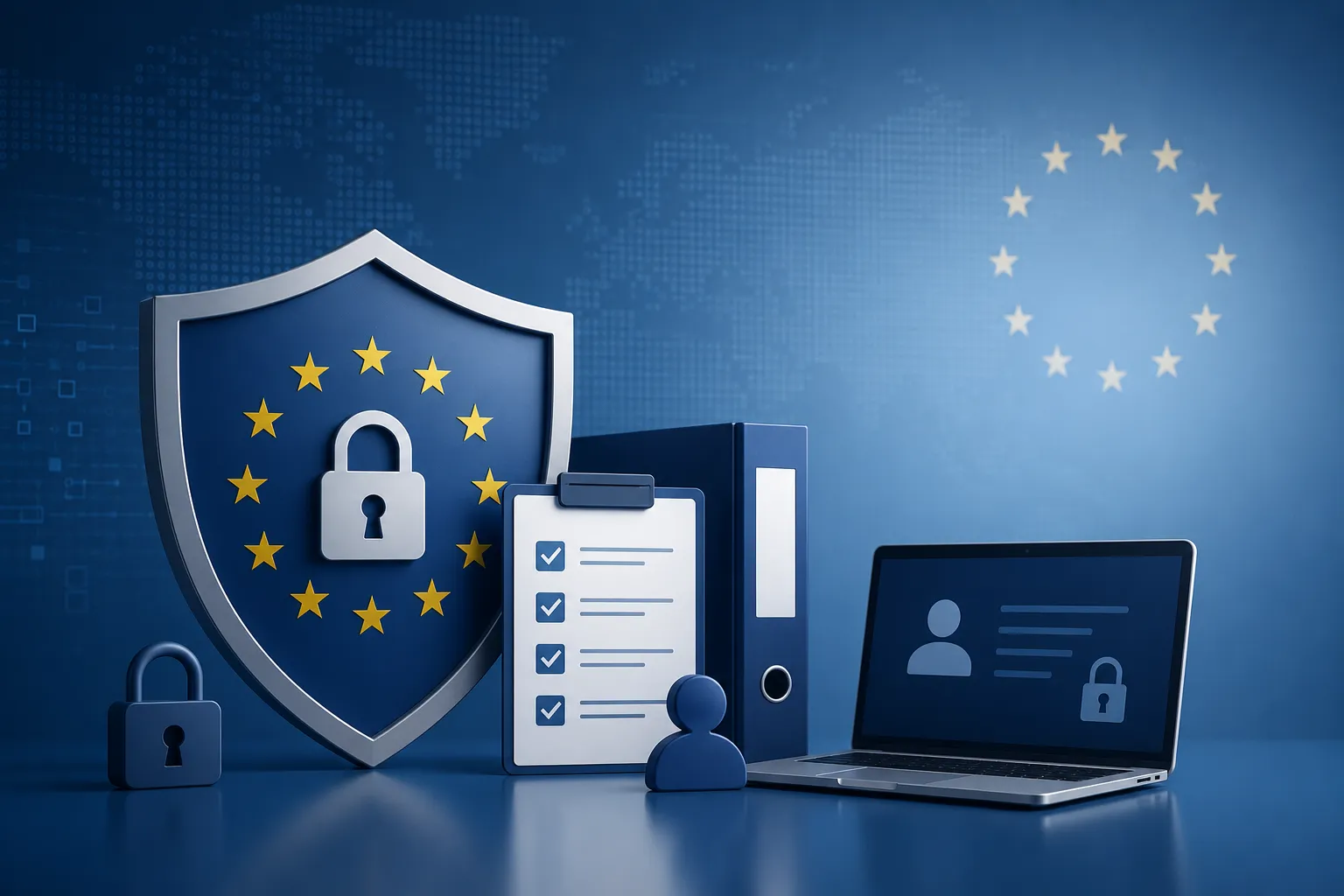

Organizations collect, process, and store vast amounts of personal data every day, making data privacy a strategic business priority. As cyber threats evolve and regulatory scrutiny increases, organizations must implement robust security controls to protect personal information and demonstrate compliance with global privacy laws. The GDPR compliance requirements established by the European Union set a high standard for data protection and accountability. Organizations that fail to comply risk significant financial penalties, reputational damage, and loss of customer trust.
Understanding the General Data Protection Regulation (GDPR) and implementing a structured compliance program helps organizations reduce risk, strengthen governance, and build confidence among customers, partners, and regulators.
What Is GDPR?
The General Data Protection Regulation (GDPR) is a comprehensive data privacy law that governs companies that collect, use, retain, transfer, and safeguard the personal information of individuals in the European Union (EU) and European Economic Area (EEA).
The General Data Protection Regulation supports the principles of accountability, transparency, and the right to individual privacy, and requires organizations to implement appropriate technical and organizational safeguards.
What Are GDPR Compliance Requirements?
Organizations must develop policies, procedures, and security measures to comply with GDPR principles. Key GDPR compliance requirements include:
- Process personal data in a lawful, fair, and transparent manner
- Collect personal data only for specified and lawful purposes
- Limit the processing of personal data to only what is necessary
- Ensure that the personal data is accurate and up to date
- Keep personal data only for as long as necessary
- Protect personal data by implementing appropriate technical and organizational measures
- Be accountable for GDPR compliance by maintaining the appropriate policies, procedures, and compliance records
- Fulfill individuals' requests regarding their personal data
- Report qualifying personal data breaches to regulatory authorities and affected individuals, where required
- Conduct regular compliance reviews and risk assessments
Organizations must document data processing activities and implement privacy-by-design across their systems and business processes.
Which Organizations Must Comply with GDPR?
GDPR applies to a wide range of organizations, not just businesses located in Europe. Compliance becomes mandatory if an organization:
- Operates in the EU or EEA
- Offers products or services to individuals in the EU
- Monitors the online behavior of EU residents
- Processes the personal data of individuals located in the EU
Benefits of Achieving GDPR Compliance
Achieving GDPR compliance delivers benefits beyond regulatory compliance. A well-developed privacy program also enhances security and governance.
Main benefits include:
- Greater customer trust and an enhanced brand reputation
- A reduced likelihood of facing fines from regulatory bodies
- Better protection of sensitive personal data
- Improved data governance and information lifecycle management
- Increased visibility of the organization’s data assets
- Improved operational efficiency through standardized processes
- Greater confidence when expanding into global markets
Organizations that implement GDPR compliance programs can meet customer security requirements while strengthening their overall privacy and compliance posture.
How a GDPR Compliance Assessment Supports Compliance Readiness
A comprehensive GDPR compliance assessment helps organizations evaluate their current privacy posture and identify compliance gaps before regulatory audits occur.
A typical assessment includes:
- Data discovery and classification
- Privacy risk assessment
- Gap analysis
- Review of policies, procedures, and governance
- Security control evaluation
- Remediation recommendations
Some organizations choose to engage professional GDPR audit services to validate readiness and streamline compliance programs before regulatory reviews.
The Role of GDPR Consultants and Certification Providers
Implementing GDPR across complex enterprise environments often requires specialized expertise. Experienced GDPR consultants help organizations interpret regulatory requirements, develop governance frameworks, perform risk assessments, and implement privacy controls aligned with business objectives.
A trusted GDPR certification consultant or GDPR certification provider can support organizations throughout their compliance journey by providing:
- Regulatory guidance and compliance strategy
- Gap assessments and remediation planning
- Data protection governance implementation
- Security and privacy policy development
- Employee awareness and training
- Continuous compliance monitoring
Although organizations often seek GDPR compliance certification or business certification, it is important to understand that the GDPR itself does not establish an official government-issued certification. Instead, organizations demonstrate compliance through documented controls, governance practices, independent assessments, and ongoing regulatory readiness.
Steps to Achieve GDPR Compliance
Organizations should take a structured approach to achieving GDPR compliance:
- Identify and map personal data throughout the organization.
- Conduct a GDPR compliance assessment.
- Perform a risk and gap analysis.
- Update privacy policies and internal processes.
- Implement appropriate technical and organizational security controls.
- Train staff on GDPR requirements.
- Create mechanisms to address data subjects’ rights and comply with breach notification rules.
- Continuously monitor and improve compliance.
Conclusion
Achieving GDPR compliance requires more than implementing security technologies. Organizations need strong governance, continuous risk management, and well-documented policies and processes.
Ampcus Cyber offers comprehensive GDPR compliance assessments, implementation of governance frameworks, and expert compliance consulting services. Whether you need a GDPR compliance assessment, ongoing advisory services, or governance support, Ampcus Cyber provides the expertise to help you achieve and maintain GDPR compliance with confidence.
























Sign in to leave a comment.