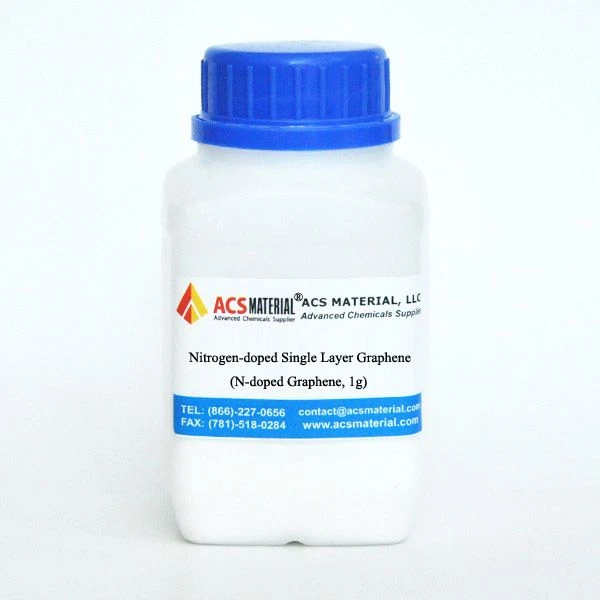

Nitrogen doped graphene is a new material that may be used to make a range of new products. It is made by adding nitrogen to a polymer and then treating it with chemical vapor deposition techniques to produce a highly transparent material. This means that it can be easily incorporated into the manufacturing process of products, including electronic devices, for a number of applications.
Structure of N-Gh
Nitrogen doping in graphene introduces a large number of topological defects on the layers. The resulting disordered carbon structure improves the storage capacity of lithium ions. In addition, conductive nanosheets with large surface areas reduce the solid-state transport length for lithium ions. Therefore, they are attractive candidates for electrocatalytic applications.
N-doped graphene electrodes exhibited good rate capability, long-term cycling stability, and reversible capacity. Moreover, it possesses a type IV isotherm, which indicates the presence of a large number of mesopores. This is one of the key properties that may help N-doped graphene become a viable candidate for reversible lithium storage.
Nitrogen doping is one of the most promising methods to increase the number of active sites in graphene. In particular, a high nitrogen content facilitates charge transfer. Consequently, a high specific surface area is required for efficient charge transfer reactions. These features make N-doped graphene an ideal electrode material.
Nitrogen doping can be achieved by a variety of methods. One method, which is a simple and cost-effective procedure, is to use chemical vapor deposition (CVD) to prepare N-doped graphene materials.
Another technique, which involves plasma treatment, is also used to produce N-doped graphene. The plasma method requires high-quality equipment. However, it is a low-cost process that enables large-scale production of N-doped graphene materials.
Aside from CVD and plasma treatments, other methods to obtain N-doped graphene include thermal annealing and arc-discharge techniques. These techniques allow researchers to produce N-doped graphene in a single step.
N-doped graphene is unique in its structure. It contains a small amount of cubic MgO residue wrapped in its graphene sheets. Besides, the two-dimension hexagonal sp2 carbon clusters can assemble into polyaromatic systems. Several defects are also retained in the graphene sheets.
Electrochemical properties
Nitrogen doped graphene materials exhibit improved capacity and electrochemical properties. They are useful for electrochemical catalysis and metal-air battery electrodes. Graphene has the potential to be a material for next-generation electronic devices, such as supercapacitors. However, the chemical structure of nitrogen doped graphene is still unclear. The aim of this study was to explore the chemical structure and stability of nitrogen doped graphene nanomaterials.
To synthesize nitrogen doped graphene nanomaterials, a two-step method was developed. During the first step, N was dissolved in water. Afterwards, carbon was added to the solution. Using this two-step process, a nitrogen-doped graphene sheet was obtained. It was then prepared in a three-M NaOH aqueous solution. After this, the sample was exfoliated with a 5.0 V alternating voltage for 5 h.
XPS measurements were conducted to identify the atomic state of the nitrogen atom. XPS measurements were performed using a VG Scientific ESCALAB-210 photoelectron spectrometer with Al Ka radiation. XPS measurements showed that the atoms were in a nitrogen-oxide state. The bond energies at these peaks were corresponding to pyridine-nitrogen (N-6), pyrrolic-nitrogen (N-5), graphitic-nitrogen (N-Q), and oxygen.
In addition to synthesizing nitrogen doped graphene nanomaterials, another objective was to enhance the rate and sensitivity of the materials. A nitrogen precursor, azodicarbonamide, was used. This precursor combines appropriate functional groups for ORR. Besides, a hydrothermal procedure was applied to prepare the graphene hydrogel electrode materials. These materials were then characterized for supercapacitor electrodes.
Electrochemical catalysis/reactions
Nitrogen-doped graphene nanomaterials are attractive candidates for electrochemical catalysis and reactions. They are stable and have high activity. But their chemical structures and functional properties are still unclear. Therefore, they need systematic theoretical simulations.
N-doped graphene nanomaterials may be promising as catalysts for oxygen reduction reactions (ORR). However, they need careful control of nitrogen doping levels. Moreover, different doping strategies could affect their N-types.
In order to evaluate the effects of nitrogen doping on the structure and properties of NCNTs, we studied the chemical stability and catalytic performance of the samples. We also determined their porosity. For this, we conducted nitrogen adsorption-desorption analysis. The obtained results were then used to determine the micropore volume. This measurement was carried out using the t-Plot method.
The obtained results showed that the nitrogen-doped graphene foams are stable, highly active and environmentally friendly. Their performance is comparable to that of commercial Pt/C catalysts. Also, they exhibit good stability and reactivity in ORR. Although the nitrogen doping level is not the only factor that influences the catalytic activity, it is an important factor.
It was found that nitrogen doping increased the catalytic activity of the materials in the ORR reaction. In particular, the nitrogen-doped graphene electrode showed a one-step, four-electron ORR pathway. And, its onset potential was -0.45 V. After 100,000 cycles, the loss of voltammetric charge was minimal. Moreover, the stability of the graphene structure suggested its stability.
Electrochemical reversibility
Graphene is a thin single-layer carbon molecule that displays exceptional electronic conductive properties. It is therefore a promising candidate material for next-generation energy storage devices. Moreover, it has the potential to be used as an electrocatalyst, displaying exceptional electrochemical reversibility.
Nitrogen doped graphene (N-Gh) has been synthesized and characterized using XPS, XRD, transmission electron microscopy, scanning electron microscopy, and Raman spectroscopy. This material was evaluated for its cycling stability and ultrahigh rate capability in a two-electrode system. Compared with the pure GF sample, the N-Gh sample shows greater effects and more reversible reactions at the electrode/electrolyte interfaces. In addition, the N-Gh sample exhibits stable performance over the long cycle duration.
Graphene with nitrogen doping shows high ion storage capacity and enhanced electrocatalytic activity for the reduction of hydrogen peroxide. The doping of nitrogen can promote the fast transport of lithium ions from the electrolyte interfaces. Furthermore, the doping of nitrogen can enhance the photoluminescence property of graphene.
The reversible electrochemical reversibility of the N-Gh sample has been studied at different scan rates. As the scan rate increases, the intensities of the CV files increase. However, the shape of the curve remains broadly stable.
The electrochemical reversibility of NG-modified SPCEs was also analyzed. The currents are distinguishable with the aid of voltammetry. XPS analyses were performed to investigate the GO doping type and the structure of the electrodes. At the same time, the Raman spectrum was conducted to determine the quality of the composite electrode.
Several NG samples were prepared at various temperatures and their specific surface area was measured by XPS. Moreover, the adsorption-desorption isotherms were examined to verify the porous microstructures. NGs have large specific surface areas that facilitate more nitrogen doped sites, which enhance the corresponding currents.
Thanks for visiting writeupcafe


























Sign in to leave a comment.