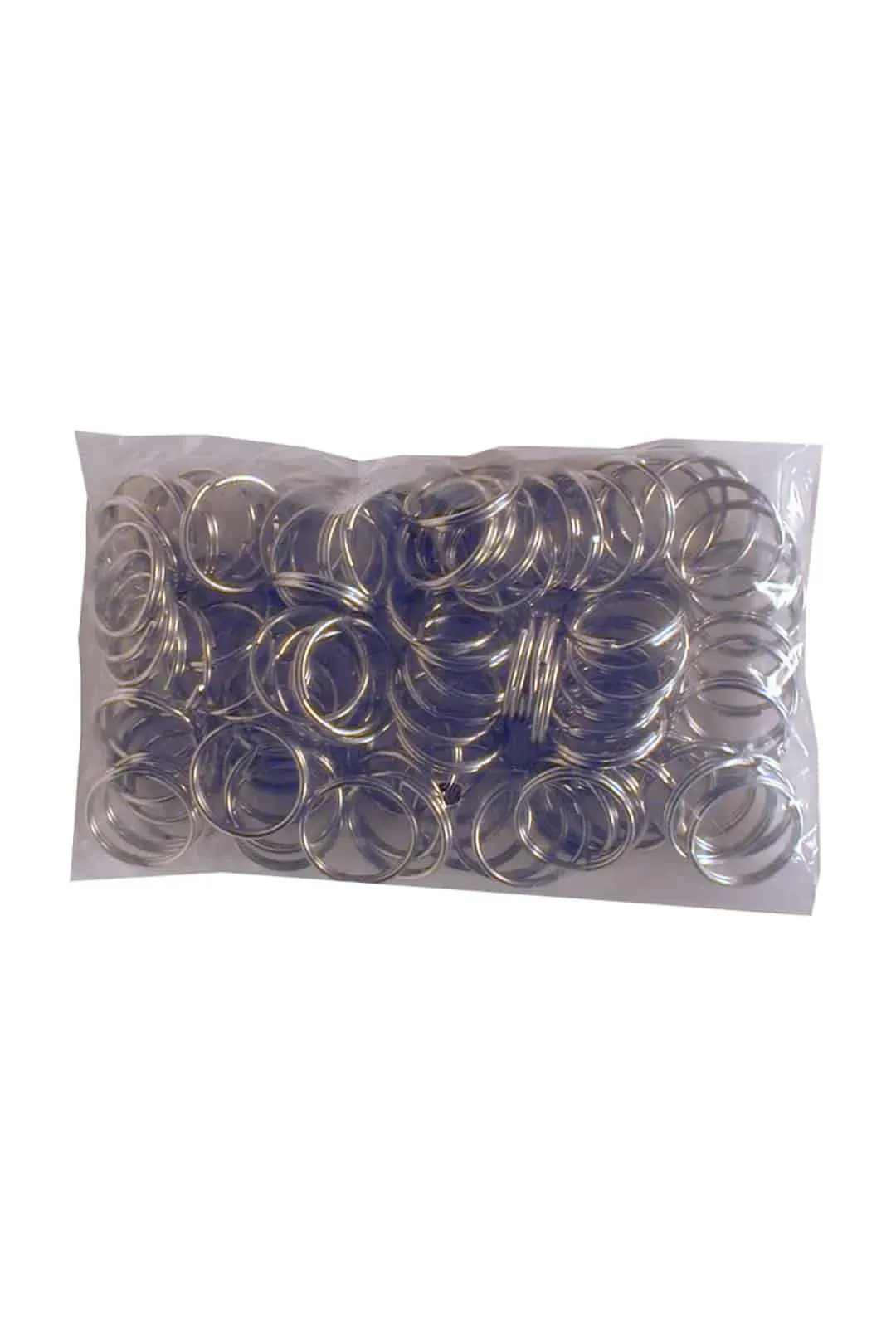

Think about the last time you put a new key on your keychain. You probably grabbed that small metal loop, wrestled with it a little, and slid the key on until it clicked into place. That little piece of hardware is called a split ring, and even though most people barely notice it, it plays a surprisingly important role in daily life.
Split rings are one of those small inventions that quietly show up everywhere. They hold our keys together, secure charms on bracelets, keep fishing lures attached to lines, and even show up in industrial equipment. Despite being so common, most people never stop to think about how they actually work or why they were designed the way they are. In this article, we will walk through what split rings are, how they differ from similar hardware, where they are used, and how to pick the right one for your needs.
What Exactly Is a Split Ring?
A split ring is a circular piece of metal wire that has been coiled twice around itself, almost like a tiny spring that loops back on top of its own starting point. This double coil is what makes it different from a simple jump ring, which only has a single loop with one opening.
Because of that double coil, a split ring is much harder to accidentally open. Once you slide an object onto it, the overlapping wire holds it firmly in place. That is exactly why split rings became the standard choice for keychains rather than simple single loop rings, which can pop open with the slightest bit of pressure or vibration. If you have ever struggled to pry open a split ring with your fingernail, you already understand why it is such a secure design. The tight coil that makes it annoying to open by hand is the same feature that keeps your keys from falling off in your pocket.
Everyday and Professional Uses of Split Rings
People often assume split rings are just for keys, but their use goes far beyond that. Here are some of the most common places you will find them. Keychains and key rings are the most familiar example. Almost every physical key you own has passed through the coil of a split ring at some point.
Jewelry making relies heavily on these little rings too. Designers use them to attach charms, pendants, and clasps to necklaces, bracelets, and anklets. Their secure closure means a charm will not slip off during everyday wear.
Fishing gear is another major category. Anglers use small, high strength split rings to connect hooks, lures, and swivels. In this context, strength really matters, since a weak ring can snap under the pull of a large fish. Pet identification tags almost always use a split ring as well. It keeps the tag attached to the collar securely, even through jumping, running, and rough play.
Industrial and automotive settings use larger, heavier duty split rings in machinery and assemblies where parts need to be connected but still removable when repairs are needed. What ties all of these uses together is the same basic idea. Something needs to be attached securely, but it also needs to be possible to remove or replace that item later without cutting or breaking anything.
Materials Used to Make Split Rings
Not all split rings are created equal, and the material they are made from has a big impact on how well they perform.
Stainless steel is one of the most popular choices because it resists rust and corrosion, which makes it ideal for outdoor use or humid environments. Nickel plated steel is another common option, and it tends to be more affordable, which is why you see it so often on everyday keychains. Brass and bronze are frequently chosen for jewelry, since they offer a warm, vintage looking finish that pairs nicely with decorative pieces. Titanium is used in more specialized products, especially high end fishing tackle, because it combines a very high strength to weight ratio with excellent resistance to saltwater corrosion.
Choosing the right material really depends on what you plan to do with the ring. A cheap steel ring might work perfectly fine for house keys, but it would not hold up well on a saltwater fishing trip.
Understanding Sizes
Split rings come in a wide range of sizes, and picking the right one matters more than people expect. Small rings, sometimes just a few millimeters wide, are typically used in delicate jewelry where a bulky ring would look out of place. Medium sized rings are the most common option for everyday keychains. Larger rings, sometimes reaching several centimeters in diameter, are used for heavy duty applications like industrial hardware or oversized key collections.
If a ring is too small for the object you are attaching, it may not open wide enough to slide the item on comfortably. If it is too large, the connection can look sloppy or feel loose. Matching the size to the task is a simple step that makes a real difference in the final result.
How to Open a Split Ring
Anyone who has tried to open a split ring with their bare hands knows it is not always easy. The tight coil that makes them so secure also makes them a little stubborn to work with. Fortunately, there are a few tried and true methods.
Using your fingernail is the simplest approach, and it can work fine for larger rings, though it is not always comfortable or fast. A flathead screwdriver is another popular option. By sliding the tip gently between the coils, you can create a small gap to slip an item through. The most reliable method, especially if you work with rings often, is a dedicated split ring tool, sometimes called key ring pliers. These tools are specifically designed to pry the coil open with minimal effort, which makes them a favorite among jewelry makers, anglers, and anyone who regularly deals with large batches of keys or hardware.
Once the ring is open, you simply guide the item along the coil until it settles naturally onto the loop.
Tips for Choosing the Right Split Ring
When shopping for split rings, a few practical factors are worth thinking about before you buy.
Consider how much weight or pressure the ring will need to hold. A keychain with a dozen keys needs a sturdier ring than a delicate necklace charm. Think about the environment the ring will be exposed to. If it will be outdoors, near water, or in humid conditions, corrosion resistant materials like stainless steel or titanium are worth the extra cost. Pay attention to the finish as well, since options like nickel, brass, or black oxide can affect both how long the ring lasts and how it looks. Finally, always double check that the size matches your intended use, whether that means a slim ring for a delicate chain or a wider, heavier ring built for daily keychain abuse.
Final Thoughts
It is easy to overlook something as small as a split ring, but these tiny coiled loops quietly hold together a huge number of things we rely on every single day. From the keys in your pocket to the lure on a fishing line to the charm hanging from a bracelet, split rings are doing more work than most people ever notice.
Understanding the differences in material, size, and opening technique can help you choose the right ring for whatever project or task you are working on. The next time you clip a new key onto your keyring or add a charm to a piece of jewelry, you will know exactly what that small metal coil is called and why it was designed the way it is. And if you ever find yourself frustrated trying to pry one open, remember that a simple pair of key ring pliers can turn that struggle into a five second task, which is often the easiest way to work with split rings on a regular basis.


























Sign in to leave a comment.