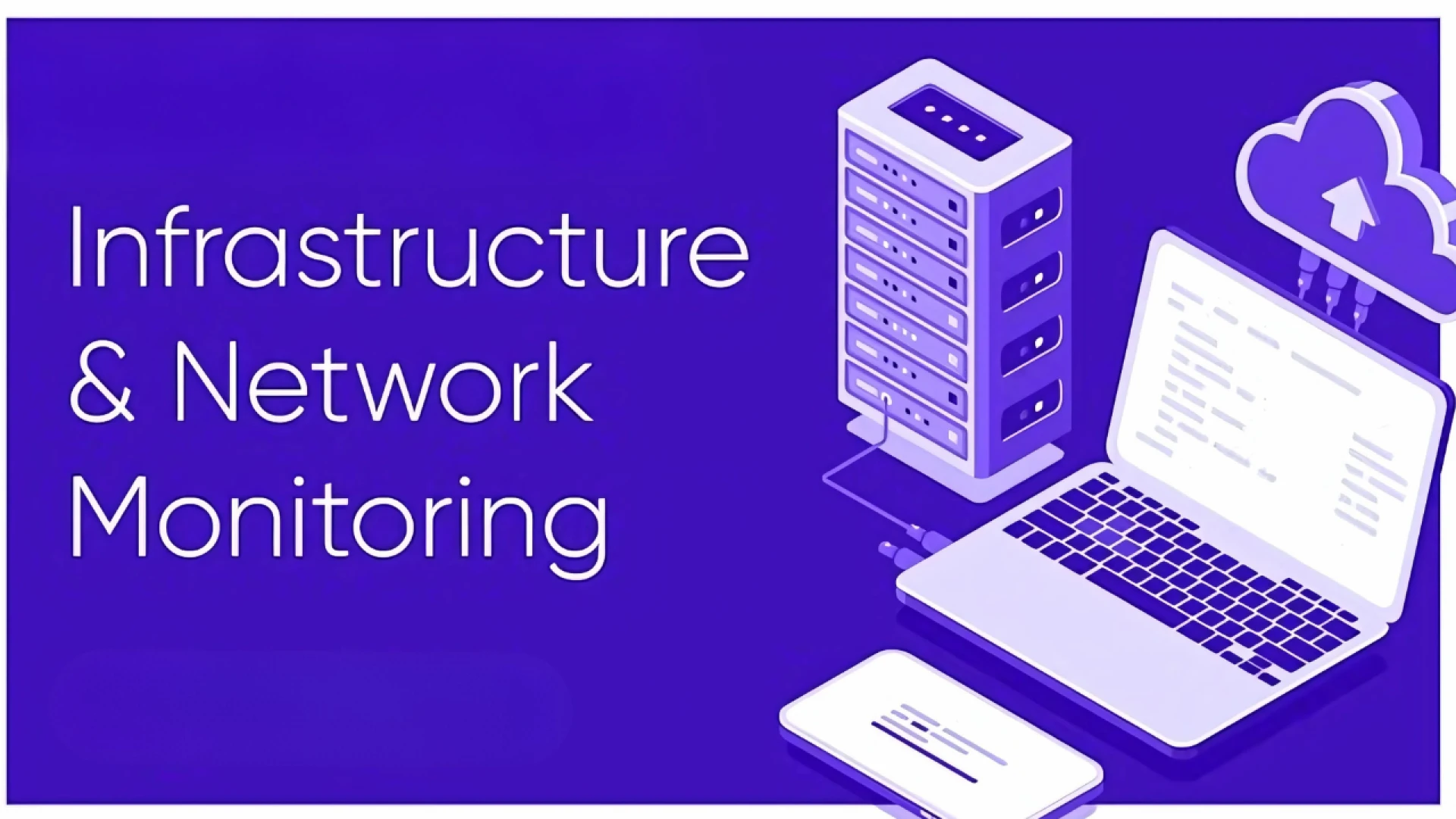

The current digital-first era demands that businesses depend on strong IT environments to deliver perfect services along with increased productivity while sustaining their market position. Organizations' increasing reliance on cloud applications and servers and data centers and network connectivity requires ongoing system health maintenance as a top priority. Infrastructure Monitoring together with network monitoring serve a critical function by ensuring IT systems operate reliably with efficiency and maintain security.
Infrastructure Monitoring tracks and analyzes the performance alongside availability and health status of different IT components including servers and storage systems and databases and virtual machines operating together within an organization. Network monitoring serves two functions by surveilling network components to evaluate bandwidth utilization and detect failures or verify performance issues with routers, switches , firewalls and bandwidth utilization. These monitoring practices shape the structure that maintains an IT operating system which offers stability and scalability.
1. Early Detection of System Failures
Monitoring tools enable organizations to detect developing system issues which help prevent major breakdowns before they occur. Real-time alerts from proactive monitoring enable IT teams to take prompt actions toward preventing downtime by detecting failing servers and network bottlenecks.
2. Improved System Performance
Businesses that track metrics regularly detect assets which perform poorly and systems which suffer from excessive resource usage. IT teams can achieve optimal critical system performance while optimizing resource allocation and workload balance through network and infrastructure monitoring data.
3. Enhanced Security
Through monitoring organizations can detect abnormal system activities alongside unauthorized system access attempts. Real-time warning systems for abnormal activities improve the speed of threat response which enhances security defenses across organizations.
4. Reduced Downtime and Improved Availability
Whether manually or automatically, monitoring the IT environment at all times enables businesses to maintain operational systems and availability. Better customer experiences combined with higher productivity result when organizations decrease their unplanned system downtime.
5. Cost Efficiency and Resource Optimization
Active system monitoring helps businesses avoid expensive technical failures together with performance problems which disrupt business activities. Real-time usage monitoring allows organizations to predict hardware needs better and develop accurate IT funding plans through their analysis of trends.
6. Better Decision-Making with Real-Time Data
Real-time performance data enables IT teams to make educated decisions when deciding how to scale their infrastructure or execute maintenance tasks or implement technology improvements. Performance analysis of historical data enables organizations to detect frequent problems which fuels the creation of enduring improvement tactics.
7. Simplified Troubleshooting
Infrastructure and network monitoring tools create detailed performance metrics and log data to assist IT staff in promptly identifying the origins of system problems. Network monitoring tools help technicians find solutions more rapidly while reducing system outages.
8. Compliance and Reporting
The strict regulatory environment of industries like finance and healthcare becomes simpler to comply with through infrastructure and network monitoring which generates records to validate uptime alongside access controls and data security efforts.
9. Supports Remote and Hybrid Work Environments
Businesses that adopt remote and hybrid work models need to guarantee both secure and uninterrupted digital resource accessibility. Through monitoring tools organizations achieve system management and maintenance no matter where the employees work.
10. Scalability and Future-Proofing
Business expansion requires proportional growth in IT infrastructure needs. IT infrastructure can automatically scale its capabilities through monitoring tools as demand increases while maintaining both performance and system stability. Preventable growth problems occur when implementing an advanced system management strategy that supports system development.
Conclusion
A combination of Infrastructure Monitoring and network monitoring outlines total visibility for business control over IT operations. Security measures and lower downtime and better resource management results from implementing these practices. Organizations who choose to invest in robust monitoring solutions protect their digital assets while creating a foundation for enduring success in today's connected environment.




























Sign in to leave a comment.