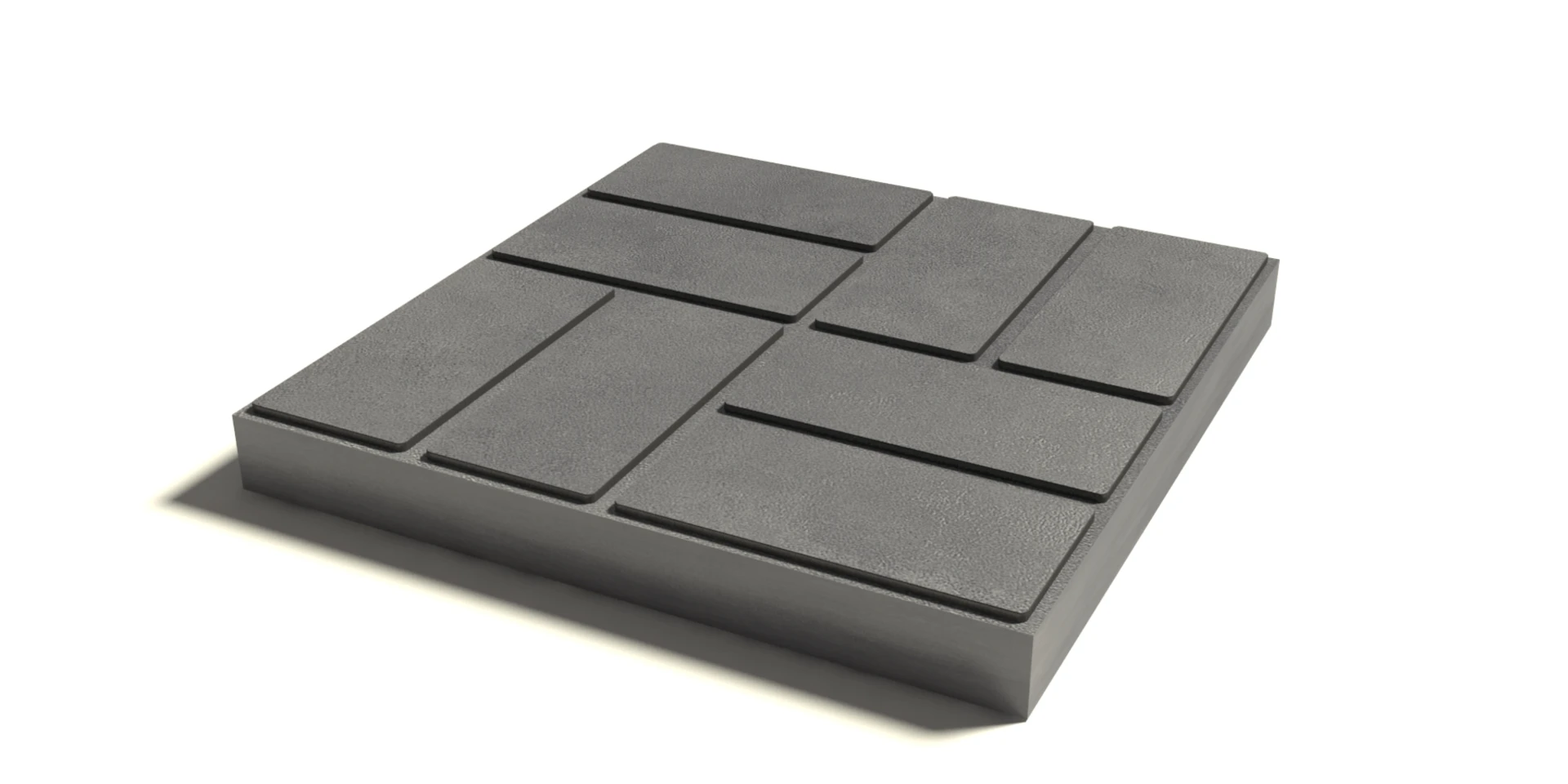

Installing eco friendly floor tiles can lower your environmental footprint and improve your indoor air quality — here’s why they’re worth considering.
Did you know that buildings account for nearly 40 % of global carbon emissions, and the choice of materials can significantly influence that figure? (source: U.S. EPA, Sustainable Management of Construction & Demolition Materials) By opting for eco friendly floor tiles, homeowners and builders can make a meaningful dent in such emissions — while reaping benefits for health, durability, and cost savings.
Why Choose Eco Friendly Floor Tiles?
Benefits of Eco Friendly Floor Tiles for the Environment
- Reduced resource depletion: Many eco tiles use recycled content (glass, ceramic, porcelain waste) or sustainably harvested raw materials.
- Lower emissions and water use: Sustainable tile manufacturing often targets low-VOC emissions and reduced water consumption throughout the production process.
- Waste diversion and circularity: Eco tiles can help close the loop by using post-consumer or post-industrial waste streams, diverting materials from landfills.
- Longer life, fewer replacements: Durable tiles reduce the frequency of reinstallation — thus less material consumed over time.
Health & Indoor Air Quality Benefits of Eco Friendly Floor Tiles
- Reduced VOCs and chemical exposure: Eco tiles typically avoid harsh adhesives, glazes, or additives that release volatile organic compounds into indoor air.
- Allergen and mold resistance: Many eco tile surfaces resist moisture, mold growth, and dust accumulation — improving indoor health.
- Safe for sensitive occupants: Households with children, seniors, or allergy sufferers can especially benefit.
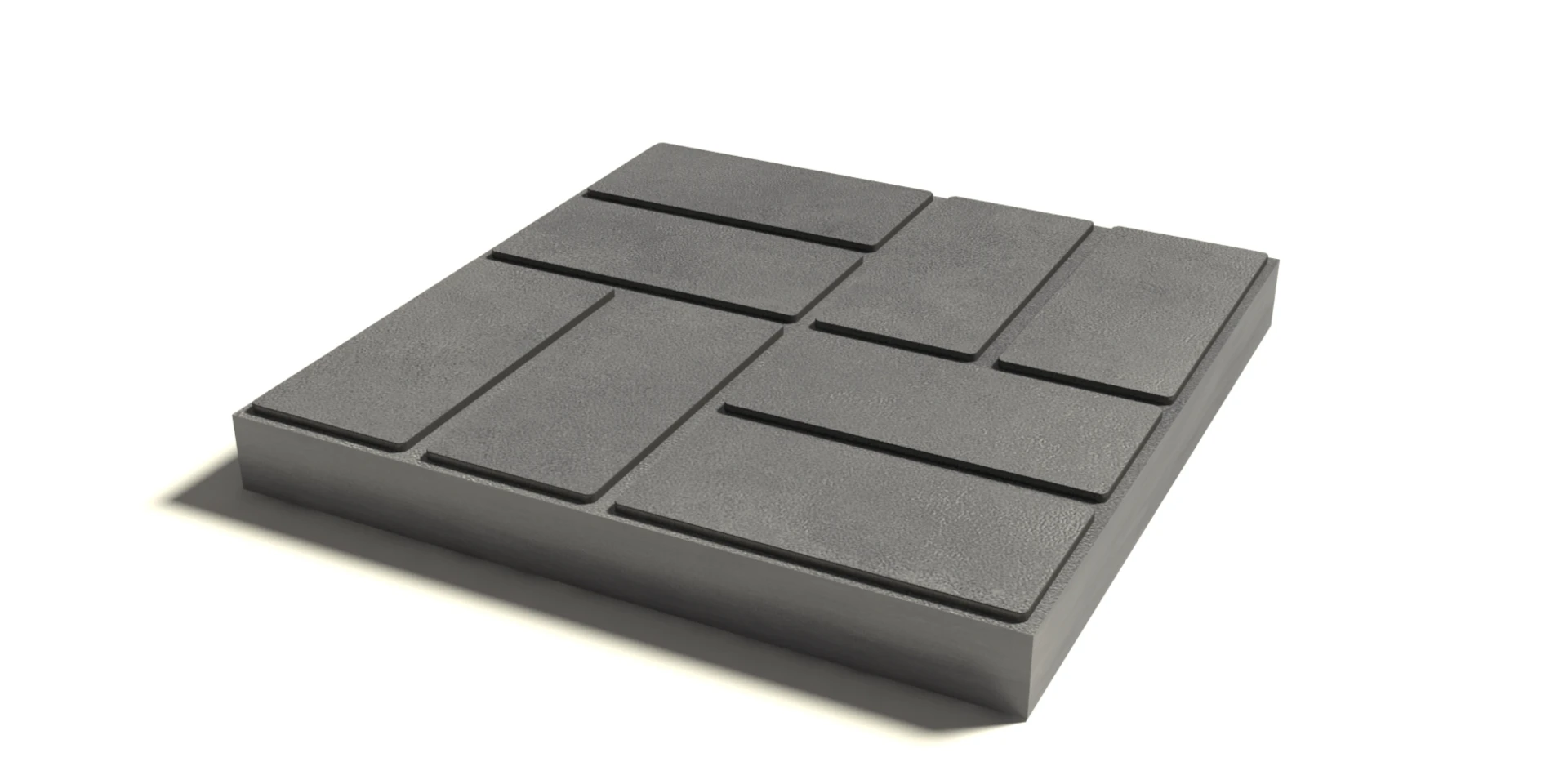
Economic & Practical Advantages of Eco Friendly Floor Tiles
- Lower operating costs
- Reduced maintenance: Eco tiles often require milder cleaners and less intensive upkeep.
- Energy savings: Some tiles have thermal reflectivity, reducing heating or cooling load.
- Increased property value: “Green” certifications or eco upgrades can upscale a property’s market appeal.
- Government incentives and rebates: In some regions, adopting sustainable building materials qualifies you for tax breaks or certification credits.
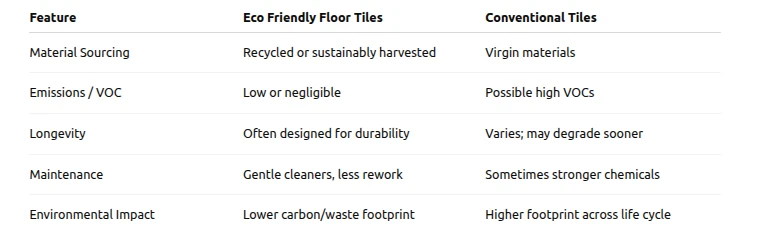
Comparing Eco-Friendly vs Conventional Tiles
Real-Life Example & Case Study
In the U.S., healthcare facilities like the University of Florida and Emory evaluated sustainable flooring options in their buildings. They ultimately installed Marmoleum (a natural linoleum product) for its combination of durability, hygiene, and lower chemical profiles — showing that even in strict environments, eco-friendly floors can perform.
In India, the Greater Hyderabad Municipal Corporation (GHMC) is piloting eco-friendly tiles made from recycled plastic to construct footpaths, aiming to reduce landfill waste and plastic pollution.
These real-life initiatives underline that eco-friendly flooring isn’t just theoretical — it’s being deployed in demanding, real-world settings.
Key Considerations & Best Practices
Certifications & Standards to Look For
- Third-party eco labels (e.g. GreenGuard, Cradle to Cradle)
- Recycled content percentages
- Low or zero formaldehyde / VOC certification
Installation & Substrate Best Practices
- Use low-VOC adhesives and grouts
- Ensure proper substrate preparation (flatness, moisture control)
- Seal and maintain joints carefully to protect longevity
Trade-Offs & Challenges
- Higher upfront costs: Some eco tiles may cost more initially
- Limited local availability: Imports or specialty suppliers may be required
- Performance under extreme use: Must verify slip resistance, scratch resistance, etc.
“Expert Voice”
“Choosing eco friendly floor tiles is not merely about ‘going green’ — it’s about marrying aesthetics, durability, and responsibility in material choices.”
— Dr. Mira Das, Sustainable Building Materials Expert
Ready to lift your living space to the next level? Discover how thousands are transforming their homes with sustainable tile solutions — click here to join the movement!
Frequently Asked Questions
Q1: What exactly qualifies as an “eco friendly floor tile”?
An eco tile typically features recycled or sustainably sourced raw materials, low or zero VOC emissions, and long service life — often supported by credible certifications.
Q2: Are eco friendly floor tiles more expensive than regular tiles?
They may cost slightly more upfront, but lower maintenance, energy savings, and longevity tend to offset that premium over time.
Q3: Do eco friendly floor tiles resist wear and tear?
Yes — many are engineered for durability, resisting scratches, stains, and heavy foot traffic. Always choose a tile rated for the intended use (residential, commercial, outdoor).
Q4: Can I install eco friendly floor tiles in bathrooms and wet areas?
Absolutely — many eco tiles are water-resistant or waterproof. Use appropriate adhesives and sealants to prevent moisture issues.
Q5: Do regulatory incentives support use of eco friendly floor tiles?
In many jurisdictions, yes — sustainable building certifications (e.g. LEED, IGBC) and government schemes may offer rebates or incentives for green material adoption.
Conclusion
Incorporating eco friendly floor tiles delivers a trifecta of benefits: environmental stewardship, healthier indoor living, and economic advantages over time. Whether you’re renovating a home, designing a commercial space, or building sustainably from the ground up, these tiles offer tangible returns beyond aesthetics.
At Hubeco Green Ventures Pvt Ltd, we're committed to bringing you the best in sustainable flooring solutions — merging innovation with environmental responsibility. When you choose us, you partner in building a greener, healthier future, floor by floor.




























Sign in to leave a comment.