Stairs are an essential part of any building. They provide a safe and practical way to move between different floors. In building construction, staircases are designed not only for function but also for style and comfort. Today, architects and homeowners pay close attention to staircase design because it can greatly influence the overall look of a space.
There are many types of stairs used in building construction. Each type has its own structure, design, and purpose. Some are simple and practical, while others are designed to create a strong visual impact in modern homes. Choosing the right staircase depends on factors such as available space, building layout, safety requirements, and interior style.
In this blog, we will explore the most common types of stairs used in building construction and understand how each design works.
1. Straight Stairs
Straight stairs are the most common type used in homes and buildings. As the name suggests, these stairs go straight from one floor to another without any turns or curves.
This type of staircase is simple, practical, and easy to construct. It is also one of the most affordable options in building construction. Straight stairs are easy to climb and provide clear visibility of the steps, which improves safety.
Because of their simple structure, straight stairs are widely used in residential buildings, offices, and commercial spaces.
2. L-Shaped Stairs
L-shaped stairs are also known as quarter-turn stairs. In this design, the staircase changes direction at a 90-degree angle. A landing platform is placed at the turning point to connect the two flights of stairs.
This design is useful in buildings where space needs to be used more efficiently. The turn also adds a level of safety because it reduces the length of the staircase and provides a resting point.
L-shaped stairs are commonly used in modern homes because they look more interesting than straight stairs while still being practical.
3. U-Shaped Stairs
U-shaped stairs are also called half-turn stairs. In this design, two parallel flights of stairs are connected by a landing. The direction of the staircase changes by 180 degrees.
This type of staircase is commonly used in multi-storey buildings and commercial spaces. It is compact and works well in limited spaces. The landing in the middle also provides a place to rest while climbing the stairs.
U-shaped stairs are considered safe and comfortable, making them a popular choice in many building construction projects.
4. Spiral Stairs
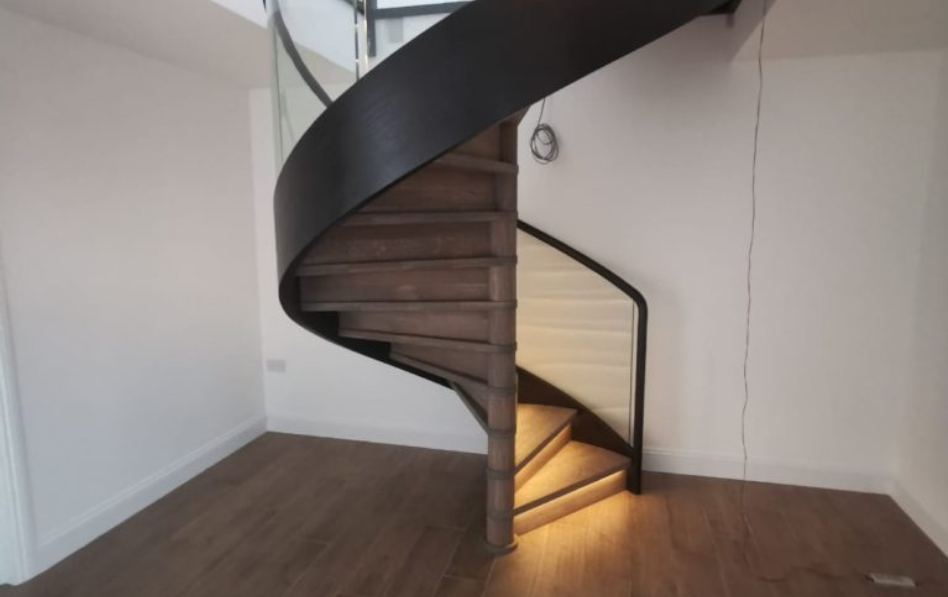
Spiral stairs are designed around a central column. The steps rotate around this column, forming a circular shape. This type of staircase takes up less space compared to other designs.
Spiral staircases are often used in small homes, apartments, or places where space is limited. They are also popular for lofts, balconies, and outdoor access points.
Although spiral stairs look attractive and save space, they may not always be the most comfortable option for daily use because the steps are narrow.
5. Curved Stairs
Curved stairs are similar to spiral stairs but do not form a complete circle. Instead, they follow a smooth, curved path with a larger radius.
These staircases are usually found in luxury homes and large buildings because they require more space and careful design. Curved stairs create an elegant and impressive look, often becoming the main feature of an entryway.
Because of the complexity involved in building them, curved stairs are often part of a bespoke staircase in the UK project where the design is fully customised.
6. Cantilever Stairs
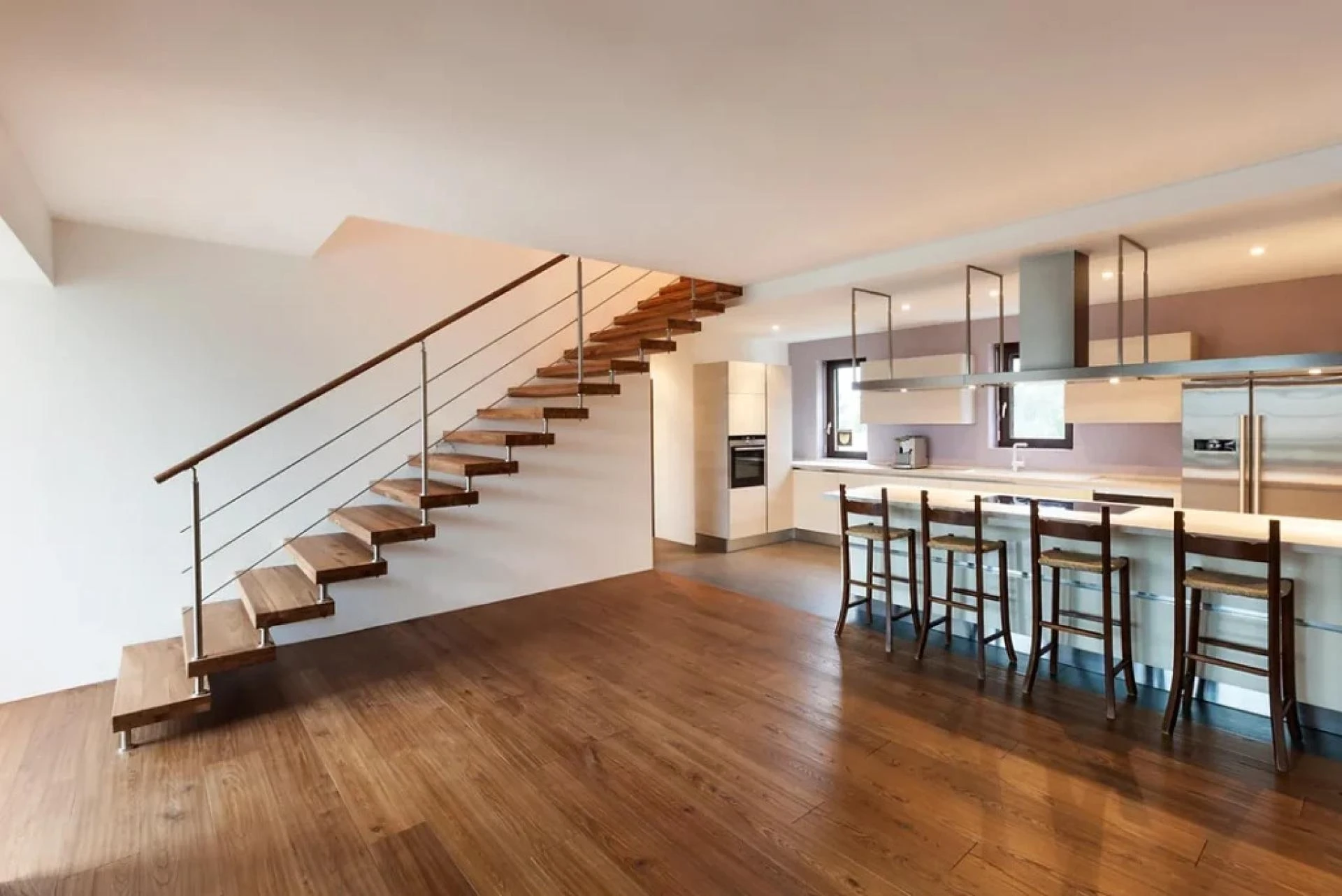
Cantilever stairs are modern and visually striking. In this design, each step is attached to the wall, while the other end appears unsupported. This creates the illusion that the steps are floating in the air.
This style is often used in contemporary homes where minimal design is preferred. Cantilever stairs create a feeling of openness and space, making the interior look larger and brighter.
These staircases require strong structural support inside the wall, so they are usually designed and installed by experienced professionals.
7. Central Stringer Stairs
Central stringer stairs are supported by a single beam located in the centre of the staircase. The steps are attached to this beam, which holds the entire structure together.
This design is popular in modern architecture because it offers both strength and a clean, minimal appearance. Central stringer stairs are often combined with glass railings or wooden treads to create a stylish and contemporary look.
Because of their modern design and strong structure, central stringer stairs are frequently chosen for custom staircase projects and modern interiors.
8. Floating Stairs
Floating stairs are another modern staircase style. In this design, the steps appear to float without visible support. The supporting structure is hidden inside the wall or underneath the stairs.
Floating staircases are popular in modern homes because they create a light and open atmosphere. They allow more natural light to pass through the space and make the interior look larger.
Many homeowners choose floating staircases as part of a bespoke staircase in the UK because they offer a unique and luxurious design.
Choosing the Right Staircase for Your Building
When selecting the right type of staircase for a building, several factors should be considered:
- The available space in the building
- Safety and building regulations
- The style and design of the interior
- The materials used for construction
- The comfort and practicality of daily use
For example, straight or L-shaped stairs may be suitable for smaller homes, while curved or floating staircases may be better for larger and more modern spaces.
Each staircase design offers different advantages, so the choice depends on the needs of the building and the preferences of the owner.
Final Thoughts
Stairs play a crucial role in building construction. They are not only a functional element but also an important design feature that can enhance the appearance of a property.
From simple straight stairs to modern central stringer stairs and elegant curved designs, there are many options available. Choosing the right type of staircase can improve safety, comfort, and the overall style of your home or building.
For homeowners looking for something unique, a bespoke staircase in the UK offers the opportunity to create a staircase that perfectly fits the space and design vision.
If you are planning to install a new staircase or upgrade an existing one, working with experienced professionals is important.
Vonka Stairs specialises in designing and building high-quality staircases tailored to each project. Whether you want a modern floating staircase, elegant curved stairs, or strong central stringer stairs, their expert team can help bring your ideas to life.
Visit www.vonka.co.uk/gallery to see completed staircase projects.
Free design consultation, quotation & site survey available.
5% bonus for architects and contractors.
Enquiries: [email protected]






















Sign in to leave a comment.