

Trademark infringement occurs when a party uses a trademark that is identical or confusingly similar to a registered trademark owned by another party without permission, leading to consumer confusion or harm to the original brand's reputation. This can involve various types of infringement, each carrying specific legal implications. Below are the primary types of trademark infringement:
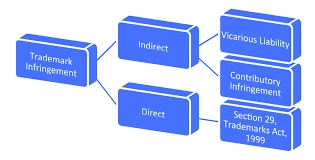
1. Direct Infringement
Direct trademark infringement refers to the unauthorized use of a registered trademark in a way that is likely to cause confusion, deception, or mistake among consumers. For direct infringement to occur, the defendant must use a trademark that is either identical or confusingly similar to the registered trademark, and this use must occur in commerce (i.e., in the marketplace or in connection with the sale of goods or services).
Key factors determining direct infringement include:
- Similarity: The degree to which the defendant's trademark is similar to the registered trademark.
- Likelihood of Confusion: Whether consumers are likely to be confused or deceived into believing that the defendant’s products or services are associated with, endorsed by, or connected to the trademark owner.
2. Use of a Similar Mark (Confusingly Similar)
When a defendant uses a mark that is similar but not identical to a registered trademark, this may lead to confusion in the minds of consumers. This type of infringement occurs when the mark, even though not identical, is sufficiently close in appearance, sound, meaning, or commercial impression to create a likelihood of confusion.
Factors that courts consider when determining whether the marks are confusingly similar include:
- The strength of the original trademark: Stronger marks, such as those with a distinctive or famous brand, are more likely to be protected.
- The similarity of the goods or services: If the products or services associated with both marks are similar, confusion is more likely.
- The similarity of the channels of trade: If the goods or services are sold through the same channels (e.g., online retail), confusion is more likely.
3. Counterfeiting
Counterfeiting is a form of trademark infringement where the defendant uses an identical mark to that of the registered trademark on goods or services that are sold in commerce. The primary intent behind counterfeiting is to deceive consumers into thinking they are purchasing genuine products when, in fact, they are not.
Counterfeiting is often associated with the sale of counterfeit luxury goods, fake medications, or pirated software. This type of infringement is considered one of the most serious because it involves deliberate fraud, and it typically carries more severe penalties under trademark law.
4. False Advertising
False advertising refers to when a business uses another party's trademark in a way that is misleading to the public about the origin, quality, or nature of the goods or services being offered. This can happen when a business uses a competitor’s trademark or a similar mark in advertisements or marketing materials, causing consumers to believe they are associated with or endorsed by the trademark owner.
For example, if a company uses a competitor’s logo or name in their own advertisements to mislead consumers into thinking their product is affiliated with or of the same quality as the competitor’s, this is considered false advertising and trademark infringement.
5. Dilution
Dilution refers to the weakening of the distinctiveness of a famous trademark, even if there is no likelihood of confusion about the origin of the goods or services. There are two main types of dilution:
- Blurring: This occurs when the defendant's use of a similar mark reduces the uniqueness or distinctiveness of the original famous trademark. For example, if a famous brand’s name is used on unrelated goods or services, it may cause consumers to lose the association of that name with its original product.
- Tarnishment: Tarnishment occurs when a famous trademark is used in a way that harms its reputation, such as associating it with low-quality, offensive, or inappropriate products.
Dilution protections are available under U.S. trademark law for famous marks, even if there is no consumer confusion. This allows the owner of a famous trademark to prevent others from diminishing the brand's strength and reputation.
6. Infringement through Domain Names
Trademark infringement can also occur through the use of domain names that are identical or confusingly similar to a registered trademark. This type of infringement is commonly associated with "cybersquatting," where an individual or company registers domain names that are similar to established brands to profit from them by reselling the domain name or directing web traffic to unrelated sites.
The Anti-Cybersquatting Consumer Protection Act (ACPA) in the U.S. allows trademark holders to take legal action against individuals who register domain names that are confusingly similar to their trademarks in bad faith.
7. Secondary Infringement (Contributory and Vicarious Infringement)
Secondary infringement occurs when a party does not directly infringe on a trademark but is still held liable for contributing to or benefiting from another party's infringing actions. This can happen in two ways:
- Contributory Infringement: A party is liable for secondary infringement if it knowingly induces, aids, or facilitates another party’s infringement. For instance, if an online platform knowingly allows the sale of counterfeit goods bearing a registered trademark, it may be liable for contributory infringement.
- Vicarious Infringement: A party may be held responsible for infringing activity if it has the right and ability to control the infringer’s actions and derives a direct financial benefit from the infringement. This often applies to cases where an employer or company benefits from the infringing acts of its employees or agents.




























Sign in to leave a comment.