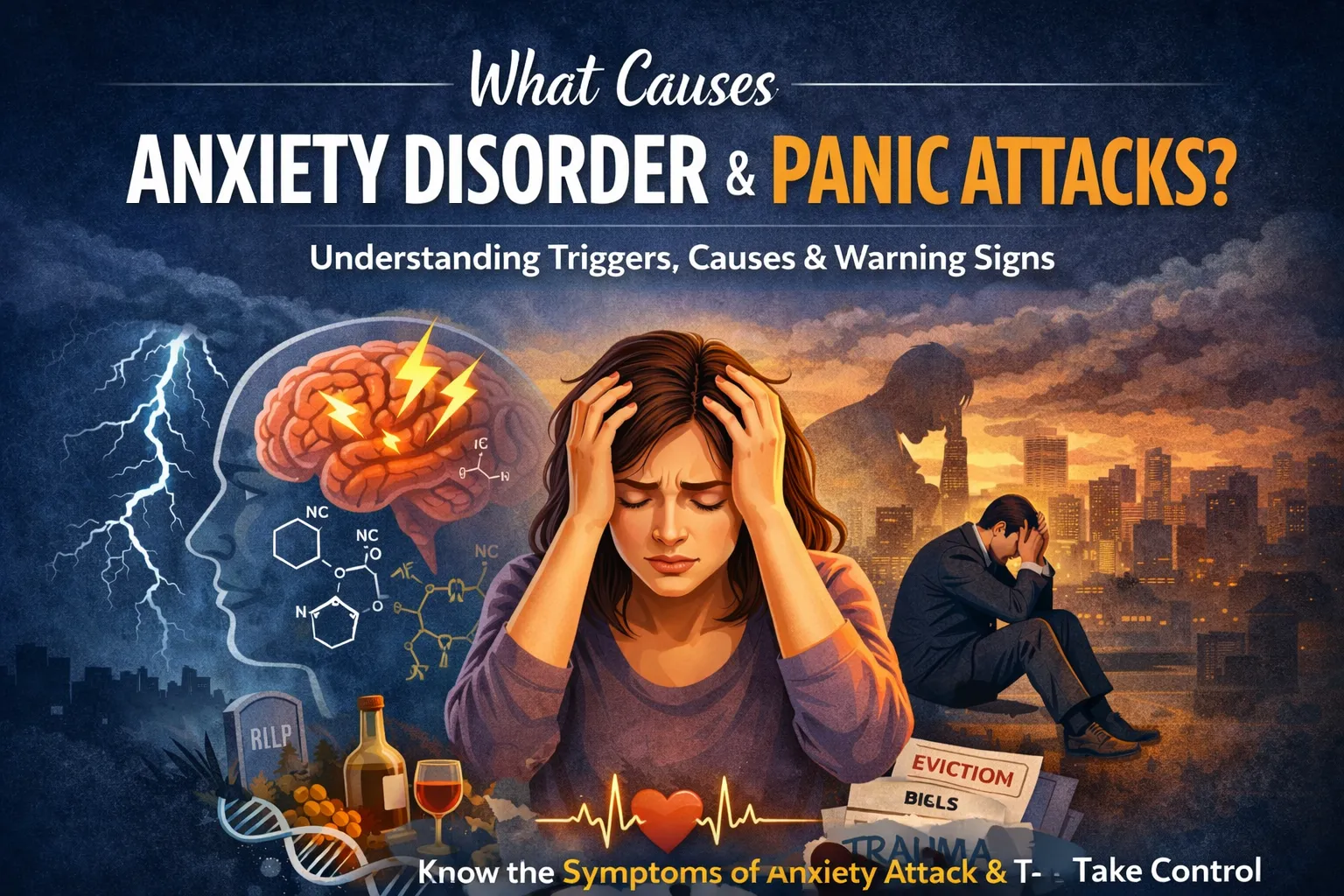

Anxiety is a natural response to stress, but when it becomes overwhelming, persistent, and interferes with daily life, it may develop into an anxiety disorder. Panic attacks, often associated with anxiety disorders, can feel sudden and intense, leaving individuals feeling helpless and frightened. Understanding what causes these conditions is the first step toward managing and overcoming them.
What is Anxiety Disorder?
Anxiety disorder is a mental health condition characterized by excessive fear, worry, or nervousness. Unlike occasional anxiety, it doesn’t go away easily and may worsen over time. It can impact work, relationships, and overall well-being.
What is a Panic Attack?
A panic attack is a sudden episode of intense fear that triggers severe physical reactions even when there is no real danger. It often peaks within minutes and can feel extremely overwhelming.
Symptoms of Anxiety Attack
Recognizing the symptoms of anxiety attack is crucial for early intervention. These symptoms can be both physical and emotional:
- Rapid heartbeat
- Shortness of breath
- Sweating
- Trembling or shaking
- Feeling restless or on edge
- Difficulty concentrating
- Trouble sleeping
- Irritability
These anxiety attack symptoms may vary from person to person but are often persistent and long-lasting.
Causes of Anxiety Disorder and Panic Attacks
There isn’t a single cause of anxiety disorders or panic attacks. Instead, multiple factors contribute to their development.
1. Genetic Factors
If anxiety disorders run in your family, you may be more likely to experience them. Genetics can influence how your brain responds to stress.
2. Brain Chemistry
Imbalances in neurotransmitters like serotonin and dopamine can affect mood regulation, leading to anxiety and panic disorders.
3. Stressful Life Events
Major life changes or traumatic experiences can trigger anxiety disorders. These include:
- Loss of a loved one
- Financial problems
- Relationship issues
- Job stress
4. Personality Traits
People with certain personality types—such as those who are more sensitive, perfectionistic, or prone to overthinking—are more vulnerable to anxiety.
5. Medical Conditions
Certain health issues can contribute to anxiety, including:
- Heart disease
- Thyroid problems
- Chronic illness
6. Substance Use
Excessive use of caffeine, alcohol, or drugs can trigger or worsen anxiety and panic attacks.
7. Environmental Factors
Living in a high-pressure or unsafe environment can increase anxiety levels over time.
What Does an Anxiety Attack Feel Like?
An anxiety attack often builds up gradually. You may feel a growing sense of worry or fear that becomes difficult to control. Physically, it may feel like:
- A tight chest
- Heavy breathing
- Constant tension
Emotionally, it can feel like something bad is about to happen, even without a clear reason.
What Causes Anxiety Attacks?
If you’re wondering what causes anxiety attacks, the answer lies in triggers. These triggers may include:
- Stressful situations
- Social interactions
- Phobias (fear of heights, crowds, etc.)
- Negative thinking patterns
- Past trauma
Sometimes, anxiety attacks can occur without any obvious trigger, making them even more distressing.
What Causes Anxiety Disorder and Panic Attacks?
Understanding what causes anxiety disorder and panic attacks requires looking at the interaction of multiple factors:
- Biological (genetics and brain function)
- Psychological (thought patterns and coping skills)
- Environmental (life experiences and surroundings)
When these factors combine, they can lead to chronic anxiety and sudden panic episodes.
Panic Attack vs Anxiety Attack
Many people confuse these two, but there are key differences:
| Feature | Anxiety Attack | Panic Attack |
|---|---|---|
| Onset | Gradual | Sudden |
| Trigger | Often identifiable | May occur without warning |
| Intensity | Mild to moderate | Severe |
| Duration | Longer-lasting | Peaks quickly (minutes) |
Understanding what is a panic attack vs anxiety attack can help you respond appropriately.
What is an Anxiety Attack?
If you're asking what is an anxiety attack, it is a period of intense worry or fear that builds over time. Unlike panic attacks, anxiety attacks are usually linked to a specific stressor and may last longer.
Managing Anxiety and Panic Attacks
While understanding causes is important, managing symptoms is equally crucial.
Practical Tips:
- Practice deep breathing exercises
- Maintain a healthy lifestyle
- Limit caffeine and alcohol
- Exercise regularly
- Try mindfulness or meditation
- Seek professional help when needed
When to Seek Help
If anxiety or panic attacks:
- Occur frequently
- Interfere with daily life
- Feel uncontrollable
It’s important to consult a mental health professional. Early treatment can significantly improve quality of life.
Conclusion
Anxiety disorders and panic attacks are complex conditions influenced by a combination of genetic, psychological, and environmental factors. By understanding the symptoms of anxiety attack and recognizing anxiety attack symptoms, you can take the first step toward managing them effectively. Awareness, self-care, and professional support can make a significant difference in overcoming anxiety and living a balanced life.
FAQ (Frequently Asked Questions)
1. What causes anxiety attacks?
Anxiety attacks can be triggered by stress, fear, trauma, or even overthinking. Sometimes, they occur without a clear cause.
2. What does an anxiety attack feel like?
It feels like intense worry combined with physical symptoms such as rapid heartbeat, sweating, and difficulty breathing.
3. What causes anxiety disorder and panic attacks?
They are caused by a mix of genetics, brain chemistry, stress, personality traits, and environmental factors.
4. What is a panic attack vs anxiety attack?
Panic attacks are sudden and intense, while anxiety attacks build gradually and are usually linked to stress.
5. What is an anxiety attack?
An anxiety attack is a prolonged period of excessive worry or fear triggered by stress or specific situations.
6. Can anxiety attacks happen without warning?
Yes, especially panic attacks can occur suddenly without any obvious trigger.
7. Are anxiety disorders treatable?
Yes, they can be managed with therapy, medication, and lifestyle changes.
8. Can lifestyle affect anxiety levels?
Absolutely. Poor sleep, unhealthy diet, and lack of exercise can worsen anxiety.
9. Is anxiety a mental illness?
Yes, anxiety disorders are recognized mental health conditions.
10. When should I see a doctor for anxiety?
If anxiety affects your daily life or becomes overwhelming, it’s important to seek professional help.

























Sign in to leave a comment.