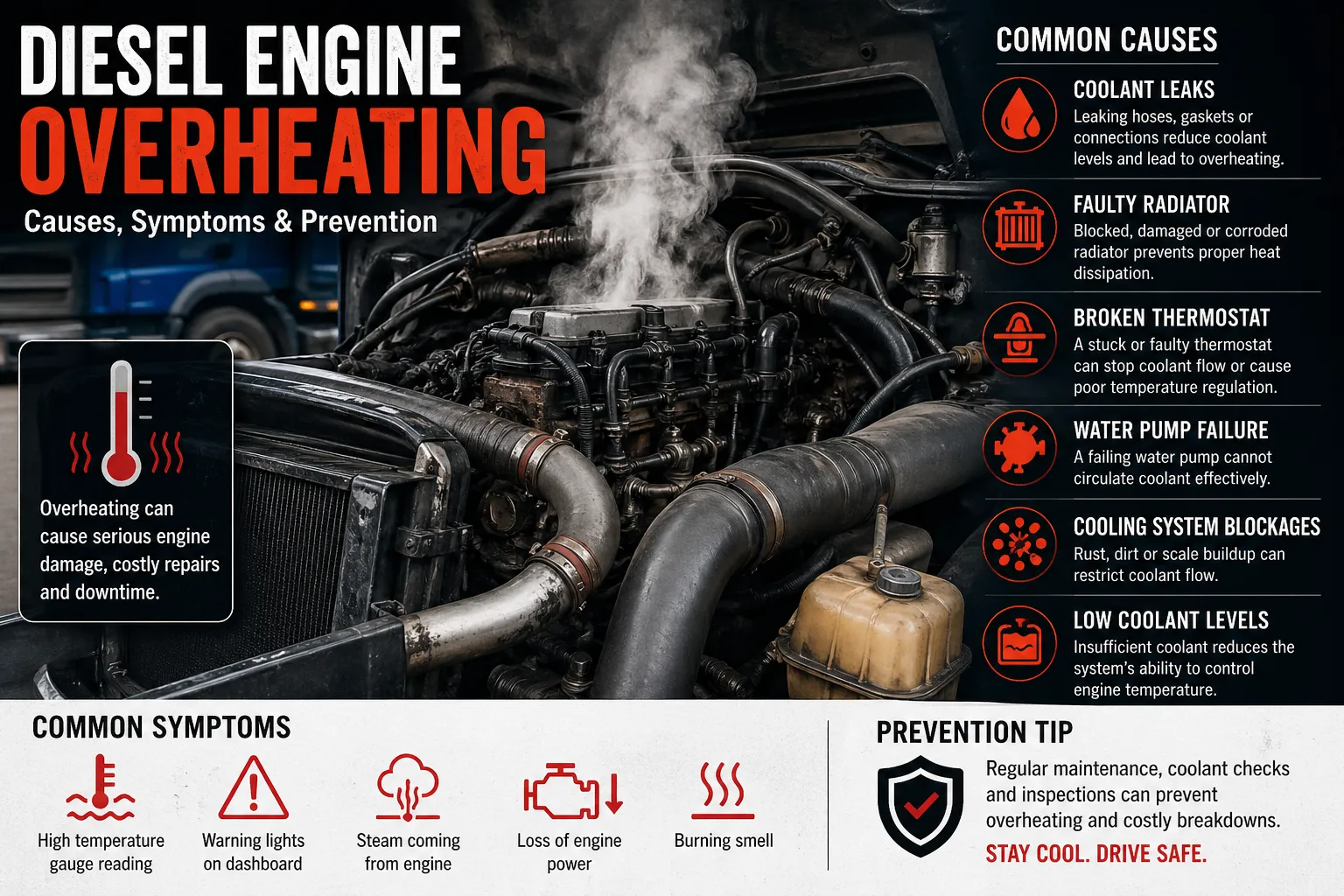


Diesel engine overheating is a serious problem for heavy-duty trucks. It can lead to expensive repairs, unexpected breakdowns, and missed deliveries. For drivers and fleet operators in Perth, even a short overheating issue can stop operations and cost money. Understanding the causes and knowing what to do can help keep your truck on the road.
What Causes Diesel Engine Overheating?
Diesel engine overheating usually happens when the cooling system cannot control engine temperature. In heavy trucks, this system works hard, so even a small fault can lead to bigger problems.
1. Coolant Leaks
Coolant helps remove heat from the engine. If there is a leak:
- Coolant levels drop
- Heat builds up inside the engine
- The engine temperature rises quickly
A small crack in a hose can slowly leak coolant. Many drivers don’t notice it until the engine starts overheating on a long trip.
2. Faulty Radiator
The radiator cools down the hot coolant. If it is blocked, damaged, or worn out:
- Heat cannot escape properly
- The coolant stays hot
Dirt, rust, and road debris often cause radiator problems in heavy-duty trucks.
3. Broken Thermostat
The thermostat controls how coolant flows through the engine.
- If it gets stuck closed, coolant cannot move → the engine overheats
- If it fails, temperature control becomes unstable
This is a common issue when trucks are not serviced regularly.
4. Water Pump Failure
The water pump moves coolant through the engine. If it stops working:
- Coolant stops flowing
- Heat builds up fast
You may hear unusual noises or see leaks near the pump.
5. Cooling System Blockages
Over time, dirt, rust, or sludge can build up inside the system. This blocks coolant flow and reduces cooling performance.
6. Low Coolant Levels
Low coolant can happen even without a visible leak.
- Poor maintenance
- Natural loss over time
Without enough coolant, the engine cannot stay at a safe temperature.
Common Symptoms of an Overheating Diesel Engine
Spotting the warning signs early can prevent engine damage.
Look out for:
- Temperature gauge rising
- Warning lights on the dashboard
- Steam coming from under the hood
- Loss of power
- Burning smell
If you ignore these signs, the engine can suffer serious damage, including failure.
How to Fix Diesel Engine Overheating
Fixing overheating starts with finding the cause. One important point: avoid trying complex repairs without proper experience.
What to Do First:
- Pull over safely
- Turn off the engine
- Let it cool down
Repairs May Include:
- Fixing coolant leaks
- Replacing a damaged radiator
- Changing the thermostat
- Flushing the cooling system
- Repairing or replacing the water pump
Many drivers try to fix problems themselves. This often makes things worse. For example, opening a hot radiator cap can cause serious burns.
How to Prevent Diesel Engine Overheating
Regular maintenance helps avoid breakdowns and keeps your truck reliable.
Simple Prevention Tips:
- Check coolant levels often
- Inspect hoses for leaks or cracks
- Service your truck on schedule
- Keep the radiator clean
- Watch the temperature gauge during long drives
A common tip from experienced mechanics: always work with certified professionals who understand heavy-duty diesel systems.
When to Call a Diesel Mechanic
You should call a mechanic right away if:
- The engine overheats more than once
- You see coolant leaks
- Warning lights stay on
- The truck loses power
Quick action can prevent bigger damage. Roadside assistance is especially helpful if the issue happens during a trip.
Diesel Mechanic Near You in Perth
If you are searching for a diesel mechanic near you in Perth, choose a team with real experience in heavy trucks.
Look for:
- Certified diesel mechanics
- Experience with heavy-duty vehicles
- Roadside assistance services
- Fast and accurate diagnosis
This helps reduce downtime and keeps your business running.
Conclusion
Diesel engine overheating is often caused by cooling system issues such as coolant leaks, faulty radiators, or broken thermostats. If not fixed early, it can lead to serious engine damage and high repair costs.
Regular checks, proper maintenance, and working with experienced mechanics can help prevent problems. Acting early is the best way to avoid breakdowns and keep your truck moving.


























Sign in to leave a comment.