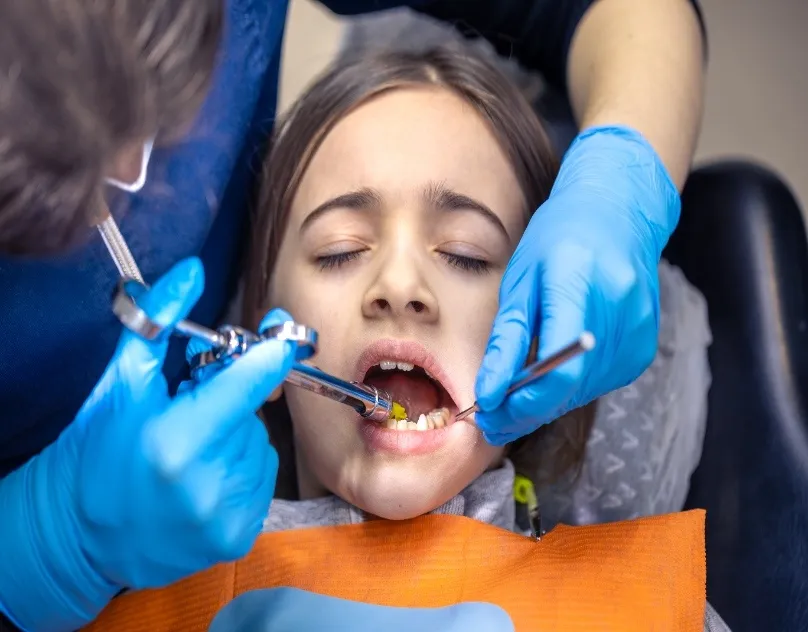


Regular checkups catch cavities, gum inflammation, and bite problems while they are still small and easy to treat. Skipping them lets these small issues grow into something painful and expensive to fix. Prevention costs far less.
Most early dental problems, like a soft spot on a molar or a jaw that is not growing evenly, do not cause pain until they have already worsened. Catching decay early with digital X-rays changes that outcome for most families.
If you are a parent in Southern Illinois searching for a pediatric dentist Mount Vernon IL families trust, it helps to know what a dentist looks for during a visit, and why catching problems early matters this much.
Key Takeaways
- Cavities are the most common issue caught during pediatric checkups, and they're far cheaper to treat early
- Gum inflammation in kids is often reversible with better home care once a dentist flags it
- Checkups also catch bite and jaw growth problems before they require full orthodontic treatment
- Digital X-rays reveal decay between teeth that's invisible during a standard visual exam
- Consistent checkups build comfort with the dentist, which reduces fear at every future visit
What Really Happens During a Pediatric Dental Checkup Visit?
Children's dental checkups cover more than a quick look at the teeth. The dentist examines every tooth surface, checks gums for swelling or bleeding, reviews bite alignment, and often takes digital X-rays below the surface.
Families across the region who choose Mount Vernon dentistry get a full evaluation from a team trained specifically in children's oral development. That focus shapes every part of the visit, not just adult dental care applied to a smaller mouth.
The dentist also asks about brushing habits and diet at home. Any pain or sensitivity the child has mentioned recently matters too. That short conversation often surfaces problems a visual exam alone would miss entirely.
How Do Regular Checkups Actually Help Prevent Cavities?
Checkups catch cavities while they are still confined to the enamel, well before they reach the nerve and start causing pain. Fluoride varnish and sealed molar grooves both stop decay from starting in the first place.
According to CDC data, 20% of children ages 5 to 11 have at least one untreated cavity, and untreated decay can affect a child's eating, speaking, and learning. A checkup usually prevents that. Early action matters most.
Dental sealants are one of the simplest tools a dentist uses. A thin coating goes over the chewing surfaces of back teeth, where food and bacteria collect in tiny grooves a toothbrush bristle cannot fully clean.
Children without sealants get almost 3 times more cavities than children with them, according to CDC research on school-age kids. Digital X-rays add another layer, revealing decay between teeth a visual exam cannot see.
What Gum Problems and Bite Issues Do Checkups Catch Early?
Checkups also catch gum inflammation and bite problems long before they become painful or require major treatment. Early gum disease in kids, called gingivitis, is almost always reversible with better brushing habits.
Gum health check: the dentist looks for redness, swelling, or bleeding along the gumline, which usually points to plaque buildup rather than anything serious, though it still needs attention before it progresses further.
Bite and jaw growth issues are trickier to spot without training. A dentist watches how upper and lower teeth meet and whether baby teeth are falling out on a normal, age-appropriate schedule each visit.
Catching a crossbite or crowding issue early sometimes means a simple appliance instead of years of orthodontics later. That is one reason Mt Vernon dentistry visits stay on a consistent six-month schedule for every child.
- Gum inflammation that's usually reversible with improved home care
- Crossbites and crowding that are easier to correct before permanent teeth fully erupt
- Delayed or early tooth loss that can signal a growth pattern worth monitoring
- Thumb-sucking or tongue-thrust habits that checkups flag before they reshape the palate
Why Do Checkups Matter So Much More for Growing Kids Now?
A child's mouth changes faster than an adult's, which means small problems can escalate in months instead of years. Baby teeth hold space for permanent teeth, so losing one early from decay can throw off a child's entire smile alignment.
The American Academy of Pediatric Dentistry recommends a first dental visit by a child's first birthday, or within six months of the first tooth appearing, so a dentist can track growth from the very beginning.
Growing mouths need closer monitoring: because baby teeth, jaw bones, and permanent teeth develop at once, the American Dental Association recommends checkups roughly every six months for most children through 2026.
What Happens When Checkups Get Skipped for a Few Years?
Skipping checkups for a few years usually means small problems get discovered as big ones. A cavity that would have needed a simple filling can progress into an infection requiring an extraction or a pulpotomy.
Kids who only see a dentist during a painful moment tend to link every visit with stress. That makes future appointments harder to schedule. Consistent, low-key checkups help avoid that pattern, which matters for comfort too.
Families that stay consistent with checkups at a trusted local pediatric office tend to see fewer emergency visits, since most problems get flagged early while still minor and inexpensive to fix properly.
Conclusion
Regular checkups are not a formality. They stop small cavities, gum inflammation, and bite issues from turning into painful, expensive problems down the road, which matters heading into the 2025 to 2026 school year.
Catching decay while it is still in the enamel, spotting a crossbite before permanent teeth erupt, or reversing gingivitis with better home care all happen because a dentist looked closely at the right moment in time.
At Associated Pediatric Dentistry, the team focuses on catching these issues early through gentle checkups built around how kids' mouths actually grow, backed by preventive dental care for kids at every visit.
Whether it is a first visit, a routine cleaning, or a concern that has nagged at you for weeks, the goal stays the same. Healthy teeth, without unnecessary pain or cost. Contact Associated Pediatric Dentistry today.
Frequently Asked Questions
How often should my child visit Mount Vernon dentistry?
Most children need a checkup every six months. Kids with braces, sedation needs, or higher cavity risk may need more frequent visits, based on their dental history.
Can a routine checkup really prevent a cavity from forming?
Yes. A protective coating applied during a checkup seals the grooves where bacteria collect on molars, stopping many cavities before they ever get a chance to start.
What age should my child start seeing a pediatric dentist?
The American Academy of Pediatric Dentistry recommends a first visit by age one or within six months of the first tooth appearing, so growth can be tracked from the start.
Do Mt Vernon dentistry checkups usually cause kids anxiety?
A well-run pediatric checkup is designed to be gentle and low-stress. Starting checkups early and keeping them consistent is one of the best ways to prevent dental anxiety later on.
What happens if my child skips checkups for a year or two?
Small, easily treated problems like early decay or mild gum inflammation often progress into bigger issues, including infections or crowding, that require more involved treatment.



























Sign in to leave a comment.