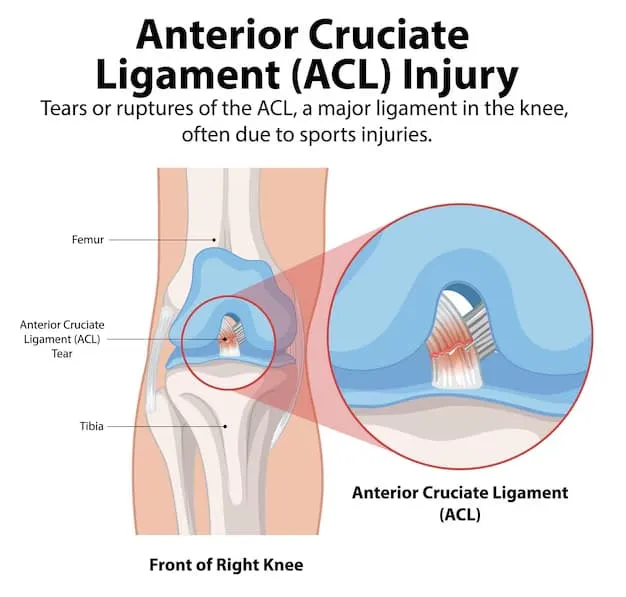

ACL surgery is often only the beginning of the recovery journey. After the procedure, the knee needs time, structured rehabilitation, and gradual strengthening to regain stability and function. Understanding what happens after surgery can help patients prepare realistically for the different stages of recovery.
For someone consulting an ACL Repair Surgeon in Jaipur, one of the most important discussions is not just about the operation itself, but also about what happens during the weeks and months afterward. Recovery can vary depending on the severity of the injury, the surgical technique, associated injuries, physical condition, rehabilitation, and the activities the patient hopes to return to.
ACL Recovery Is a Process, Not a Single Milestone
A successful ACL recovery does not simply mean being able to walk without pain. The knee may need to progress through several stages before it is ready for demanding activities such as running, jumping, changing direction, or competitive sports.
A typical recovery journey may involve:
Early protection → movement restoration → strength building → balance and control → running → sport-specific training → return to activity
The exact progression is individualized. Patients should follow the rehabilitation plan provided by their orthopaedic surgeon and physiotherapist rather than comparing their recovery with someone else's.
The First Few Days After ACL Surgery
Immediately after surgery, the primary goals are protecting the reconstructed ligament, controlling swelling and discomfort, and beginning safe movement.
Patients may experience:
- Knee swelling
- Mild to moderate pain
- Stiffness
- Difficulty putting weight on the leg initially
- Reduced quadriceps strength
- Temporary difficulty with everyday movements
Depending on the surgical procedure and associated injuries, the patient may use crutches or a knee brace for a period of time.
Early exercises are generally introduced according to the surgeon's rehabilitation protocol. Regaining knee extension is particularly important during the early phase.
Weeks 1–3: Restoring Basic Knee Movement
During the initial rehabilitation period, physiotherapy focuses on gradually restoring movement and improving muscle activation.
Common goals may include:
- Reducing swelling
- Achieving better knee extension
- Gradually improving knee flexion
- Activating the quadriceps
- Improving walking mechanics
- Building confidence in weight-bearing
The exercises should be progressed according to the patient's condition. Doing too much too soon can place unnecessary stress on the healing knee.
Weeks 3–6: Building a Stronger Foundation
As early symptoms improve, rehabilitation generally becomes more focused on strength and controlled movement.
Exercises may gradually include activities designed to strengthen:
- Quadriceps
- Hamstrings
- Gluteal muscles
- Calf muscles
- Core muscles
Strengthening the muscles around the hip and knee helps improve lower-limb control.
At this stage, patients may feel considerably better, but that does not necessarily mean the ACL graft has fully recovered. Feeling less pain should not be interpreted as permission to immediately return to sports.
Why Physiotherapy Matters So Much
Physiotherapy is a central part of ACL rehabilitation.
Surgery addresses the damaged ligament, but rehabilitatioTotal Knee Replacement Jaipurn helps the patient regain the strength, movement, coordination, balance, and confidence needed for normal activities.
A physiotherapist may progressively work on:
- Range of motion
- Muscle activation
- Strength
- Balance
- Proprioception
- Walking mechanics
- Functional movement
- Running and sport-specific skills
The exercises are usually modified as the patient's strength and control improve.
What Happens When Strength Starts Returning?
One of the important middle stages of ACL recovery is rebuilding strength without compromising knee control.
Patients may gradually move from basic exercises to more challenging strengthening activities. The focus is not simply on how much weight can be lifted but also on whether the movement is controlled and symmetrical.
A patient may be able to perform an exercise but still have weakness or poor movement mechanics. These factors can influence the progression of rehabilitation.
Returning to Running
Running is usually introduced only after the knee has reached appropriate rehabilitation milestones.
Before running, the patient may need adequate:
- Knee range of motion
- Muscle strength
- Balance
- Single-leg control
- Minimal swelling
- Functional movement
The timing varies considerably between patients. A calendar alone should not determine when someone begins running.
Returning to Sports Takes Longer
Sports involving rapid changes of direction, jumping, pivoting, or sudden stopping place significant demands on the knee.
Therefore, returning to competitive sport generally requires more than simply being pain-free.
Sport-specific rehabilitation may include:
- Agility drills
- Direction changes
- Jumping and landing exercises
- Acceleration and deceleration
- Single-leg control
- Sport-specific movement patterns
The patient should progress through these stages under appropriate professional guidance.
Why You May Feel Better Before the Knee Is Fully Ready
This is one of the most important things patients should understand.
Pain and swelling may decrease considerably during recovery, creating a feeling that the knee is almost normal. However, internal healing and neuromuscular recovery continue for much longer.
The graft also undergoes biological changes during the healing process.
Therefore, returning to high-demand activities solely because the knee feels comfortable can be premature.
What Can Slow Down ACL Recovery?
Recovery does not always follow a perfectly predictable timeline. Several factors can influence progress.
Associated Injuries
ACL injuries may occur alongside meniscus, cartilage, or other ligament injuries. Additional procedures can affect rehabilitation.
Muscle Weakness
Significant weakness, particularly in the quadriceps, can make functional recovery more challenging.
Poor Rehabilitation Adherence
Skipping exercises or physiotherapy sessions may limit strength and movement recovery.
Returning to Activity Too Quickly
Increasing running, jumping, or sports activity before meeting rehabilitation milestones can place excessive demands on the recovering knee.
Individual Health Factors
Age, fitness level, body weight, previous injuries, general health, and activity demands can all influence recovery.
ACL Repair in Jaipur: Why Individual Planning Matters
Patients searching for ACL Repair in Jaipur should understand that ACL treatment is not limited to the surgical procedure.
A complete treatment plan may involve clinical assessment, imaging, surgical planning when required, rehabilitation, physiotherapy, and follow-up.
Not every ACL injury necessarily requires surgery. The decision depends on factors such as the type and extent of the tear, knee instability, associated injuries, activity level, and the patient's goals.
An orthopaedic evaluation helps determine whether surgical or non-surgical management is appropriate.
How an ACL Repair Surgeon Helps During Recovery
An ACL Repair Surgeon in Jaipur does more than perform the surgical procedure. Follow-up appointments allow the surgeon to monitor healing, assess knee movement, review strength progression, and identify concerns during recovery.
Depending on the patient's progress, the rehabilitation program may be adjusted.
Patients should report unusual symptoms such as increasing pain, significant swelling, wound problems, fever, calf pain, or sudden changes in knee function rather than ignoring them.
ACL Recovery and Other Knee Replacement Care
Orthopaedic specialists may also treat advanced knee joint conditions that are unrelated to ACL injuries.
For example, Total Knee Replacement Jaipur services are generally considered for patients with significant damage to the knee joint, often associated with advanced arthritis and persistent functional limitations. Total knee replacement and ACL reconstruction are different procedures designed for different clinical situations.
This distinction is important because knee pain does not automatically indicate the need for either procedure. Diagnosis and imaging help determine the underlying problem and appropriate treatment.
How Can Patients Support Their Recovery?
Patients can play an active role in rehabilitation.
Follow the Rehabilitation Plan
Complete prescribed exercises consistently and attend recommended physiotherapy sessions.
Respect Activity Restrictions
Avoid running, jumping, pivoting, or other high-impact activities until they are cleared.
Focus on Technique
Perform exercises with proper form rather than rushing to increase repetitions or resistance.
Maintain General Fitness
When permitted, suitable exercises can help maintain overall fitness without unnecessarily stressing the recovering knee.
Attend Follow-Up Visits
Regular clinical assessments help track recovery and guide progression.
When Can You Return to Normal Activities?
There is no single recovery timeline that applies to every ACL patient.
Returning to everyday activities may occur much earlier than returning to competitive sports. The latter generally requires more extensive rehabilitation and objective assessment of strength and movement.
Rather than asking only, “How many months has it been?”, patients should also ask:
- Is my knee stable?
- Is my range of motion adequate?
- Has my strength recovered sufficiently?
- Can I control the leg during single-leg movements?
- Can I perform sport-specific activities safely?
- Has my surgeon or rehabilitation team cleared me for progression?
These factors provide a more meaningful picture of readiness.
Dr. Abhishek Gupta and Comprehensive Orthopaedic Care
Dr. Abhishek Gupta is a Senior Consultant Orthopaedic & Joint Replacement Surgeon with more than 25 years of experience. His areas of expertise include arthroscopy, ACL and ligament treatment, sports injuries, knee conditions, hip conditions, and joint replacement procedures.
For patients undergoing ACL treatment, his approach involves evaluating the injury, understanding the patient's activity requirements, determining the appropriate treatment pathway, and supporting rehabilitation as part of the overall recovery process.
Whether the concern involves an ACL injury, another sports-related knee problem, or degenerative joint disease, an accurate diagnosis is an important first step toward selecting appropriate treatment.
Frequently Asked Questions
1. How long does ACL recovery take after surgery?
Recovery varies between individuals. Everyday activities may return sooner, while running and sports generally require longer rehabilitation and specific functional milestones.
2. Is physiotherapy necessary after ACL surgery?
Rehabilitation is an important part of ACL recovery. It helps restore movement, strength, balance, coordination, and functional knee control.
3. Can I walk normally after ACL surgery?
Walking ability gradually improves during recovery. The timing depends on the surgical procedure, associated injuries, pain, swelling, muscle strength, and the rehabilitation plan.
4. When can I start running after ACL surgery?
Running is generally introduced after appropriate strength, movement, stability, and functional milestones have been achieved. The timing should be determined by the treating team.
5. Can I return to sports after ACL surgery?
Many patients work toward returning to sports, but the timing depends on rehabilitation progress and the demands of the particular sport. Clearance should be based on clinical and functional assessment rather than time alone.
6. Why does my knee still feel weak after surgery?
Muscle weakness, particularly around the quadriceps, can persist during ACL rehabilitation. Consistent, appropriately progressed strengthening is generally an important part of recovery.
7. Can an ACL tear heal without surgery?
Some ACL injuries may be managed without surgery depending on the extent of the injury, knee stability, associated damage, activity level, and individual goals. An orthopaedic assessment is needed to determine the appropriate approach.
8. What happens if I return to sports too early?
Returning to high-demand activities before the knee has adequately recovered may increase stress on the recovering knee and may raise the risk of further injury.
9. Is ACL surgery the same as total knee replacement?
No. ACL surgery is generally performed to address instability caused by an ACL injury, while total knee replacement replaces damaged joint surfaces in a severely diseased or arthritic knee.
10. What is the most important part of ACL recovery?
Recovery involves multiple components, including protecting the knee, restoring movement, rebuilding strength, improving balance and movement control, following rehabilitation, and gradually returning to activities.
Final Thoughts
ACL recovery involves much more than the day of surgery. It is a gradual process in which knee movement, muscle strength, balance, stability, and functional control are progressively restored.
If you are considering treatment from an ACL Repair Surgeon in Jaipur, discuss the nature of your injury, surgical options when appropriate, expected rehabilitation, and activity-specific recovery goals with your orthopaedic specialist.
A structured rehabilitation plan and patient-specific progression can help make the recovery process more informed and manageable while reducing the temptation to return to demanding activities before the knee is ready.



















Sign in to leave a comment.