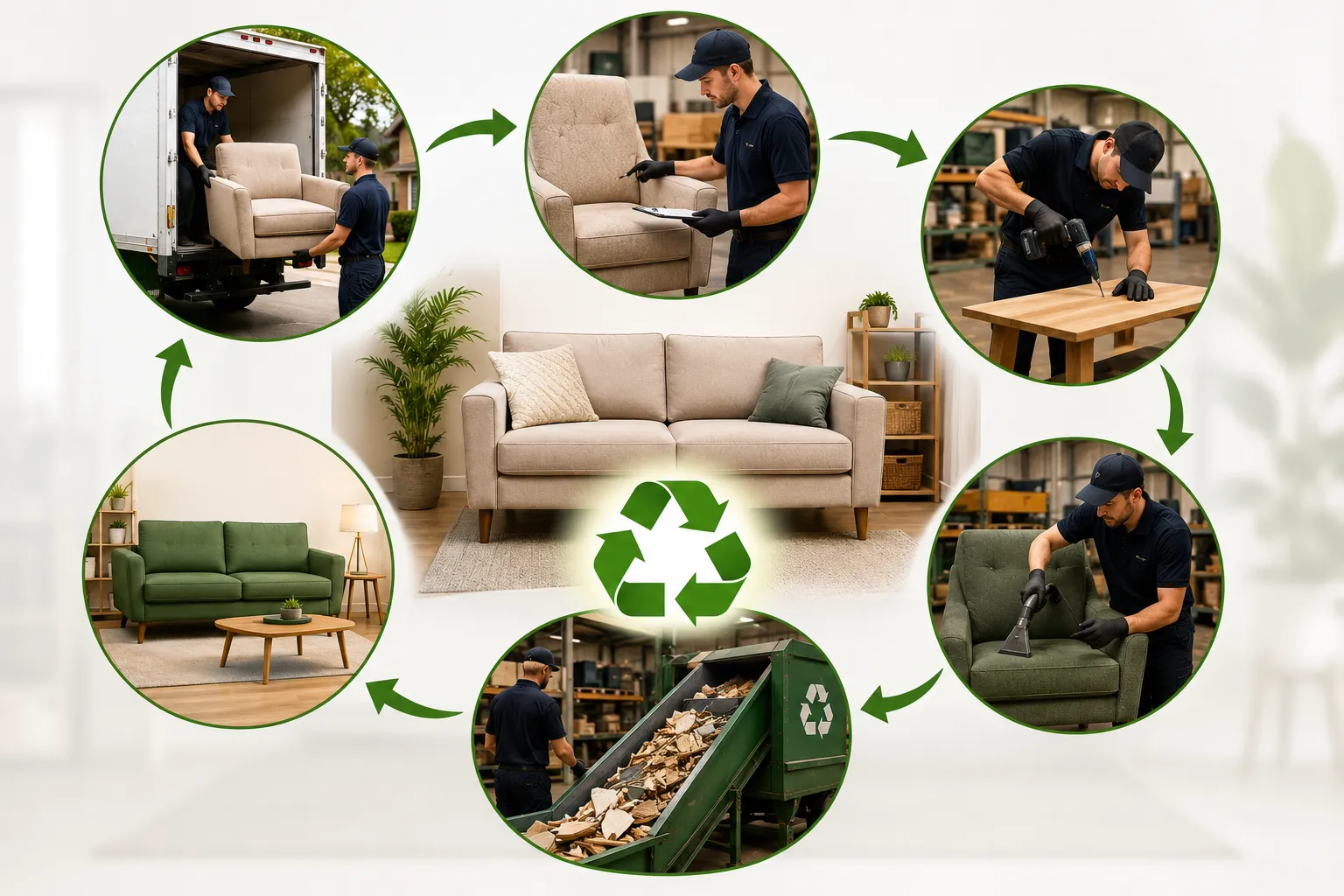

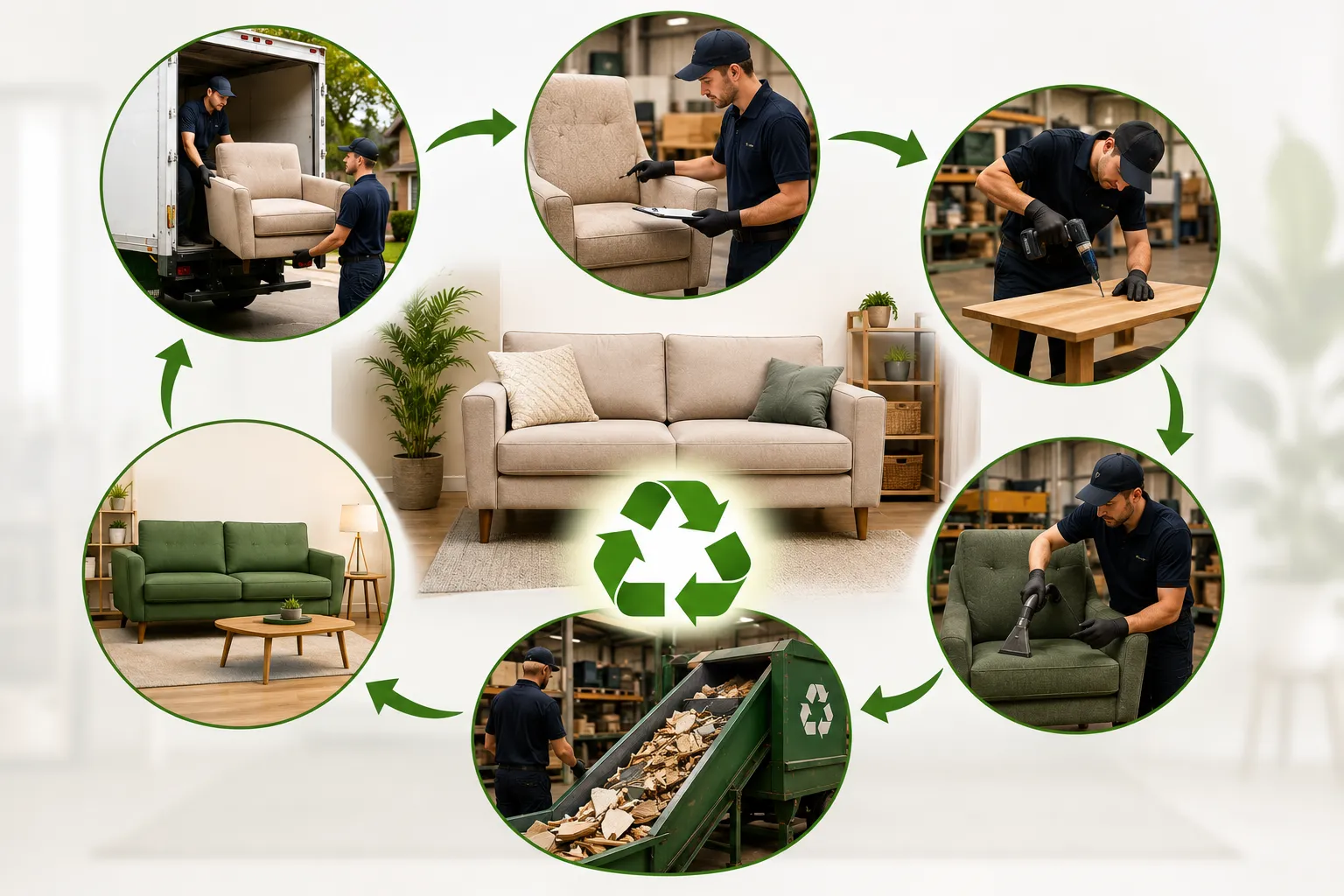
You click "Return Item" on a website, a delivery team pulls up to your house to haul away the box or the fully assembled sofa, and you get your money back. For you, the transaction is over. But that piece of furniture has a long way to go.
With online home shopping reaching record highs, return rates have skyrocketed. Today, nearly 30% of all e-commerce purchases are sent back, and furniture is one of the hardest categories for companies to handle.
So, what actually happens to a couch, a dining table, or an office chair after it leaves your house? The truth is a mix of high-tech logistics, financial calculations, and a major environmental battle.
The Reverse Logistics Dilemma
When a shirt is returned to a clothing retailer, it can easily be folded, placed in a new poly-bag, and shipped back to a shelf. Furniture is a completely different beast. It is heavy, fragile, and takes up massive amounts of warehouse space.
Processing a single returned sofa can cost a retailer up to 60% of the item’s original retail value just in handling fees. The brand has to pay for the two-person pickup crew, transport the unboxed item to a regional distribution hub, inspect it for damage, clean it, and figure out where to put it.
Because traditional retail warehouses are optimized to push new boxes out, storing loose, opened returns ruins their efficiency. Therefore, companies have to decide the fate of that piece of furniture almost immediately based on three paths: liquidation, donation, or the landfill.
Path 1: The B2B Liquidation Market (The Smart Alternative)
To recoup some of their losses without clogging up their main warehouses, major retailers rely heavily on Business-to-Business (B2B) liquidation networks.
Instead of trying to sell single items to individual buyers, brands bundle hundreds of returned items onto pallets or fill up 53-foot semi-truckloads. They list these loads on private B2B platforms where a massive ecosystem of independent resellers, antique flippers, and small businesses bid on them.
This is where networks like LoopDeco step in to fix the supply chain. Traditionally, these bulk loads were shipped blindly across the country, letting high freight costs eat up the profits.
Decentralized networks keep these items local. By connecting national brands directly with local resale networks right in the same metropolitan area, returns are routed straight to local warehouses or independent stores. The item gets a second life, and a local small business makes a predictable profit.
Path 2: Charitable Donation and Furniture Banks
Many retailers genuinely want to do the right thing and avoid the dump, so they form partnerships with national non-profits and regional "furniture banks." Organizations like Habitat for Humanity ReStore, or local housing charities, are frequent recipients of these items.
When a return is picked up and deemed structurally perfect but cannot be resold as new due to a minor cosmetic blemish, it may be routed directly to a charity. The retailer gets a tax write-off, and the furniture goes directly to families transitioning out of homelessness, refugee families, or lower-income households.
However, this path has strict quality limits. If an item has heavy pet hair, deep stains, or missing crucial assembly hardware, charities will reject it because they lack the workforce to clean or fix it.
Path 3: The Grim Reality of the Landfill
If a return can't be quickly liquidated or accepted by a local charity, it faces a dark destination. According to data from the U.S. Environmental Protection Agency (EPA), over 12 million tons of furniture and furnishings are discarded in the United States every single year. A staggering 80% of that waste goes straight into landfills.
Why would a multi-billion-dollar retailer choose to throw away a perfectly good $1,000 sectional?
- The Freight Trap: If a return center is located 500 miles away from the nearest liquidation hub, the cost to truck that single couch across state lines might be higher than the value of the couch itself. Economically, it becomes cheaper for the brand to pay a local junk hauler to dump it.
- Brand Protection Rules: Some high-end luxury furniture brands strictly forbid their items from being sold on discount liquidation sites because they worry it will hurt their luxury image. In those rigid corporate structures, items are intentionally destroyed and thrown out.
Closing the Loop on Furniture Waste
The journey of returned furniture highlights a massive flaw in modern e-commerce, but it also highlights a massive opportunity. As consumers and businesses shift toward a circular economy, the pressure on retailers to stop dumping sound furniture is at an all-time high.
By building smarter local logistics networks and supporting independent resellers who can repair and re-home open-box items, we can keep valuable materials out of the ground and build a sustainable, zero-waste future for home decor.




























Sign in to leave a comment.