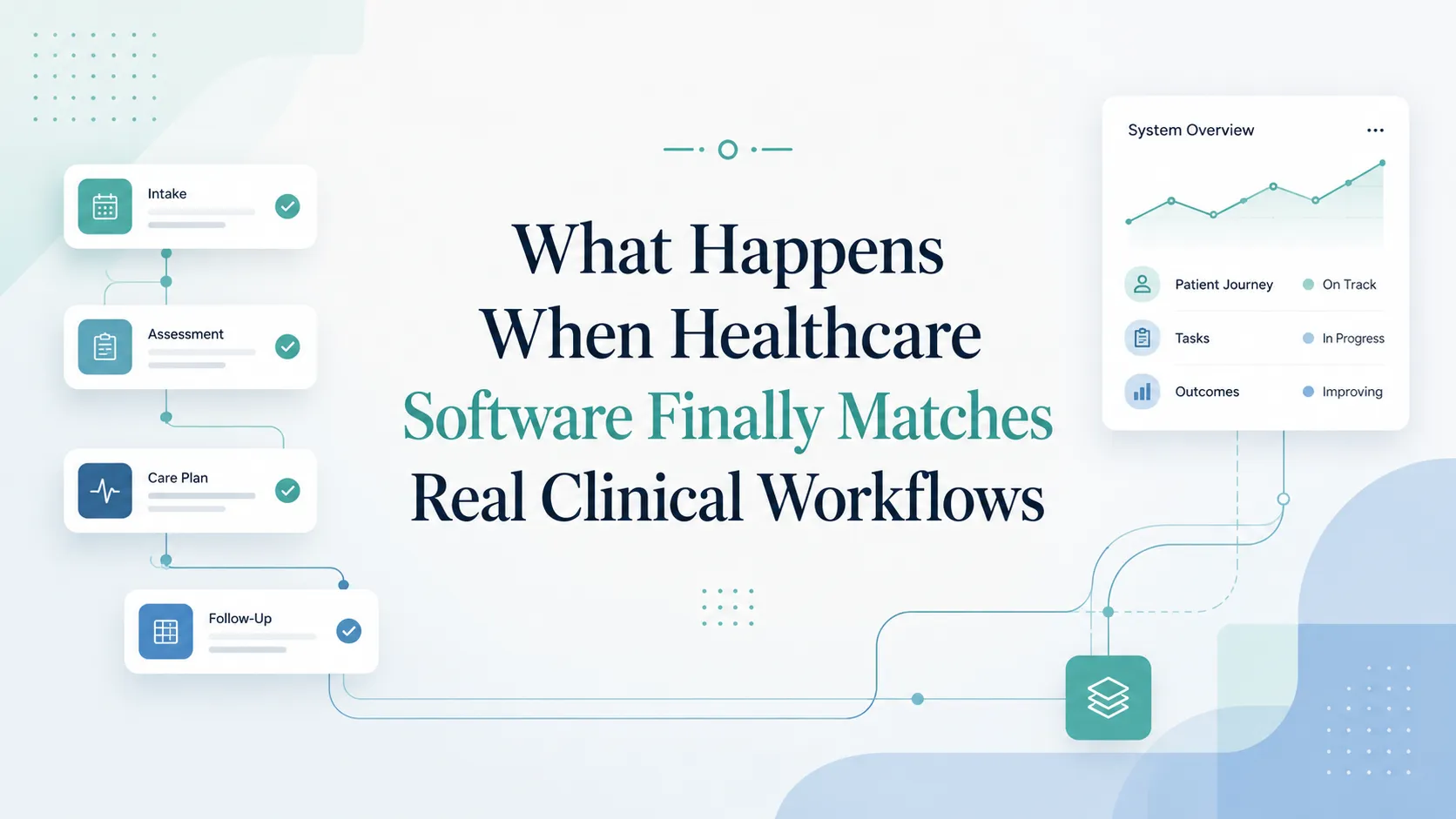

Custom Healthcare Software Development changes the way clinics, hospitals, and healthcare teams work because it starts with the real clinical routine, not a fixed software template. When a custom healthcare software development company builds around actual patient flow, staff roles, documentation habits, billing steps, and care coordination needs, the software stops feeling like another burden and starts working like part of the care team.
Most healthcare software fails because it asks doctors, nurses, admins, and patients to adjust around the system. Better healthcare software does the opposite. It bends around the workflow, removes friction, and helps every user complete critical tasks with fewer clicks, fewer delays, and less confusion.
Why Healthcare Software Often Feels Disconnected From Real Care
Many healthcare teams use software that looks powerful on paper but feels painful during daily use. The features exist, but they do not match how people actually work.
A front desk team may need faster scheduling, but the system hides availability behind too many screens. A physician may need a clean patient history view, but the record is buried under tabs. A nurse may need to update vitals quickly, but the form does not match the exam room process. A billing team may need cleaner claim data, but the software allows missing fields and creates avoidable rework.
That gap creates the real problem.
The issue is not always lack of technology. The issue is poor workflow fit.
What Changes When Software Matches Clinical Workflows?
When healthcare software finally matches the daily rhythm of care, teams work with more clarity. Patients move through the system faster. Providers spend less time fighting screens. Admin teams reduce duplicate work. Leadership gets better visibility into performance.
Staff Stop Creating Workarounds
Every healthcare team knows the hidden workaround problem.
Sticky notes. Spreadsheets. Side messages. Manual reminders. Extra phone calls. Duplicate patient lists. These workarounds appear when the official system does not support the actual workflow.
Custom healthcare software development reduces that problem by building the missing steps into the product itself. Instead of forcing staff to leave the platform, the right system brings scheduling, intake, patient updates, documentation, billing, and reporting into one cleaner experience.
Patient Flow Becomes Easier to Manage
A strong clinical workflow depends on timing. Patients move from appointment booking to intake, check-in, consultation, diagnostics, treatment, payment, follow-up, and ongoing care.
When software matches that full journey, every step becomes easier to track. The team can see who has arrived, who is waiting, which forms are incomplete, which provider is assigned, what care notes are pending, and when follow-up should happen.
This improves both patient experience and internal coordination.
Providers Get the Right Information at the Right Time
Doctors and nurses do not need more data. They need the right data at the right moment.
A well-built healthcare platform can show medication history, allergies, care notes, lab results, prior visits, risk flags, and follow-up instructions in a clean view. The goal is not to overload the screen. The goal is to support fast, informed decisions.
That is where healthcare software development services become valuable. They help shape the product around clinical decision-making, not just data storage.
Core Features That Make Healthcare Software Feel Natural
The best healthcare systems do not win because they have the longest feature list. They win because the right features appear in the right place.
Patient Intake That Reduces Front Desk Pressure
Digital intake forms can collect patient details, insurance information, consent forms, medical history, and reason for visit before the appointment. This reduces front desk congestion and gives providers better context before the patient enters the room.
A smart intake module can also flag missing fields, validate required information, and send reminders automatically.
Scheduling Built Around Real Appointment Types
Healthcare scheduling is not the same as booking a salon appointment. Different providers, rooms, visit types, equipment, durations, and insurance rules affect availability.
Custom healthcare software development services can create scheduling tools that reflect those details. A clinic can set different appointment lengths, provider availability, follow-up rules, telehealth options, waitlists, and cancellation workflows.
The result is fewer scheduling errors and a smoother patient experience.
Role-Based Dashboards for Every Team
A physician, nurse, front desk coordinator, billing specialist, and clinic manager should not see the same screen.
Role-based dashboards help each user focus on their work. Nurses can view vitals and room status. Providers can view patient notes and care history. Admins can view appointments and forms. Billing teams can view claims, payments, and missing documentation.
This makes the software feel less crowded and more useful.
EHR and System Integration
Healthcare teams often rely on multiple systems for records, billing, labs, pharmacy, imaging, insurance, and patient communication. If those systems do not connect, staff waste time moving data manually.
A custom healthcare software development company can build integrations that connect EHR platforms, payment tools, lab systems, telehealth solutions, wearable devices, and reporting dashboards.
The benefit is simple: data moves with the patient, not behind the patient.
Secure Access and Audit Trails
Security is not an extra feature in healthcare software. It is part of the foundation.
Strong systems use encrypted data, secure login, role-based permissions, activity logs, session controls, and audit trails. These features help protect sensitive patient information and give leadership better control over who accessed what, when, and why.
The Digital Building Blocks Behind Better Healthcare Software
Good healthcare software depends on more than screens and buttons. It needs strong technical materials underneath.
Cloud Infrastructure
Cloud-based architecture helps healthcare platforms scale without heavy local infrastructure. It supports remote access, faster updates, backup options, and smoother expansion across multiple locations.
APIs and Interoperability
APIs allow systems to exchange information safely. In healthcare, this can support patient records, lab results, billing data, appointment updates, and third-party tools.
FHIR-ready and HL7-aware integrations can help healthcare organizations connect with established clinical systems more effectively.
Encrypted Databases
Patient data must stay protected at rest and in transit. Encrypted databases help secure medical records, insurance details, billing information, and private communication.
Mobile and Web Interfaces
Healthcare teams need access across devices. A responsive web platform can support admin and provider workflows, while mobile apps can support patients, field staff, home care teams, or remote monitoring.
Why Off-the-Shelf Software Breaks Under Real Healthcare Pressure
Ready-made software can work for simple workflows, but healthcare rarely stays simple.
A growing clinic may add new providers, locations, services, payment methods, patient groups, reporting needs, and compliance requirements. A healthtech startup may need a unique patient journey, custom user roles, remote monitoring, or specialized care logic.
That is where generic tools start to break.
They may limit customization, charge extra for integrations, or force the team into rigid processes. Over time, the organization spends more energy adapting to the software than improving the patient experience.
When Custom Software Becomes the Better Investment
Custom software makes sense when the workflow is unique, the current tools create too much manual work, or the organization plans to scale.
A healthcare business should consider custom development when it needs:
More control over patient workflows
Better EHR or third-party integrations
Secure patient portals or provider dashboards
Telehealth features built around its care model
Automated billing, claims, or reporting workflows
A system that can grow with multiple departments or locations
If your team keeps saying, “Our software does not let us do that,” custom development may be the better path.
Choosing the Right Development Partner
A healthcare software project needs more than developers who can write code. It needs a team that understands clinical pressure, patient privacy, compliance expectations, usability, integrations, and long-term support.
When comparing a Custom Software Development Company in Texas, look at how the team studies workflows before proposing features. A strong partner should ask about patient intake, provider routines, admin bottlenecks, billing pain points, reporting gaps, security needs, and existing tools.
The discovery process should feel practical. The team should map how work happens today, where delays appear, and what the software must improve.
What a Good Development Process Looks Like
A reliable healthcare software project usually starts with workflow discovery. The team interviews stakeholders, reviews current tools, and identifies the highest-value problems.
Then it moves into UX planning, architecture, development, integrations, testing, security review, deployment, and support.
The best result is not just a launched product. It is a working system your team actually wants to use.
Business Benefits of Workflow-Matched Healthcare Software
When software fits the workflow, the business impact becomes visible.
Clinics reduce administrative waste. Providers document faster. Patients get clearer communication. Billing teams catch fewer errors. Managers see performance trends. Leadership makes decisions from cleaner data.
This improves operational efficiency without adding unnecessary pressure on staff.
Better Patient Experience
Patients notice when a healthcare organization runs smoothly. They appreciate faster check-ins, clearer reminders, easier forms, secure messages, simple payments, and better follow-up.
Good software makes the experience feel organized and respectful.
Faster Team Productivity
A system that removes extra steps gives staff time back. Even small improvements matter when repeated across hundreds of appointments, forms, calls, and patient interactions every week.
Stronger Scalability
A custom platform can grow with the organization. New locations, providers, features, integrations, and reporting needs become easier to add when the architecture supports expansion from the beginning.
FAQs
What is custom healthcare software development?
Custom healthcare software development is the process of building software around the specific needs of a healthcare organization. It can include patient portals, telehealth platforms, EHR integrations, scheduling systems, billing tools, dashboards, remote monitoring apps, and internal workflow automation.
Why should healthcare providers choose custom software instead of ready-made tools?
Custom software gives healthcare providers more control over workflow, user roles, integrations, reporting, security, and scalability. Ready-made tools may work for basic needs, but custom software fits the way the organization actually operates.
What services are included in healthcare software development services?
Healthcare software development services can include product strategy, UI/UX design, web app development, mobile app development, EHR integration, telehealth development, patient portal development, billing automation, QA testing, security implementation, deployment, and maintenance.
Is custom healthcare software useful for small clinics?
Yes. Small clinics can use custom software to reduce manual scheduling, improve intake, manage follow-ups, organize patient communication, and connect billing or record systems. The scope can start small and expand as the clinic grows.
How do I know if my healthcare business needs custom software?
You may need custom software if your team relies on spreadsheets, duplicate data entry, disconnected tools, manual follow-ups, poor reporting, limited integrations, or software that does not match your care process.
Final Thoughts
Healthcare teams should not have to fight their own systems to deliver good care. When software matches real clinical workflows, it becomes easier to serve patients, manage operations, protect data, and scale with confidence. If you want to build a system that fits your providers, patients, and business goals instead of forcing your team into rigid software, explore a tailored solution with Unique Software Development and take the next step toward a smarter healthcare platform.

























Sign in to leave a comment.