

A deep dive into how childhood trauma rewires independence, trust, and emotional responses.
There’s a certain kind of person people admire a little too quickly. The one who always seems to have it together. They don’t ask for help, they stay calm in chaos, and everyone calls them “mature for their age.” They’re the strong one, the reliable one, the one who can survive anything. What people don’t realize is that none of this came from a productivity hack or a motivational phase. It came from necessity. It came from survival, and Dauna DeOlus ponders on it a bit too deeply in her book.
For some of us, childhood wasn’t about exploring who we are—it was about figuring out how to stay safe. You learned how to read moods before you learned how to express your own. You became quiet when things got loud, agreeable when things got tense, and invisible when things felt uncertain. You weren’t trying to build character—you were trying to avoid chaos. And when you do that long enough, survival stops feeling like something you do. It starts feeling like who you are.
That’s where hyper-independence walks in, dressed like confidence but rooted in something much deeper. People praise you for not needing anyone, but the truth is, it’s not that you don’t need people—it’s that you don’t trust needing them. Asking for help feels uncomfortable, relying on someone feels risky, and depending on others feels like setting yourself up for disappointment. So you carry everything alone, not because you’re strong, but because somewhere along the way, you learned you had no other option.
Then come the so-called “trust issues.” But let’s be honest, it’s not really about broken trust—it’s about trust that was never properly built in the first place. If love was inconsistent, conditional, or unpredictable, your brain adapted the only way it knew how—it stopped expecting stability. Now you question intentions, overanalyze tone, and prepare for things to go wrong before they even begin. Not because you’re negative, but because being prepared has always felt safer than being hopeful.
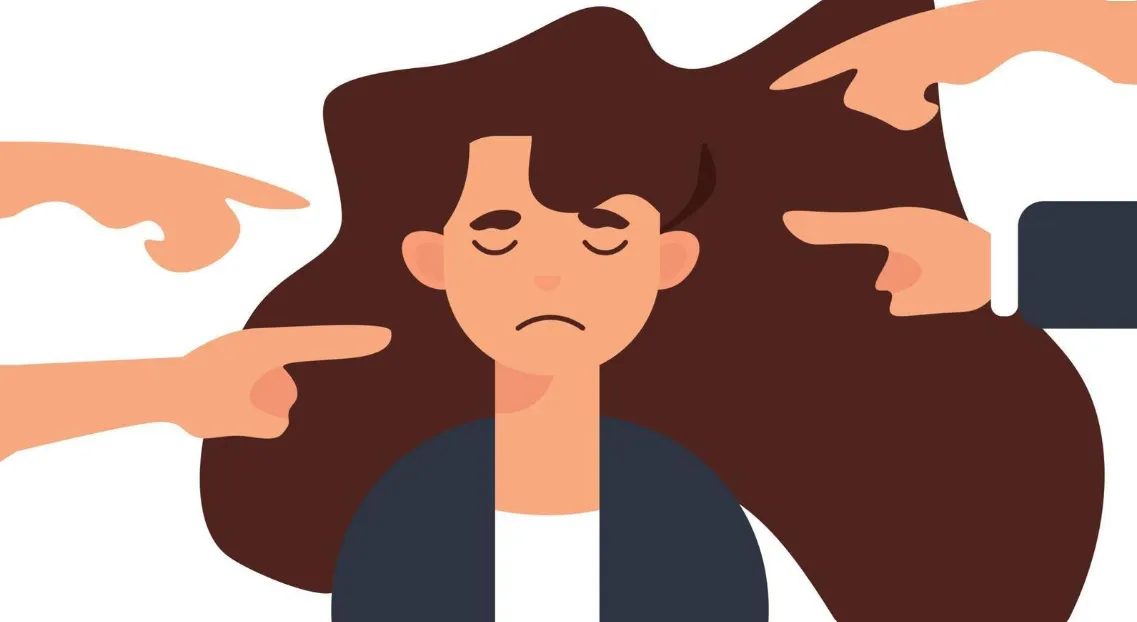
And those emotional reactions people love to label as “too much”? They’re not random either. Your body remembers what your mind has tried to move on from. A raised voice, a sudden silence, a shift in someone’s energy—it all feels familiar in ways you can’t always explain. So when you react strongly, it’s not just about the moment in front of you. It’s about every version of that moment you’ve lived through before. That’s not overreacting—that’s your nervous system doing exactly what it was trained to do.
Ironically, people like this are often the funniest in the room. Humor becomes a coping mechanism, a shield, a way to stay connected without getting too vulnerable. You can make everyone laugh, tell stories that light up a room, and keep things easy on the surface. But the moment things get real—really real—you deflect, you downplay, or you disappear behind a “I’m just tired.” It’s not that you don’t feel deeply. It’s that you’ve learned how to hide it beautifully.
The hardest part about all of this is realizing that the very traits that once protected you can start to limit you. Your independence can isolate you. Your strength can make people assume you don’t need support. Your awareness can turn into constant overthinking. You become so good at surviving that you forget what it feels like to simply live. And somewhere along the way, you start believing that this is just who you are, instead of something you had to become.
But here’s the truth—survival mode isn’t a life sentence. It’s a pattern, and patterns can be unlearned. Slowly, awkwardly, and sometimes uncomfortably, you can start questioning the beliefs that once kept you safe. Maybe asking for help doesn’t make you weak. Maybe not everyone is going to leave. Maybe you don’t have to earn rest or prove your worth through struggle. Maybe being “too much” just means you were never given enough space to be yourself.
Healing doesn’t show up as some dramatic, overnight transformation. It shows up quietly. In letting someone help you without guilt. In saying “I’m not okay” without turning it into a joke. In pausing before assuming the worst. In choosing rest without feeling like you have to justify it. These moments seem small, but they’re powerful—because they mean you’re no longer operating purely from survival.
If survival became your personality, it means you did something remarkable—you made it through. You adapted, you endured, and you found ways to keep going when you had every reason not to. But you weren’t meant to just survive your life. You were meant to feel safe in it, to trust within it, and to exist without constantly preparing for what might go wrong.
And learning that—unlearning survival, piece by piece—might just be the bravest thing you’ll ever do.





























Sign in to leave a comment.