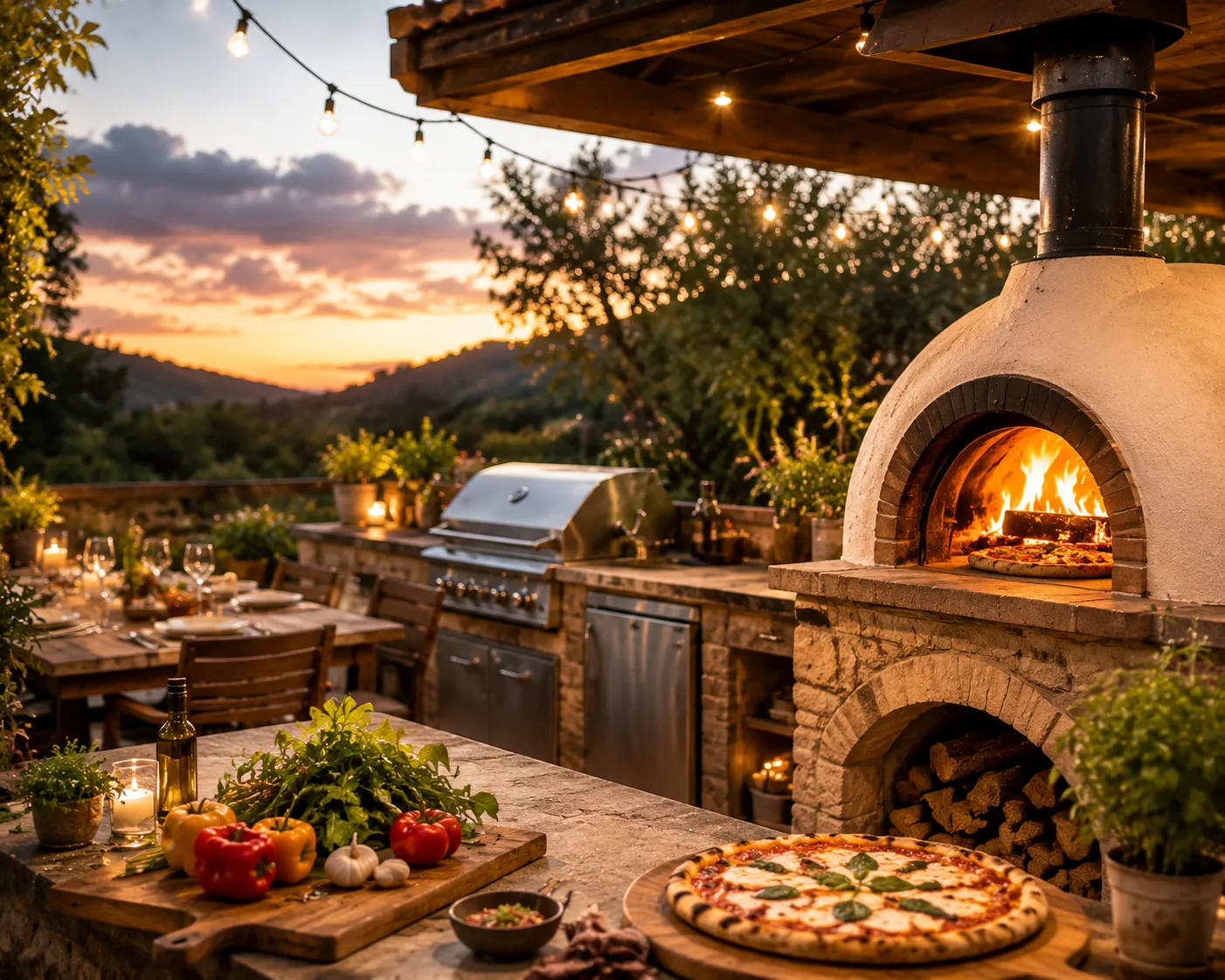

There’s a strange thing that happens when you spend enough time reading outdoor kitchen discussions online you stop seeing them as “projects” and start seeing them as stories.
Not glossy showroom stories. Real ones. The kind where someone talks about uneven heat, surprise costs, family dinners that changed after a grill upgrade, and why a simple setup often ends up becoming a full outdoor kitchen.
After going through hundreds of these conversations, one pattern became impossible to ignore: people don’t just want an outdoor kitchen—they want a reason to use it often.
And that changes everything.
The idea is simple. The reality is never simple.
Most outdoor kitchen journeys start with a clean idea:
A grill. A counter. Maybe a sink.
But in almost every discussion, that “simple plan” evolves quickly.
People start adding:
- Extra cooking zones
- Pizza ovens
- Storage cabinets
- Prep counters
- Lighting and seating areas
Not because they planned to but because they realized how much time they actually wanted to spend outside cooking.
This is where the phrase outdoor kitchen setup stops being design and starts becoming lifestyle.
And surprisingly, the biggest shift is emotional, not technical.
The pizza oven factor kept appearing everywhere
One of the strongest recurring themes across outdoor kitchen discussions is how often a pizza oven enters the picture even when it wasn’t part of the original plan.
People don’t usually start with “I need an outdoor kitchen with a pizza oven.”
Instead, they arrive there after asking questions like:
- “What else can I cook besides grilling?”
- “How do I make outdoor cooking more fun for guests?”
- “Is it worth adding a specialty cooking feature?”
And somewhere in those answers, pizza ovens keep showing up.
Not as a luxury item—but as a social catalyst.
Because once a pizza oven is in the setup, cooking stops being background activity. It becomes the center of attention.
This is also why search interest around outdoor kitchen with pizza oven keeps growing steadily it represents a shift from utility to experience.
The biggest misconception: size equals satisfaction
Another pattern that stood out clearly: bigger doesn’t always mean better.
Many people who built large outdoor kitchens later admitted something interesting:
They still ended up using only a small portion of it regularly.
The most used elements were almost always:
- The grill or main heat source
- A prep surface
- Basic storage
Everything else became occasional-use features.
This doesn’t mean large setups are bad. It just means usefulness matters more than scale.
A well-designed compact outdoor kitchen often gets more daily use than a large, complex one.
And that’s a detail many first-time planners overlook.
Heat management is the silent deal-breaker
One topic that appears in almost every serious discussion—but rarely in early planning—is heat control.
People talk about:
- Uneven cooking zones
- Wind affecting flames
- Overheating near walls
- Seasonal usability issues
It turns out that outdoor kitchens aren’t just about equipment—they’re about environment.
This is where experience really matters. Users who have gone through trial and error often emphasize:
- Positioning matters more than appliances
- Shade and airflow change everything
- Material choice affects long-term comfort
In short, design is not just visual—it’s functional under real conditions.
Maintenance is where enthusiasm meets reality
Almost every outdoor kitchen discussion eventually reaches the same turning point: maintenance.
At first, people talk about cooking dreams. Later, they talk about cleaning schedules.
The common insights were:
- Stainless steel still needs regular care
- Open setups collect more dust than expected
- Covers and storage habits make a huge difference
- Weather exposure changes long-term durability
What surprised me most was how many users said the same thing in different ways:
“I didn’t think maintenance would matter this much.”
But once you’re using an outdoor kitchen regularly, maintenance stops being optional—it becomes part of the routine.
The social effect is stronger than expected
If there’s one thing that consistently stands out, it’s this:
Outdoor kitchens change how people gather.
Not in a dramatic way—but in a subtle shift.
Instead of:
- Cooking alone indoors
- Guests waiting separately
- Food being served all at once
You get:
- People standing around the cooking area
- Conversations happening mid-prep
- Cooking becoming interactive
Many users described it as “the kitchen moving outside the house, but also moving people closer together.”
This is the part that no spec sheet can capture.
Why pizza ovens keep winning attention
Coming back to the most repeated feature in discussions: pizza ovens.
They stand out not because they’re necessary, but because they change behavior.
A grill cooks food.
A pizza oven creates participation.
People gather around it. They customize food. They wait for their turn. They talk while cooking.
And that changes how the entire outdoor kitchen is used.
This is why so many outdoor setups eventually evolve toward including one—even if it wasn’t planned initially.
What actually matters when planning an outdoor kitchen
After reading hundreds of real experiences, the takeaway isn’t about brands or budgets.
It comes down to three things:
1. Frequency of use
If it’s not easy to use, it won’t be used often.
2. Flow of movement
Cooking outside should feel natural, not fragmented.
3. Real lifestyle fit
Not imagined usage—actual habits.
Everything else is secondary.
Final thoughts
Outdoor kitchen discussions reveal something simple but often overlooked:
People don’t regret building outdoor kitchens.
They regret overcomplicating them—or underestimating how they’ll actually use them.
The most successful setups aren’t the biggest or the most expensive. They’re the ones designed around real cooking habits, real weather conditions, and real social moments.
And somewhere in almost every meaningful setup, there’s a reason people gather.
Sometimes it’s a grill. Sometimes it’s a counter.
But more and more often, it’s an outdoor kitchen with a pizza oven that quietly becomes the center of everything.
Not because it was planned that way.
But because it worked that way.


























Sign in to leave a comment.