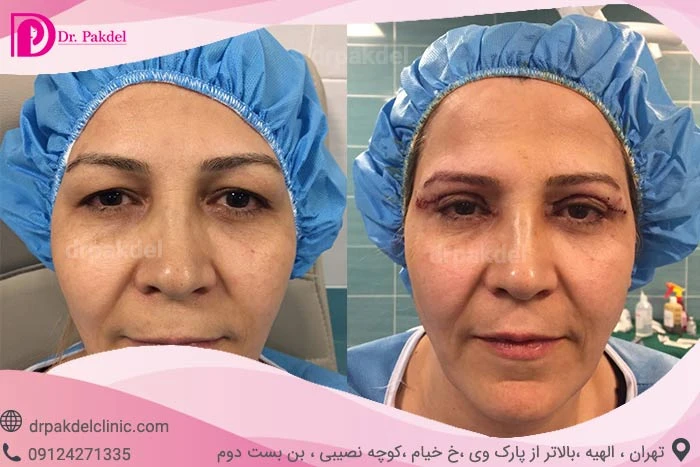

What is eyelid surgery (blepharoplasty)?
The main reason for many applicants for eyelid surgery is drooping and extra eyelid skin. This surgery can tighten and lift the skin around the eyes and give your face a more attractive, younger and more alert look. Blepharoplasty is sometimes used to remove vision barriers caused by drooping eyelids. In the treatment process, excess skin, muscle and sometimes adipose tissue are removed from the upper and lower eyelid areas. Sometimes only the extra skin is removed from the eyelid.
Of course, upper eyelid blepharoplasty, sometimes referred to as eyelid lift or eyelid augmentation, should not be confused with eyelid drooping surgery (ptosis surgery). In drooping eyelid surgery, the muscles and tendons of the upper eyelid, which are responsible for holding the eyelid up, tighten to correct the problem. Blepharoplasty eliminates drooping eyelids when excess skin causes the eyelids to become heavy and droop. So these two surgeries are different, but both can correct drooping eyelids.
Beauty blepharoplasty
Cosmetic blepharoplasty refers to an application of this surgery that is not medically necessary to perform it, but it can make your face beautiful and youthful.
Unfortunately, your upper and sometimes lower eyelids become swollen, swollen, and drooping as you age and accumulate fat. The same aging process sometimes causes drooping and swelling of the eyelids. As you age, your eyelid skin loosens, its muscles weaken, and its fat pads become swollen and more noticeable. From an aesthetic point of view, these items can reduce the attractiveness and beauty of your eyes and face and make you look older and tired.
Various specialists are allowed to perform cosmetic eyelid surgery. Ophthalmologists, plastic surgeons and ENT specialists can perform this surgery.
Therapeutic blepharoplasty
Blepharoplasty refers to those eyelid surgeries that are performed because of a problem with the eyelids or their structures. These surgeries are medically necessary or important.
In most cases, blepharoplasty is performed when the extra skin on the eyelids has become so heavy that the person's vision is impaired. Sometimes swelling of the upper or lower eyelid makes it difficult to wear glasses or medical lenses, in which case eyelid surgery can be used to correct the problem. Treatment of skin inflammation caused by the folds of the eyelids overlapping is another application of this surgery. Sometimes the extra skin on the eyelids makes the eyelid so heavy that one has to use the forehead muscles to hold the eyelid up. In this case, fatigue and discomfort of the forehead muscles occur, which can be treated with eyelid surgery.
Like cosmetic blepharoplasty, eyelid surgery can be performed by ophthalmologists, surgeons, and ENT specialists.
Applications of eyelid surgery
Overall, the applications of eyelid surgery can be summarized in the following list:
Treatment of sagging skin or sagging upper eyelid skin that causes wrinkles on the eyelid and can cause problems with the surface curvature of the eyelid.
Treatment of drooping eyelids due to excess skin weight that impairs vision.
• Eliminate puffiness and swelling of the eyelids;
• Eliminate puffiness and swelling under the eyes;
Eliminates the drooping of the lower eyelid, which makes the white areas of the eye more visible under the cornea.
• Remove excess skin and remove fine wrinkles on the lower eyelid.
Recovery after eyelid surgery
After surgery, the doctor applies topical antibiotics to the affected areas to minimize the risk of infections. There is usually no need for patches or full eye patches.
• On the first day after surgery, you should use a cold compress every hour (while waking up) for 10 to 15 minutes. This will keep inflation and bruising to a minimum.
On the second day, it is recommended to use a cold compress every few hours for 10 to 15 minutes.
• To speed up the healing process, it is better to use a warm compress after 48 hours.
Depending on your condition, your doctor will explain the use of painkillers. Postoperative pain for most of our clients is controlled with regular (over-the-counter) painkillers. In rare cases, there is a need for stronger painkillers, in which case your doctor will prescribe the appropriate medication.
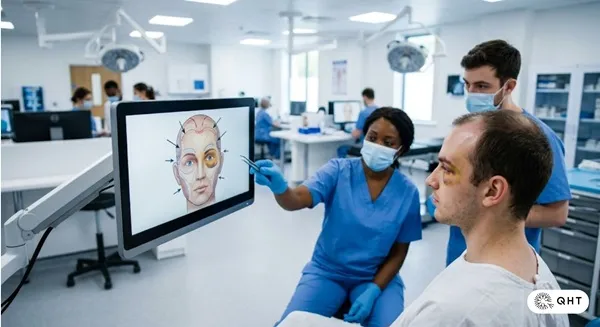
You should expect mild discomfort immediately after surgery. Although blepharoplasty is a minor surgery, it is still a surgical procedure. Of course, all discomfort and complications will improve in a few days. If you experience any vision problems or severe pain, contact Dr. Pakdel Clinic immediately.
Recovery period after blepharoplasty
Most eyelid surgeries are performed on an outpatient basis, so you can return home when your numbness is gone. Your eyesight is blurred and your eyes may be gassed, so you need to plan for someone close to you to take you home. Avoid excessive physical activity for the first 24 hours and keep your head above your body during sleep. For this purpose, you can use two ordinary pillows or a large pillow.
Try not to turn your head too much and sleep in a semi-sitting position. You may feel that your eyelids are stretched and swollen. Ideally, you should apply a cool gas pad to the eyes regularly for up to 3 days after the operation. Use eye drops or ointment as prescribed by your surgeon. Any pain and discomfort can be relieved with painkillers. You can also use a light cold compress such as eye or corn and frozen peas in a clean, sterile plastic bag on the eyelids.
Source: Drpakdelclinic




















Sign in to leave a comment.