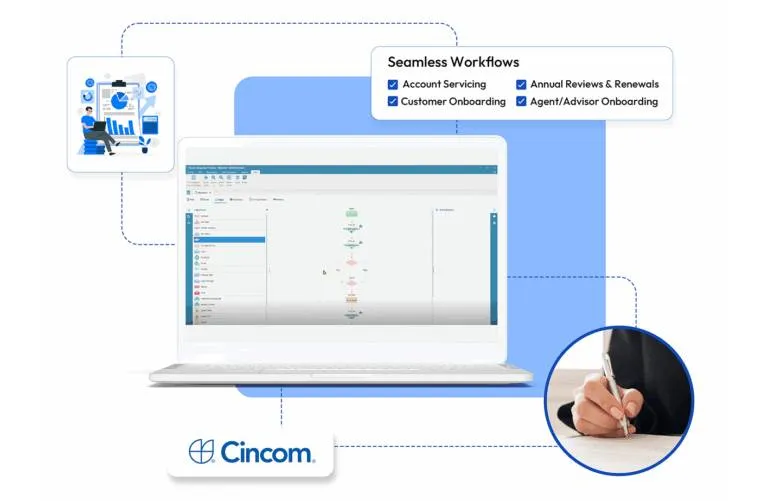

Customer communication has become more complex than ever. Businesses communicate with customers through emails, letters, statements, invoices, notifications, mobile apps, and other digital channels. Managing all these interactions consistently can be challenging, especially for organizations that handle large volumes of sensitive or regulated information. This is where customer communication management (CCM) comes in.
What Is Customer Communication Management?
Customer communication management is the process of creating, managing, personalizing, delivering, and tracking communications sent to customers across different channels. The goal is to make every interaction clear, relevant, consistent, and timely.
CCM brings together content, customer data, business rules, templates, and delivery channels so organizations can manage communications more efficiently. Instead of creating individual documents and messages manually, businesses can automate communications while still maintaining personalization.
For example, a bank can use CCM to generate personalized account statements, loan notifications, payment reminders, and regulatory notices. An insurance company can use it to deliver policy documents, renewal reminders, and claims updates.
What Is a Customer Communication Management System?
A customer communication management system is the technology that supports these processes. It provides tools for designing communication templates, managing content, integrating customer data, applying business rules, and distributing communications through channels such as email, SMS, print, web portals, and mobile applications.
A modern CCM system can also support automation and analytics. Organizations can determine which communication was delivered, which channel was used, and how customers interacted with it. This information can help businesses improve future communications.
The key advantage is centralization. Rather than relying on disconnected tools and manual processes, teams can manage communication workflows from a unified environment.
Why Do Businesses Need a CCM Platform?
A CCM platform can help organizations solve several common communication challenges. Manual processes often lead to inconsistent branding, outdated content, errors, and slow turnaround times. A centralized platform can reduce these problems by standardizing templates and automating repetitive tasks.
Personalization is another major benefit. Customers increasingly expect businesses to provide information that is relevant to their individual circumstances. CCM platforms can use customer and transaction data to personalize messages without requiring employees to create each communication individually.
A strong platform can also support omnichannel communication. Customers may prefer email for everyday updates but choose a mobile app or physical document for more important information. CCM makes it easier to coordinate these channels while maintaining a consistent customer experience.
Enterprise Customer Communication Management Software
For large organizations, enterprise customer communication management software typically needs to handle high communication volumes, complex workflows, multiple departments, and strict governance requirements.
Enterprise solutions may include advanced template management, workflow automation, content libraries, integrations with CRM and core business systems, personalization capabilities, analytics, and role-based access controls.
Scalability is particularly important. A solution that works for a small team may not be suitable for an enterprise sending millions of communications each month. Enterprise CCM software should be able to support different business units and communication types while maintaining centralized control over important content and brand standards.
Enterprise Customer Communications Management Platforms for Regulated Industries
Enterprise customer communications management platforms for regulated industries have additional requirements. Organizations in banking, insurance, healthcare, utilities, and telecommunications often need to communicate information accurately while meeting regulatory and compliance obligations.
These platforms can help organizations maintain approved templates, control access to sensitive content, preserve communication records, and apply rules to specific customer segments or situations. They can also make it easier to update standardized communications when regulations or business requirements change.
For regulated organizations, CCM is therefore not simply a document-generation tool. It can become an important part of governance, compliance, customer experience, and operational efficiency.
What Are Some Popular Customer Communication Management Software Options?
When evaluating CCM solutions, businesses may encounter platforms such as Cincom Eloquence, OpenText Exstream, Quadient Inspire, Smart Communications, Messagepoint, and Precisely Engage. Each option has different strengths, integrations, deployment models, and capabilities.
The right choice depends on factors such as communication volume, industry regulations, required channels, personalization needs, existing technology infrastructure, and budget. Organizations should also consider ease of use, scalability, security, analytics, and the ability to integrate with CRM, ERP, and customer data systems.
The Future of Customer Communication Management
CCM is evolving from traditional document production toward intelligent, data-driven customer engagement. Automation, cloud technologies, analytics, and artificial intelligence are making it possible to create more personalized communications while reducing manual effort.
For businesses, the objective is simple: deliver the right information to the right customer through the right channel at the right time. A well-designed CCM strategy can help organizations achieve that goal while improving efficiency, consistency, compliance, and customer experience.
Ultimately, customer communication management is more than sending messages. It is a structured approach to managing every important customer interaction—and for modern enterprises, it can be a critical part of delivering better service at scale.


























Sign in to leave a comment.