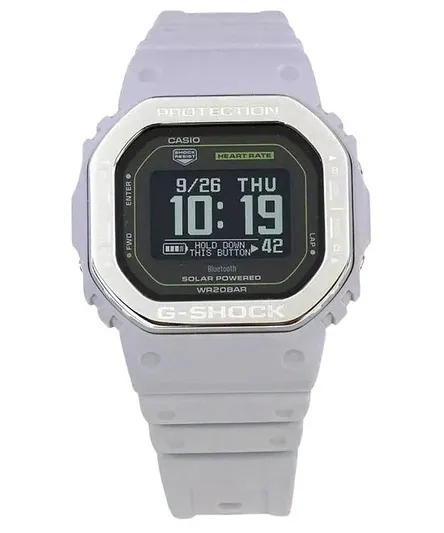

G-Shock started with a genuine accident — Casio engineer Kikuo Ibe dropped a mechanical watch given to him by his father, watched it shatter on the ground, and set out to build one that couldn't. The Casio G-Shock watches range that followed has run since April 1983, built around a specific "triple 10" design goal that still shapes the line's identity more than four decades later.
Quick Answer
G-Shock is a line of shock, vibration, and impact-resistant watches made by Casio, conceived in 1981 and released in April 1983. The name stands for "Gravitational Shock." The original design goal was "triple 10" resistance: a 10-year battery life, 10 bar water resistance, and the ability to survive a 10-metre fall. Most G-Shock references include a chronograph, 200m water resistance, and an alarm, with analog, digital, or combined analog-digital displays, and the line has since expanded into specialized sub-lines for specific environments.
The origin story behind the name
Casio engineer Kikuo Ibe conceived G-Shock in 1981 after a mechanical watch, given to him by his father, popped off his wrist and shattered when he bumped into a pedestrian. That experience became the direct motivation for building a genuinely shock-resistant watch, and Ibe reportedly went through around 200 prototypes before landing on a design that met his own durability standard.
The triple 10 design goal
Ibe's original target was specific: a 10-year battery life, 10 bar (100m) water resistance, and the ability to survive a fall from 10 metres. This concrete engineering goal shaped the earliest G-Shock designs and remains part of the line's identity, even as current references have gone well beyond those original benchmarks in most respects.
What's actually inside a typical G-Shock
Most references use a quartz timekeeping module, commonly with 200m water resistance, an alarm, and a chronograph function, in either digital, analog, or combined analog-digital display formats. The shock resistance itself typically comes from a hollow-structure case design that suspends the module and glass away from direct impact points, rather than simply using thicker materials.
Advanced features on newer high-end models
Higher-end current G-Shock references add GPS, directional and pressure sensors, a thermometer, radio-controlled time adjustment (branded WaveCeptor or Multi-Band), and Bluetooth smartphone syncing through a dedicated app. Tough Solar charging also appears widely across the range, removing the need for the battery replacement the original "10-year battery" goal was built around.
Master of G: the harsh-environment sub-line
Master of G references are specifically designed for harsh environments, often introducing new technology — like altimeters, digital compasses, and Tough Solar — before it appears across the broader G-Shock line. The Mudman, first released in 1985 as the DW-5500C, was the original mud-resistant model in this sub-line, and it's since been joined by Frogman (dive-oriented) and Rangeman (outdoor survival-oriented) variants.
Frogman and Rangeman: two specific Master of G directions
Frogman is built specifically for diving, with genuine ISO-rated water resistance well beyond the standard G-Shock figure, while Rangeman leans toward outdoor survival use with reinforced sensor protection and extended battery management for extended time away from charging or battery access.
Collaborations and cultural reach
G-Shock has built an extensive history of brand and artist collaborations — spanning streetwear labels, other watch and equipment brands, and pop culture partnerships — which has helped the line maintain relevance across multiple generations of buyers well beyond its original outdoor and military-adjacent audience.
Buying strategy
Decide on feature tier first — basic quartz shock resistance, or advanced GPS/sensor-equipped references — since that's the primary differentiator across the range, then compare specific styling and sub-line (standard G-Shock versus Master of G, or a specific collaboration model) within that choice.
FAQ
What does G-Shock stand for?
Gravitational Shock, reflecting the line's core design focus on shock and impact resistance.
When was G-Shock first released?
It was conceived in 1981 by Casio engineer Kikuo Ibe and released in April 1983, reportedly after around 200 prototype iterations.
What was the original G-Shock design goal?
Triple 10 resistance: a 10-year battery life, 10 bar water resistance, and the ability to survive a 10-metre fall.
Do all G-Shock watches have GPS?
No, GPS and other advanced sensors (pressure, temperature, compass) appear on newer high-end references specifically, not across the entire line.
What is Master of G?
A G-Shock sub-line designed for harsh environments, which has historically introduced new technology (altimeters, Tough Solar) before it reached the broader G-Shock range. It includes Mudman, Frogman, and Rangeman.
Is G-Shock only digital?
No, the line spans digital, analog, and combined analog-digital display formats across different references.
What's the difference between Frogman and Rangeman?
Frogman is built specifically for diving with genuine ISO-rated water resistance; Rangeman leans toward outdoor survival use with reinforced sensor protection.
How does the case actually resist shock?
Most G-Shock references use a hollow-structure case design that suspends the internal module and glass away from direct impact points, rather than relying purely on thicker materials.
Verdict
G-Shock exists because of a specific accident and a concrete engineering goal — triple 10 resistance — that's carried through from the 1983 original to today's GPS and sensor-equipped high-end references and specialized sub-lines like Frogman and Rangeman. Decide on feature tier first, then compare specific sub-lines within that choice. Browse the current Casio G-Shock watches range for available references.


























Sign in to leave a comment.