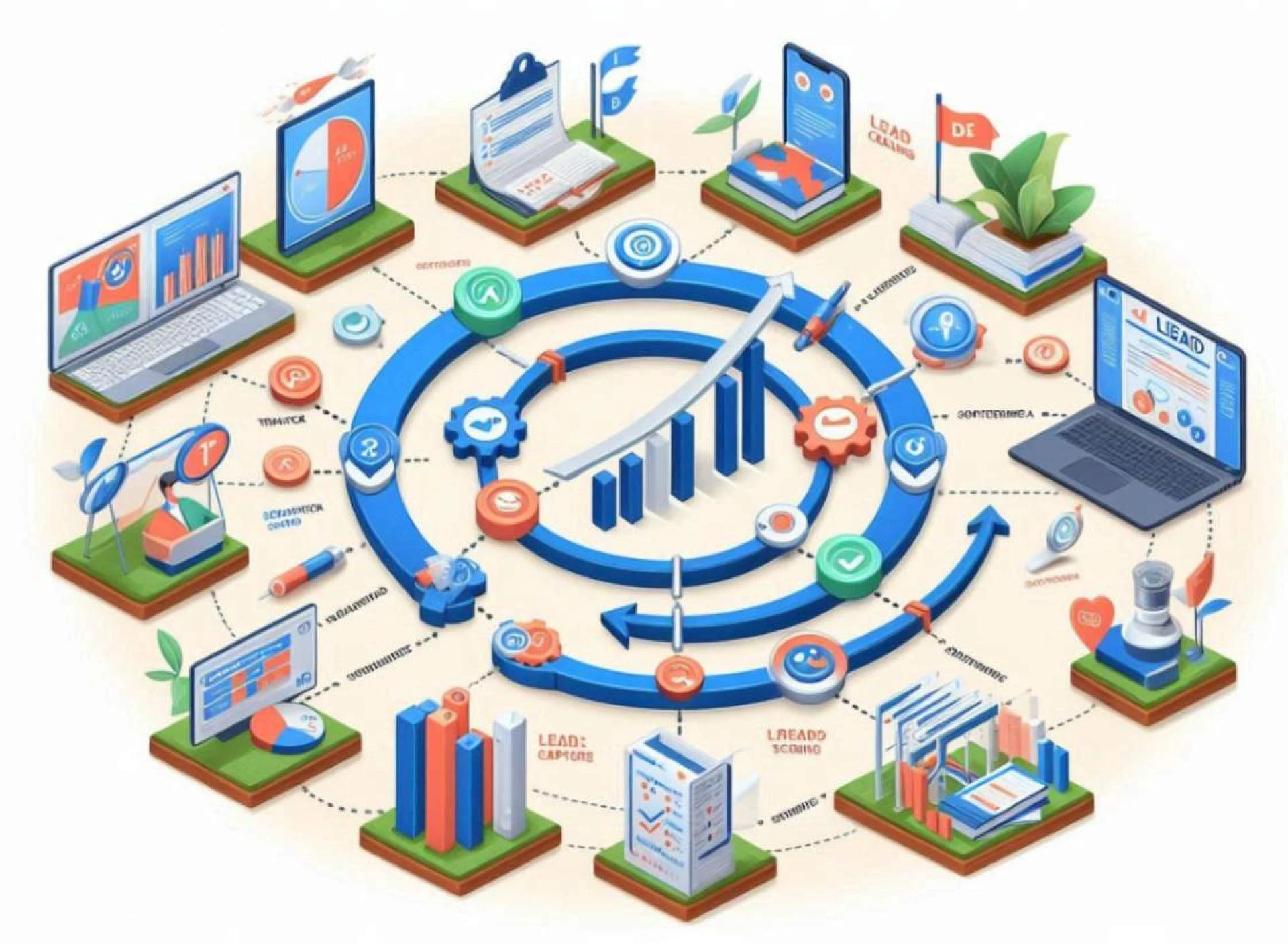

What is a Lead Management System?
Enhance Pre-Sales with Lead Management System 4QT
Businesses can lose up to 79% of their leads due to inefficient lead management systems. This underscores the need for a robust strategy, like the Lead Management System (Pre-Sales) by 4QT, to capture, track, and nurture leads effectively.
The 4QT approach ensures potential customers are efficiently guided through the sales funnel, boosting conversion rates and minimizing lost opportunities.

Lead Management Systems (Pre-Sales)
What is a Lead Management System?
A Lead Management System (LMS) is a tool designed to help businesses capture, track, and manage leads effectively.
It plays a crucial role in the pre-sales process by ensuring that potential customers are nurtured and guided through the sales funnel.
An LMS typically integrates with various marketing and sales tools, providing a centralized platform for lead data.
This allows businesses to have a holistic view of their lead pipeline and streamline their pre-sales efforts.
The Importance of Lead Management Systems in Pre-Sales
In the pre-sales phase, a lead management system helps in identifying potential leads, nurturing them, and converting them into sales-ready prospects.
This system ensures that no lead falls through the cracks, maximizing the chances of conversion.
For instance, without a proper LMS, a business might lose track of a lead who showed initial interest but didn\'t make a purchase immediately.
An LMS ensures that this lead is continuously engaged until they are ready to convert.
Key Features of a Lead Management System
1. Lead Capture
Lead capture is the first step in the lead management process.
An LMS helps in collecting leads from various sources such as websites, social media, and email campaigns.
For example, a visitor who fills out a form on your website or engages with your social media posts is captured as a lead in the system.
This centralization of data ensures that all potential customers are tracked from the moment they show interest.
2. Lead Tracking
Tracking leads is essential to understand their journey and behavior.
An LMS provides detailed insights into lead activities, helping businesses tailor their strategies accordingly.
For instance, if a lead frequently visits product pages but doesn\'t make a purchase, the LMS can alert the sales team to follow up with personalized offers or additional information.
3. Lead Scoring
Lead scoring helps in prioritizing leads based on their likelihood to convert.
An LMS assigns scores to leads based on their engagement level, making it easier for sales teams to focus on high-potential prospects.
For example, leads who open emails and click on links might receive higher scores than those who only visit the website occasionally.
This prioritization ensures that sales efforts are focused where they are most likely to yield results.
4. Lead Nurturing
Nurturing leads involves engaging with them through personalized content and interactions.
An LMS automates this process, ensuring that leads receive the right information at the right time.
For instance, a lead who downloaded a whitepaper might receive follow-up emails with additional resources and invitations to webinars.
This continuous engagement helps keep the lead interested and informed.
Benefits of Implementing a Lead Management System
Increased Efficiency
A lead management system streamlines the lead handling process, reducing manual efforts and errors.
This efficiency translates into quicker response times and improved lead conversions.
For example, automated lead capture and scoring mean that sales teams can focus more on interacting with leads rather than managing data.
Improved Lead Quality
With lead scoring and nurturing, businesses can focus on high-quality leads, increasing the chances of successful conversions.
For instance, by prioritizing leads who have shown genuine interest, businesses can avoid wasting time on those who are unlikely to convert.
Enhanced Customer Experience
By providing personalized and timely interactions, an LMS enhances the overall customer experience, fostering loyalty and trust.
For example, personalized email campaigns that address specific needs and interests can make leads feel valued and understood.
Statistics Supporting Lead Management Systems
According to a study by HubSpot, companies that excel at lead nurturing generate 50% more sales-ready leads at a 33% lower cost.
This highlights the cost-effectiveness and efficiency of lead management systems.
Moreover, research by Forrester shows that companies that automate lead management see a 10% or greater increase in revenue within 6-9 months.
How to Choose the Right Lead Management System
Assess Your Business Needs
Before selecting an LMS, it\'s crucial to understand your business requirements.
Identify the pain points in your current lead management process and look for an LMS that addresses these issues.
For instance, if you struggle with lead tracking, choose an LMS with robust tracking features and analytics.
Evaluate Key Features
Ensure that the LMS you choose offers essential features such as lead capture, tracking, scoring, and nurturing.
Consider additional features like integration capabilities, reporting, and analytics.
For example, an LMS that integrates with your CRM and email marketing tools can provide a seamless workflow and better data management.
Consider User Experience
A user-friendly LMS ensures that your team can easily adapt to the new system.
Look for an intuitive interface and comprehensive support resources.
For instance, an LMS with drag-and-drop features and a clean dashboard can make it easier for your team to use effectively.
Check Integration Capabilities
Your LMS should seamlessly integrate with your existing tools and platforms such as CRM, email marketing software, and social media channels.
This integration ensures a smooth flow of information and enhances overall efficiency.
For example, integrating your LMS with your CRM ensures that lead data is automatically updated and accessible to both marketing and sales teams.
Best Practices for Using Lead Management Systems
Maintain Clean Data
Ensure that your lead data is accurate and up-to-date.
Regularly clean your database to remove duplicates and outdated information.
For example, schedule monthly data audits to check for inconsistencies and errors in your lead database.
Segment Your Leads
Segmenting leads based on various criteria such as demographics, behavior, and engagement level allows for more targeted and personalized interactions.
For instance, you can create segments for leads interested in different product categories and tailor your messaging accordingly.
Automate Where Possible
Leverage automation features in your LMS to streamline repetitive tasks.
Automation not only saves time but also ensures consistent and timely interactions with leads.
For example, set up automated email sequences for new leads to ensure they receive relevant information and follow-ups.
Monitor and Optimize
Regularly monitor the performance of your lead management system.
Analyze the data and make necessary adjustments to optimize your lead management strategy.
For instance, track metrics such as lead response time, conversion rates, and engagement levels to identify areas for improvement.
Common Challenges in Lead Management and How to Overcome Them
Challenge 1: Lead Leakage
Lead leakage occurs when leads are not properly captured or tracked, resulting in lost opportunities.
Solution
Implement a robust lead capture system and ensure that all touchpoints are integrated with your LMS.
For example, use web forms, chatbots, and social media integrations to capture leads from all channels.
Challenge 2: Poor Lead Quality
Not all leads are created equal. Poor quality leads can waste time and resources.
Solution
Use lead scoring to prioritize high-potential leads and focus your efforts on nurturing them.
For instance, set criteria for lead scoring that include engagement levels and demographic fit to ensure you focus on the most promising leads.
Challenge 3: Ineffective Lead Nurturing
Ineffective lead nurturing can result in leads losing interest and dropping out of the sales funnel.
Solution
Develop a comprehensive lead nurturing strategy that includes personalized content and timely follow-ups.
For example, create tailored content for different stages of the lead journey and use automated follow-up emails to keep leads engaged.
Future Trends in Lead Management Systems (4QT)
Artificial Intelligence and Machine Learning
AI and machine learning are revolutionizing lead management systems, including the 4QT approach.
These technologies can predict lead behavior, automate tasks, and provide deeper insights into lead activities.
For instance, AI within a 4QT framework can analyze past lead data to identify patterns and suggest optimal times to contact leads or the type of content they prefer.
Enhanced Personalization
The future of LMS, particularly in the 4QT model, will emphasize enhanced personalization.
This means delivering tailored experiences based on individual lead preferences and behavior.
For example, advanced personalization engines in a 4QT software can create dynamic content that adjusts based on the lead\'s past interactions and preferences.
Integration with Customer Data Platforms
Integration with Customer Data Platforms (CDPs) will be crucial for future lead management systems like 4QT.
This integration provides a holistic view of the customer, enabling more informed decision-making.
For instance, a CDP within the 4QT framework can aggregate data from various sources, offering a unified customer profile that supports more targeted and effective lead nurturing.
Mobile Accessibility
As remote work becomes more prevalent, mobile accessibility will be a key feature of future lead management systems, including those using the 4QT approach.
For example, mobile-optimized LMS platforms within the 4QT model will allow sales teams to access lead data, track interactions, and respond to leads on-the-go, ensuring that no opportunity is missed.
Conclusion
A robust Lead Management System, like the 4QT model, is essential for businesses looking to optimize their pre-sales process and increase conversions.
By capturing, tracking, scoring, and nurturing leads through the 4QT approach, businesses can ensure that no opportunity is missed.
Implementing best practices and staying abreast of future trends will further enhance the effectiveness of your lead management strategy.



























Sign in to leave a comment.