

Loan settlement is a formal agreement between a borrower and a lender where the lender agrees to close the loan account by accepting less than the total outstanding amount.
The borrower pays a negotiated lump sum. The lender writes off the remaining balance. The account is officially closed and marked as "Settled" in credit bureau records.
It is legal, recognized under RBI guidelines, and practiced regularly by banks and NBFCs across India.
How Is Loan Settlement Different From Loan Closure?
Loan Closure means the borrower repaid the complete outstanding amount principal, interest, and all charges. The account closes with a clean "Closed" status.
Loan Settlement means the lender accepted a reduced amount. The account closes but with a "Settled" status on the credit report.
Closure is the ideal outcome. Settlement is the practical alternative when full repayment is not possible.
How Is Loan Settlement Different From Loan Restructuring?
Loan Restructuring changes the terms of the loan lower EMI, extended tenure, reduced interest rate but the borrower still repays the full amount over time.
Loan Settlement closes the account permanently by accepting less than the full amount in one lump sum.
Restructuring keeps the loan alive. Settlement ends it.
Who Is Eligible for Loan Settlement?
You are typically eligible for loan settlement if:
- Your loan EMIs are overdue for 90 days or more
- Your account has been classified as NPA by the lender
- You are facing genuine financial hardship job loss, medical emergency, business failure
- You can arrange a lump-sum payment to offer the lender
Lenders consider settlement when full recovery of the outstanding amount seems unlikely through normal repayment or legal means.
Which Loans Can Be Settled in India?
Most types of loans can be settled:
- Personal loans
- Credit card outstanding dues
- Business loans (unsecured)
- Consumer durable loans
- Education loans (in some cases)
- Home loans and vehicle loans (possible but harder as lenders hold collateral)
Unsecured loans are the easiest to settle because lenders have no collateral to fall back on.
How Much Can You Save Through Loan Settlement?
There is no fixed number it depends on:
- How long the account has been in default
- The type and size of the loan
- The lender's internal settlement policies
- How well you negotiate
In many cases, borrowers settle for 40–65% of the total outstanding amount. Long defaulted accounts typically have more room for negotiation.
Does Loan Settlement Affect Your CIBIL Score?
Yes. When a loan is settled, your credit report shows "Settled" instead of "Closed."
This impacts your CIBIL score but the full picture matters:
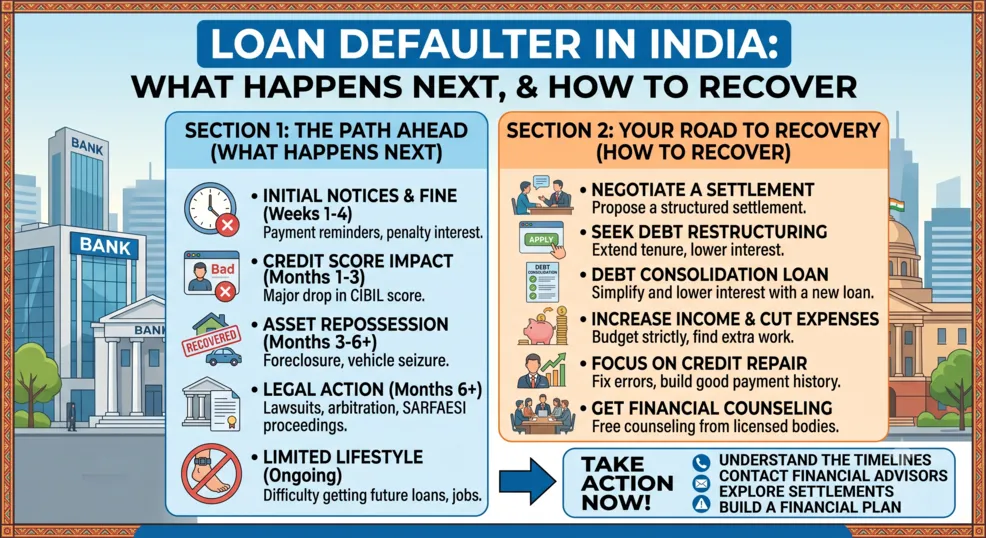
- If your loan was already 90+ days overdue, your score had already dropped significantly
- Settlement stops further damage by closing the account
- With consistent positive credit behaviour after settlement, your score can recover within 12–24 months
- The "Settled" status remains on your report for 7 years but becomes less impactful over time as recent positive history builds up
Settlement hurts your score less than continued default does.
Is Loan Settlement Legal in India?
Yes completely legal.
Loan settlement is a standard banking practice permitted under RBI guidelines on NPA management. Banks and NBFCs have dedicated loan resolution teams specifically to negotiate and process settlements.
There is no law in India that prohibits a borrower from requesting or negotiating a settlement with their lender.
Can a Lender Refuse to Settle?
Yes. Lenders are not obligated to settle.
However, most lenders prefer recovering something over spending years in legal proceedings to recover everything. When a borrower demonstrates genuine hardship and presents a reasonable lump-sum offer, lenders typically engage in settlement discussions.
Platforms with direct lender relationships like Zavo have significantly higher success rates in getting settlements approved compared to individuals negotiating alone.
What Is the Loan Settlement Process Step by Step?
Step 1 - Calculate your total outstanding amount including principal, interest, and penalties.
Step 2 - Determine what lump sum you can realistically arrange to pay.
Step 3 - Contact your lender's loan resolution or NPA team not regular customer care.
Step 4 - Present your financial hardship clearly. Use documentation if available — job loss letter, medical bills, bank statements.
Step 5 - Negotiate the settlement amount. The lender's first offer is rarely their best.
Step 6 - Get the agreed settlement terms in a written letter from the lender before paying anything.
Step 7 - Pay the agreed amount via traceable mode — NEFT, RTGS, or cheque.
Step 8 - Collect your No Objection Certificate (NOC) confirming the account is closed.
Step 9 - Verify your credit report 45 days later to confirm the "Settled" status is updated correctly.
What Documents Do You Need for Loan Settlement?
Documents to submit to your lender:
- Identity proof
- Loan account details
- Proof of financial hardship (job termination letter, medical bills, income statements)
- Bank statements showing financial difficulty
Documents you receive after settlement:
- Written settlement agreement (before payment)
- Payment receipt
- No Objection Certificate / NOC (after payment)
Always keep these documents stored safely both physically and digitally.
How Long Does Loan Settlement Take?
Typically 2 to 8 weeks from initial contact to final closure.
The timeline depends on:
- How quickly the lender responds
- How long negotiations take
- The lender's internal approval process
Platforms with direct lender access like Zavo typically resolve settlements faster than individuals negotiating independently.
Can You Rebuild Your CIBIL Score After Loan Settlement?
Yes and many people do.
Steps to rebuild after settlement:
- Get a secured credit card and use it responsibly
- Pay all bills and EMIs on time without exception
- Keep credit card utilization below 30%
- Avoid applying for multiple loans immediately after settlement
- Use a structured credit builder program
Consistent positive behaviour over 12–24 months can bring meaningful score recovery even after settlement.
Will Collection Calls Stop After Loan Settlement Begins?
Once a formal settlement process is initiated, collection pressure naturally begins to ease. The lender shifts focus from aggressive recovery to closing the account through the settlement process.
After the settlement is complete and the NOC is issued, all collection activity stops permanently the debt no longer exists.
Is There a Tax Impact of Loan Settlement?
Possibly and this is something many people overlook.
In some cases, the amount written off by the lender (the difference between what you owed and what you paid) may be treated as income and could attract tax liability.
This is not universal and depends on the type of loan and lender. Consulting a Chartered Accountant before settling a large loan amount is advisable.
Should You Use a Loan Settlement Platform or Do It Yourself?
Do it yourself if:
- You're comfortable negotiating directly with banks
- Your outstanding amount is relatively small
- You already have a relationship with your lender
Use a platform if:
- You've tried and the lender isn't responding or isn't flexible
- You're dealing with multiple overdue loans
- You want to ensure you're getting the best possible settlement amount
- You want the process handled professionally without added fees
Zavo is one such platform zero settlement fees, direct lender access, 97% success rate, and cashback on successful settlements. You can explore their loan settlement service at thezavo.com/settle.
What Happens If You Pay Without Getting a Settlement Letter?
This is a critical mistake.
If you pay without a written settlement agreement, the lender may:
- Apply the payment toward your outstanding dues without closing the account
- Continue charging interest on the remaining balance
- Deny that a settlement was agreed upon
Always get the settlement letter before making any payment. No exceptions.
Final Answer Is Loan Settlement Worth It?
For someone who genuinely cannot repay their full loan outstanding, yes loan settlement is worth it.
It legally closes the debt. It stops ongoing damage to your credit score. It ends collection pressure. And it gives you a defined starting point to rebuild your financial life.
It is not the perfect outcome full repayment always is. But when full repayment is not possible, settlement is the smartest, most practical move available.
The key is to act early, negotiate well, get everything in writing, and start rebuilding immediately after.



















Sign in to leave a comment.