
If you are exploring Ayurveda and looking for natural approaches to wellness, you may have heard the term Panchakarma. But what is Panchakarma, and why is it considered an important part of traditional Ayurvedic practice?
Panchakarma is a classical Ayurvedic approach that includes a series of therapeutic procedures traditionally used for cleansing, balancing, and rejuvenation. Unlike a general wellness detox, Panchakarma is usually planned according to an individual's health condition, body constitution, lifestyle, digestion, and other factors.
A properly planned Panchakarma treatment can include preparation therapies, selected Panchakarma procedures, dietary guidance, rest, and post-treatment care.
In this guide, we will explain what Panchakarma is, the five types of Panchakarma, how the treatment process works, its traditional benefits, safety considerations, and what you should know before starting Ayurvedic therapy.
What Is Panchakarma?
The word Panchakarma comes from the Sanskrit words Pancha, meaning five, and Karma, meaning actions or procedures.
In Ayurveda, Panchakarma refers to five classical therapeutic procedures traditionally used as part of a comprehensive Ayurvedic treatment approach.
The five classical Panchakarma procedures are:
- Vamana – therapeutic emesis
- Virechana – therapeutic purgation
- Basti – medicated enema therapy
- Nasya – nasal administration of Ayurvedic medicines
- Raktamokshana – traditional bloodletting
An important point to understand is that Panchakarma does not mean every person must undergo all five procedures. An Ayurvedic practitioner may select particular therapies after assessing the individual's health, constitution, age, strength, lifestyle, and treatment requirements.
What Is Panchakarma Treatment in Ayurveda?
Panchakarma treatment is more than a single therapy or massage. Traditionally, it is a structured process that can involve three broad stages:
- Purvakarma: preparation before the main procedures
- Pradhana Karma: the primary therapeutic procedures
- Paschat Karma: post-treatment care and gradual return to a normal routine
The exact treatment plan may differ from one individual to another.
This personalized approach is one of the key characteristics of traditional Panchakarma.
What Are the 5 Types of Panchakarma?

The five classical procedures are the foundation of Panchakarma. Each procedure has a different purpose within traditional Ayurvedic practice.
1. Vamana
Vamana is a traditional therapeutic emesis procedure.
In classical Ayurveda, it is performed under professional supervision after appropriate preparation. The procedure is not intended for self-treatment and should only be considered when an appropriately qualified practitioner determines that it is suitable.
Because induced vomiting can involve risks such as dehydration and aspiration, professional supervision and appropriate patient selection are important.
2. Virechana
Virechana refers to therapeutic purgation.
During this traditional Ayurvedic procedure, selected medicines are used to encourage bowel evacuation. The preparation, medicine, dosage, and timing depend on the individual's condition and the practitioner's assessment.
Unsupervised use of strong purgatives can cause dehydration or electrolyte disturbances, so this procedure should be performed only under appropriate professional guidance.
3. Basti
Basti is a traditional Ayurvedic therapy involving the administration of herbal or medicated preparations through the rectal route.
Ayurvedic texts describe different forms of Basti, and the preparation used may vary depending on the treatment plan.
Basti is traditionally associated particularly with management of Vata according to Ayurvedic principles.
Since it is an internal procedure, appropriate hygiene, preparation, and professional supervision are essential.
4. Nasya
Nasya involves administering selected Ayurvedic preparations through the nasal route.
It is traditionally used in Ayurvedic practice for conditions and wellness concerns associated with the head and neck region.
The type and quantity of preparation can vary. Nasya should therefore be performed according to professional guidance rather than using random oils or herbal products at home.
5. Raktamokshana
Raktamokshana is a traditional Ayurvedic bloodletting procedure.
Historical Ayurvedic texts describe different approaches to this practice. Modern application requires careful consideration of hygiene, safety, practitioner training, and applicable medical regulations.
It is not appropriate for everyone and should only be considered after professional evaluation.
How Does Panchakarma Treatment Work?
A traditional Panchakarma program may involve several stages rather than a single procedure.
Step 1: Ayurvedic Consultation
The first step is generally an individual consultation.
An Ayurvedic practitioner may consider:
- Current health concerns
- Medical history
- Diet and eating habits
- Digestion
- Sleep pattern
- Daily lifestyle
- Medications
- Allergies
- Age
- Physical strength
- Ayurvedic constitution
This information helps the practitioner decide whether Panchakarma is appropriate and which therapies may be considered.
Step 2: Purvakarma – Preparation
Before certain Panchakarma procedures, traditional Ayurveda may use preparatory therapies known as Purvakarma.
Two commonly discussed preparatory practices are:
Snehana
Snehana generally refers to oleation therapy involving oils or ghee, either internally or externally, depending on the treatment plan.
Swedana
Swedana refers to traditional sweating or fomentation therapies.
These preparatory practices are traditionally used to prepare the body before selected Panchakarma procedures.
Step 3: Pradhana Karma – Main Treatment
This is the primary stage of the Panchakarma program.
Depending on the individual's assessment, the practitioner may select one or more appropriate procedures.
It is important to remember that all five Panchakarma procedures are not necessarily performed on every person.
Step 4: Paschat Karma – Post-Treatment Care
Post-treatment care is another important component of a traditional Panchakarma program.
The practitioner may provide recommendations regarding:
- Diet
- Rest
- Daily routine
- Physical activity
- Hydration
- Gradual return to regular food
- Lifestyle habits
Following professional instructions can help make the transition back to a normal routine more comfortable.
What Are the Traditional Benefits of Panchakarma?
Panchakarma is traditionally associated with cleansing, rejuvenation, and maintaining balance according to Ayurvedic principles.
People may seek Panchakarma as part of a wellness program for goals such as:
- Supporting digestive wellness
- Encouraging relaxation
- Promoting a structured lifestyle
- Supporting general well-being
- Rejuvenation and restorative care
- Incorporating traditional Ayurvedic practices into daily wellness
However, it is important to distinguish traditional Ayurvedic claims from modern clinical evidence. Panchakarma should not be presented as a guaranteed cure for a disease or as a replacement for medically necessary treatment.
Panchakarma vs Ayurveda Detox: Are They the Same?
The phrase Ayurveda detox is frequently used online, but it does not necessarily mean the same thing as Panchakarma.
Panchakarma specifically refers to five classical Ayurvedic procedures.
“Detox” is a broader modern wellness term that can include:
- Dietary changes
- Herbal preparations
- Massage
- Fasting
- Lifestyle changes
- Wellness therapies
Therefore, an Ayurvedic massage or short detox program should not automatically be described as Panchakarma.
A genuine Panchakarma program should involve appropriate assessment and a treatment plan based on the individual.
Panchakarma Treatment and Ayurvedic Therapies
Several Ayurvedic therapies may be used alongside or around a Panchakarma program.
Depending on the individual's needs, an Ayurvedic center may offer therapies such as:
Abhyanga
A traditional Ayurvedic oil massage that is commonly used as a supportive or preparatory therapy.
Swedana
A traditional fomentation or sweating therapy that may be used after oleation.
Shirodhara
A traditional Ayurvedic therapy involving a continuous stream of liquid over the forehead.
Kati Basti
A localized Ayurvedic therapy involving the application of warm oil to the lower back area.
Pizhichil
A traditional therapy involving the application or pouring of warm oil over the body.
These therapies may be part of broader Ayurvedic wellness programs, but they are not themselves among the five classical Panchakarma procedures.
How Long Does Panchakarma Treatment Take?
There is no universal duration for Panchakarma.
The length of treatment may depend on:
- The selected procedures
- Individual health status
- Preparation requirements
- Practitioner recommendations
- Response to treatment
- Post-treatment requirements
Some centers offer shorter wellness programs, while traditional treatment plans may involve a longer period covering preparation, the main procedure, and post-treatment care.
A practitioner should explain the expected duration before treatment begins.
What Food Is Recommended During Panchakarma?
Diet is traditionally considered an important part of Ayurvedic treatment.
Depending on the stage of treatment, a practitioner may recommend simple and easily digestible meals.
Common examples may include:
- Khichdi
- Cooked vegetables
- Rice-based preparations
- Light soups
- Warm fluids
- Other easily digestible foods
Dietary recommendations should always be individualized.
People with conditions such as diabetes, kidney disease, gastrointestinal disorders, or other medical concerns should discuss dietary changes with an appropriate healthcare professional.
What Should You Avoid During Panchakarma?
During a supervised Panchakarma program, the practitioner may recommend avoiding certain foods and activities.
These may include:
- Heavy meals
- Highly processed foods
- Excessive physical activity
- Alcohol
- Smoking
- Irregular sleep
- Excessive stimulation
- Unsupervised herbal preparations
The exact recommendations can vary depending on the individual's treatment plan.
Is Panchakarma Safe?
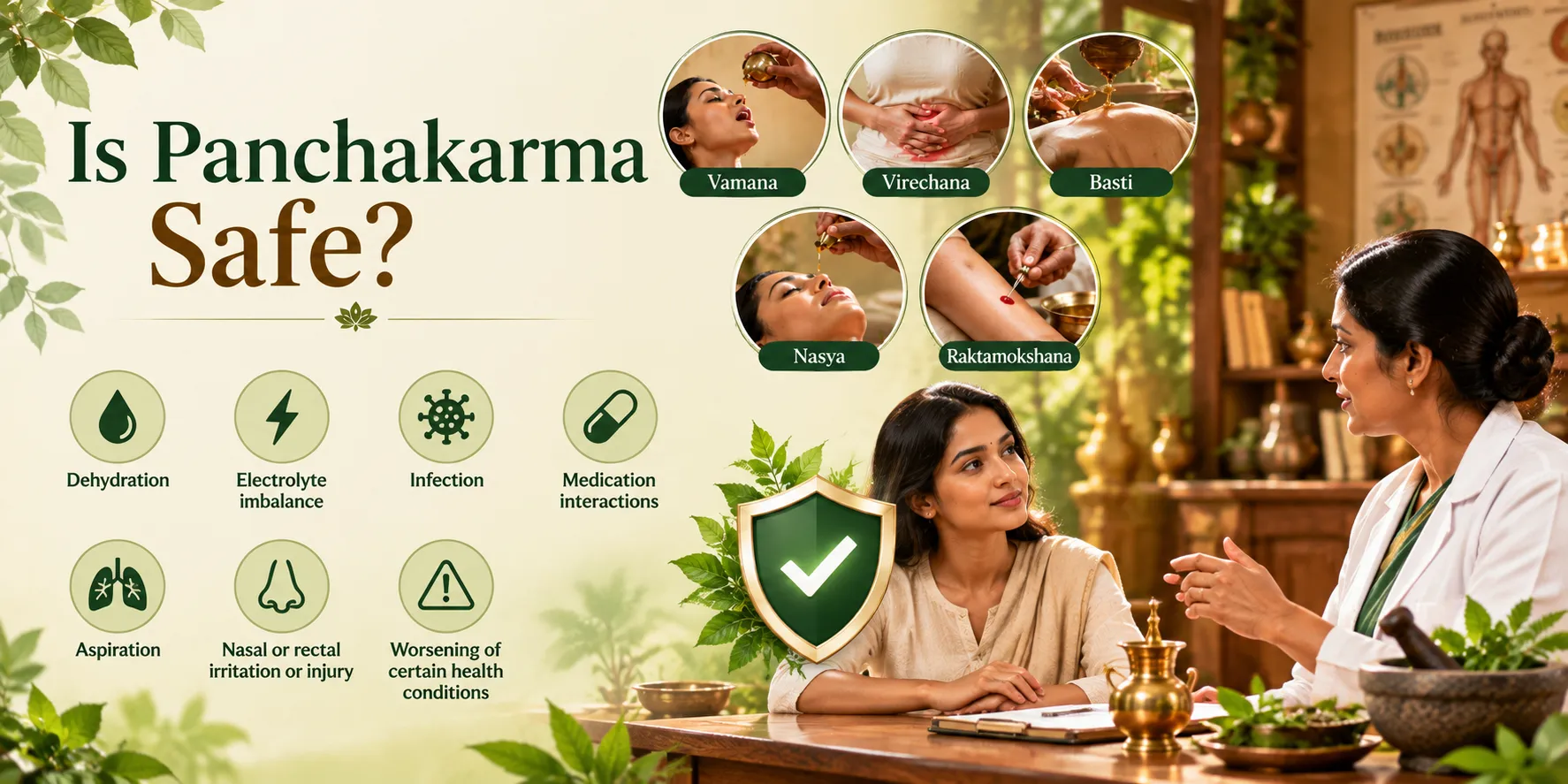
The safety of Panchakarma depends on the specific procedure, the person's health, and the quality of professional supervision.
Some procedures involve vomiting, purgation, enemas, nasal administration, or bloodletting. These procedures can carry risks if performed incorrectly or on an unsuitable individual.
Possible risks may include:
- Dehydration
- Electrolyte imbalance
- Infection
- Medication interactions
- Aspiration
- Nasal or rectal irritation or injury
- Worsening of certain health conditions
For this reason, Panchakarma should not be attempted as a DIY detox program.
Before beginning treatment, tell the practitioner about your existing health conditions, allergies, pregnancy status, and all medicines or supplements you are taking.
Who Should Avoid or Seek Medical Advice Before Panchakarma?
Not everyone is necessarily suitable for every Panchakarma procedure.
Extra caution may be required for people who are:
- Pregnant
- Elderly or very young
- Physically weak
- Dehydrated
- Taking multiple medications
- Living with significant chronic health conditions
- Recovering from surgery
- Experiencing an acute illness
The decision should be based on an individual assessment rather than a general online recommendation.
How to Choose a Panchakarma Treatment Center
If you are searching for Panchakarma treatment, consider the following questions before choosing a center:
- Is an individual consultation provided?
- Are practitioner qualifications clearly stated?
- Is your medical history reviewed?
- Are treatment procedures explained beforehand?
- Are hygiene and safety practices followed?
- Is post-treatment guidance provided?
- Are your existing medicines taken into consideration?
- Can you ask questions before starting the treatment?
A professional consultation can help you understand whether a particular Ayurvedic therapy is appropriate for your circumstances.
Panchakarma at Aarogya India
If you are looking for information about Ayurvedic therapy and Panchakarma treatment, Aarogya India provides information about Ayurvedic wellness and consultation services.
Before beginning any Panchakarma procedure, an individual consultation can help determine the appropriate approach based on your requirements.
Visit aarogyaindia.hospital to explore Ayurvedic services, wellness therapies, and consultation options.
Conclusion
Understanding what is Panchakarma is important before considering Ayurvedic treatment.
Panchakarma is a traditional Ayurvedic approach involving five classical procedures: Vamana, Virechana, Basti, Nasya, and Raktamokshana. A complete program may also include preparation therapies, dietary recommendations, supportive Ayurvedic therapies, rest, and post-treatment care.
The treatment is not necessarily the same for everyone. A qualified practitioner should assess the individual's health and determine which procedures, if any, are appropriate.
If you are interested in learning more about Panchakarma treatment, Ayurvedic therapy, Panchakarma procedures, or Ayurveda detox, begin with a professional consultation and choose a treatment plan based on your individual needs.
Explore Ayurvedic wellness and consultation services at aarogyaindia.hospital.
























Sign in to leave a comment.