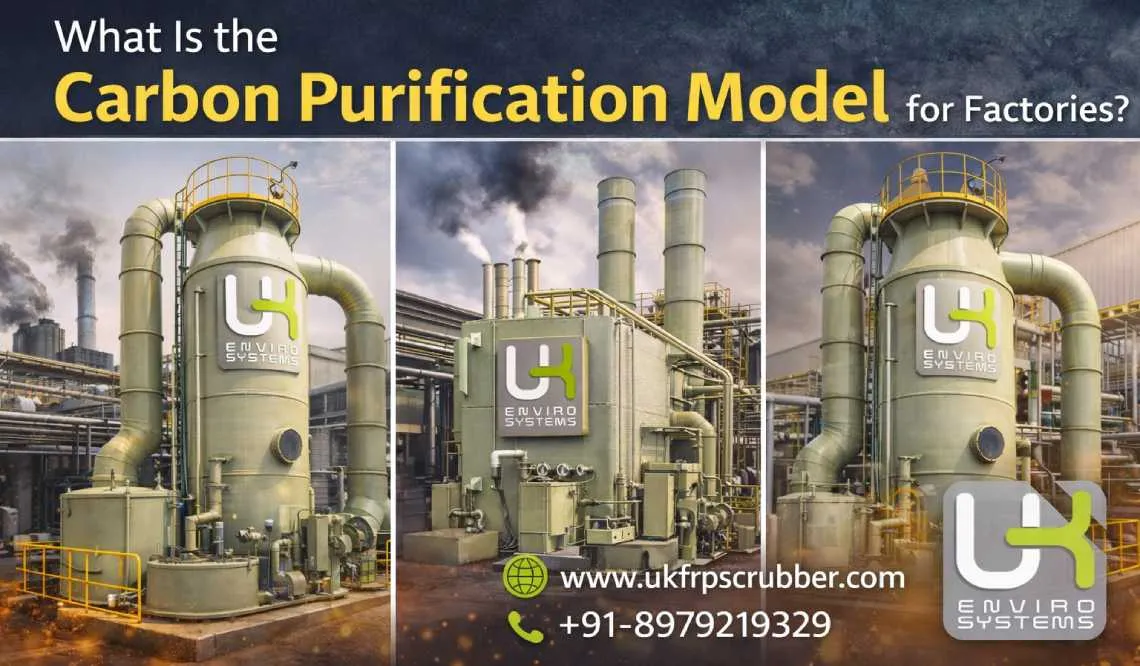
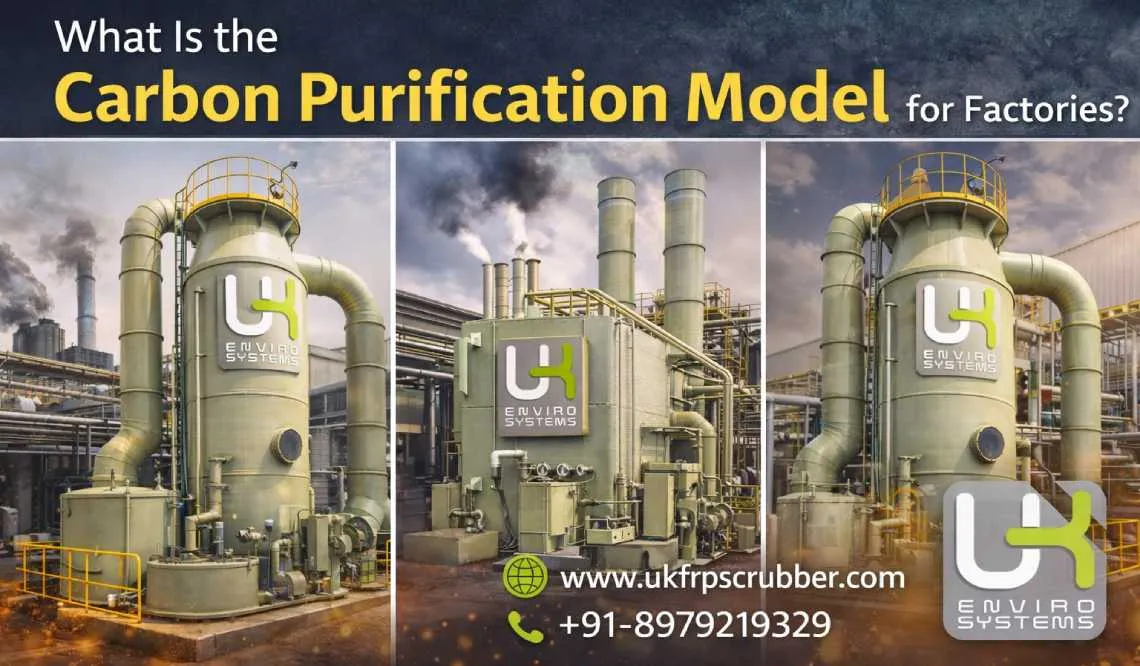
Many factories release harmful vapors and odors. These emissions harm workers and the environment. Activated Carbon Tower Manufacturers provide a proven solution. Their systems capture toxic compounds from industrial exhaust. This process is called the carbon purification model. It uses activated carbon to adsorb gases. Consequently, factories achieve cleaner air and regulatory compliance. Understanding this model helps you select the right equipment. Activated Carbon Tower Manufacturers design systems for various applications. Therefore, let us explore how this model works.
Understanding the Carbon Purification Concept
Carbon purification relies on physical adsorption. Molecules stick to the carbon’s surface. Activated carbon has millions of tiny pores. These pores create enormous surface area. One gram of activated carbon can cover 3,000 square meters. That surface traps volatile organic compounds (VOCs). It also captures odorous gases like hydrogen sulfide. The carbon does not chemically react with pollutants. Instead, it holds them through van der Waals forces. This mechanism makes carbon purification highly effective. Factories use it for solvent recovery, odor control, and air toxics removal.
How Adsorption Differs from Absorption
People often confuse adsorption with absorption. Absorption means a gas dissolves into a liquid. For example, Wet Scrubbers use liquid to absorb pollutants. Adsorption means gas sticks to a solid surface. Carbon towers use adsorption exclusively. This difference matters for system design. Adsorption works best for low-concentration streams. It also handles variable flow rates well. Activated Carbon Tower Manufacturers optimize their vessels for maximum adsorption. They select carbon grades based on target molecules.
How Activated Carbon Towers Operate
The carbon purification model follows a simple flow. Contaminated air enters the tower’s inlet. Then it passes through a carbon bed. Pollutants get trapped inside carbon pores. Clean air exits from the outlet. Activated Carbon Tower Manufacturers use vertical or horizontal vessels. Vertical towers save floor space. Horizontal towers allow easier carbon changeout. Both designs achieve the same goal. They remove 95% to 99% of targeted compounds.
The Role of Residence Time
Residence time determines removal efficiency. This term means how long air contacts the carbon. Longer contact captures more pollutants. Activated Carbon Tower Manufacturers calculate ideal residence times. Typical values range from 0.5 to 2 seconds. Shorter beds work for highly adsorptive compounds. Longer beds handle challenging molecules. You must match residence time to your application.
Carbon Bed Depth and Saturation
Carbon beds have finite capacity. Eventually, they become saturated. Saturated carbon no longer adsorbs pollutants. Then breakthrough occurs. Breakthrough means pollutants exit the tower. Activated Carbon Tower Manufacturers provide saturation monitoring systems. These systems include sampling ports and sensors. Regular testing tells you when to replace carbon. Some factories regenerate spent carbon off-site. Regeneration restores adsorption capacity. However, not all carbon types allow regeneration.
Key Components of a Carbon Purification System
A complete carbon tower includes several parts. Each part affects performance. Activated Carbon Tower Manufacturers design these components carefully.
Vessel Construction Materials
Carbon steel works for dry, non-corrosive gases. Stainless steel resists moisture and acidic compounds. Industrial FRP Scrubbers use fiberglass for extreme corrosion. But carbon towers typically avoid FRP. Moisture damages activated carbon. Therefore, vessels must remain dry inside. Activated Carbon Tower Manufacturers often specify coated carbon steel. This coating prevents rust without adding moisture.
Inlet and Outlet Configurations
Proper airflow distribution prevents channeling. Channeling means air bypasses the carbon bed. That reduces efficiency. Activated Carbon Tower Manufacturers include diffuser plates. These plates spread air evenly across the bed. Outlet ducts connect to Fume Extraction Systems. Good integration ensures complete fume capture. Without proper ductwork, fugitive emissions escape.
Access Ports for Carbon Changeout
Changing carbon requires safe access. Towers need manways and fill ports. Activated Carbon Tower Manufacturers place these at strategic locations. Drain ports remove spent carbon easily. Top ports allow fresh carbon loading. You must plan for carbon replacement every 6 to 24 months. Easy access reduces labor costs and downtime.
Why Factories Need Carbon Purification
Environmental regulations drive carbon tower adoption. Agencies like the EPA limit VOC emissions. Carbon purification meets these limits effectively. Additionally, factories face community pressure. Odors from chemical plants or wastewater treatment annoy neighbors. Activated Carbon Tower Manufacturers help eliminate these odors. Consequently, factories maintain good relationships with local residents.
Worker Health and Safety
Exposure to VOCs causes serious illnesses. Headaches, nausea, and cancer result from long-term exposure. Carbon towers remove these dangers from the workplace. Fume Extraction Systems capture emissions at the source. Then carbon towers clean the captured air. This two-step approach protects your workforce. Moreover, it reduces liability and insurance costs.
Solvent Recovery and Cost Savings
Some factories recover valuable solvents. Steam-regenerable carbon towers capture solvents. Then steam releases the trapped compounds. Condensation turns solvents back into liquid. Companies reuse these solvents in production. Consequently, carbon towers pay for themselves. Activated Carbon Tower Manufacturers offer recovery-grade systems. These systems achieve high-purity solvent returns.
Integration with Other Pollution Control Devices
Carbon towers rarely work alone. They often combine with other technologies. Understanding these integrations helps you design complete systems.
Pairing with Wet Scrubbers
Wet Scrubbers remove acid gases and particulates. They use liquid sprays to capture pollutants. However, scrubbers cannot remove VOCs effectively. That’s where carbon towers excel. First, a wet scrubber removes HCl or ammonia. Then the carbon tower adsorbs organic vapors. Activated Carbon Tower Manufacturers design downstream carbon units. This sequence prevents carbon bed clogging. Scrubbers remove sticky particles that would foul the carbon.
Using Industrial FRP Scrubbers for Pre-Treatment
Industrial FRP Scrubbers resist highly corrosive gases. They handle chlorine, hydrogen fluoride, and sulfur dioxide. After scrubbing, the gas still contains trace VOCs. A carbon tower provides final polishing. FRP Scrubber Manufacturers often collaborate with carbon tower suppliers. Together, they deliver complete treatment trains. You should ask FRP Scrubber Manufacturers about carbon integration. They can recommend compatible tower designs.
Complementing Fume Extraction Systems
Fume Extraction Systems collect emissions from specific points. These points include tanks, reactors, and ovens. The extracted fumes go to a carbon tower. Without extraction, contaminated air dilutes into the plant. Dilution does not remove pollutants. Therefore, Fume Extraction Systems and carbon towers work as a pair. Activated Carbon Tower Manufacturers provide inlet connections for extraction ductwork.
Positioning with Industrial Air Scrubbers
Industrial Air Scrubbers is a broad category. It includes wet scrubbers, dry scrubbers, and carbon towers. Carbon towers represent one type of industrial air scrubber. However, they specialize in organics and odors. Other scrubbers target acids or dust. For complex emissions, use multiple technologies in series. For instance, a venturi scrubber removes dust. Then a carbon tower removes VOCs. This sequence ensures complete air cleaning.
Selecting Reliable Activated Carbon Tower Manufacturers
Choosing the right manufacturer determines system success. Poor quality leads to premature failure. Activated Carbon Tower Manufacturers vary in expertise and service.
Evaluating Manufacturer Experience
Ask about similar installations. Request references from your industry. Experienced manufacturers understand your pollutant profile. They recommend the right carbon grade. Activated Carbon Tower Manufacturers with decades of service provide better support. Avoid new companies without proven track records.
Checking Design Capabilities
Each factory has unique constraints. Your manufacturer must customize accordingly. Do you need explosion-proof construction? Does your gas contain moisture? Activated Carbon Tower Manufacturers should perform process calculations. They must size the vessel based on your flow rate. Additionally, they should model pressure drop. High pressure drop increases fan energy costs.
Assessing After-Sales Support
Carbon towers need regular maintenance. You will replace carbon multiple times. Reliable manufacturers offer changeout services. They also supply replacement carbon. Some Activated Carbon Tower Manufacturers provide monitoring contracts. These contracts include periodic testing and reporting. Choose a manufacturer who stays available for years.
The Role of FRP Scrubber Manufacturers in Complementary Systems
Your carbon tower may follow an FRP scrubber. In that case, FRP Scrubber Manufacturers become important partners. They ensure the scrubber does not discharge moisture. Moisture destroys activated carbon efficiency. FRP Scrubber Manufacturers can add mist eliminators. These devices remove water droplets before the carbon tower. Consequently, your carbon bed lasts longer. Always coordinate between both suppliers.
Coordinating Material Interfaces
FRP scrubbers have different flange standards. Carbon towers use metal flanges. FRP Scrubber Manufacturers and carbon suppliers must agree on connections. Mismatched flanges cause leaks. Specify gasket materials that resist both chemicals. Neoprene or PTFE gaskets work for most applications. Verify compatibility with your specific stream.
Operational Best Practices for Carbon Towers
Once installed, proper operation maximizes performance. Follow these guidelines from Activated Carbon Tower Manufacturers.
Monitoring Breakthrough Early
Install sensors downstream of the carbon bed. These sensors detect rising pollutant levels. Once breakthrough reaches 5% to 10%, change carbon immediately. Waiting too long allows emissions violations. Activated Carbon Tower Manufacturers recommend weekly checks for critical applications. Use portable analyzers for accurate readings.
Controlling Inlet Humidity
Relative humidity above 50% reduces carbon performance. Water molecules compete for adsorption sites. Therefore, install a dehumidifier before the carbon tower. Alternatively, heat the incoming air. Warm air holds more moisture without condensation. Activated Carbon Tower Manufacturers specify maximum humidity levels. Stay below those limits for optimal results.
Avoiding High Temperatures
Activated carbon adsorbs best below 40°C. High temperatures drive pollutants back out of the carbon. This phenomenon is called desorption. Desorption releases captured gases into the outlet. Consequently, your system fails. Keep inlet temperatures below the manufacturer’s rating. Use cooling coils if necessary.
Scheduling Regular Carbon Replacement
Set a replacement schedule based on usage. Track total run hours and pollutant loading. Activated Carbon Tower Manufacturers provide saturation calculators. These tools estimate carbon lifespan. Replace carbon proactively, not reactively. Unplanned outages cost more than scheduled maintenance.
Cost and Efficiency Considerations
Carbon purification involves both capital and operating costs. Understanding these helps you budget accurately.
Initial Purchase Costs
Carbon towers cost between $5,000 and $100,000. Smaller units for low flow rates are cheaper. Large industrial systems cost more. Activated Carbon Tower Manufacturers price vessels based on size and material. Stainless steel adds 30% to 50% over carbon steel. Get multiple quotes before deciding.
Operating Expenses
Carbon replacement is the biggest operating cost. Virgin carbon costs $1 to $3 per pound. Spent carbon disposal adds another cost. Regenerated carbon reduces expenses by 40%. However, regeneration requires specialized facilities. Activated Carbon Tower Manufacturers can recommend local regeneration services. Also, account for fan electricity. Pressure drop across the carbon bed consumes energy.
Efficiency Metrics to Track
Calculate removal efficiency regularly. Divide outlet concentration by inlet concentration. Subtract from 1 and multiply by 100. Aim for 95% or higher. Also track pressure drop. A rising pressure drop indicates bed fouling. Clean or replace carbon immediately. Activated Carbon Tower Manufacturers provide baseline pressure drop values.
Common Mistakes When Implementing Carbon Purification
Avoid these errors to ensure success. Many factories learn these lessons the hard way.
Oversizing or Undersizing the Tower
Bigger is not always better. Oversized towers hold excessive carbon. That carbon sits partially used for years. Meanwhile, moisture degrades it. Undersized towers cause frequent changeouts. Activated Carbon Tower Manufacturers help you calculate the correct size. Trust their engineering calculations.
Ignoring Pre-Filtration
Dust and oil aerosols clog carbon pores. These particles reduce adsorption capacity rapidly. Install a pre-filter rated for 5 microns or less. Change pre-filters monthly. This simple step triples carbon lifespan. Activated Carbon Tower Manufacturers often sell compatible pre-filters.
Forgetting Safety Showers
Spent carbon can self-heat. Certain solvents create exothermic reactions. This heat may ignite the carbon. Therefore, install water spray systems. Activated Carbon Tower Manufacturers offer fire suppression options. Also, provide safety showers nearby. Train workers on emergency procedures.
Future Trends in Carbon Purification
Technology continues to evolve. Activated Carbon Tower Manufacturers innovate constantly.
Advanced Carbon Materials
New carbons include impregnated varieties. These materials target specific gases like mercury or formaldehyde. Metal-organic frameworks (MOFs) offer even higher surface areas. However, MOFs remain expensive today. Expect wider adoption in five years.
Smart Monitoring Systems
IoT sensors now track carbon saturation remotely. These systems send alerts to your phone. Activated Carbon Tower Manufacturers integrate these sensors into new towers. Real-time data prevents breakthrough events. Consequently, you change carbon only when necessary. This approach saves money.
Regeneration at Smaller Scales
On-site regeneration units are becoming affordable. Small thermal units desorb captured VOCs. Then an oxidizer destroys the desorbed gases. Activated Carbon Tower Manufacturers offer compact regeneration skids. These skids eliminate carbon disposal completely. Payback periods range from two to four years.
Conclusion
The carbon purification model offers a reliable solution for factory emissions. Activated Carbon Tower Manufacturers design systems that capture VOCs and odors. Understanding adsorption principles helps you select the right tower. Combine carbon units with Wet Scrubbers, Fume Extraction Systems, Industrial FRP Scrubbers, and Industrial Air Scrubbers for complete treatment. Always partner with experienced FRP Scrubber Manufacturers when integrating technologies. Proper operation and maintenance extend carbon life. Avoid common mistakes like ignoring pre-filtration. Finally, embrace future trends like smart monitoring. Your factory will achieve cleaner air, regulatory compliance, and worker safety. Contact Activated Carbon Tower Manufacturers today to start your carbon purification journey.


























Sign in to leave a comment.