What Is the Mobile App Development Process from Idea to Launch?

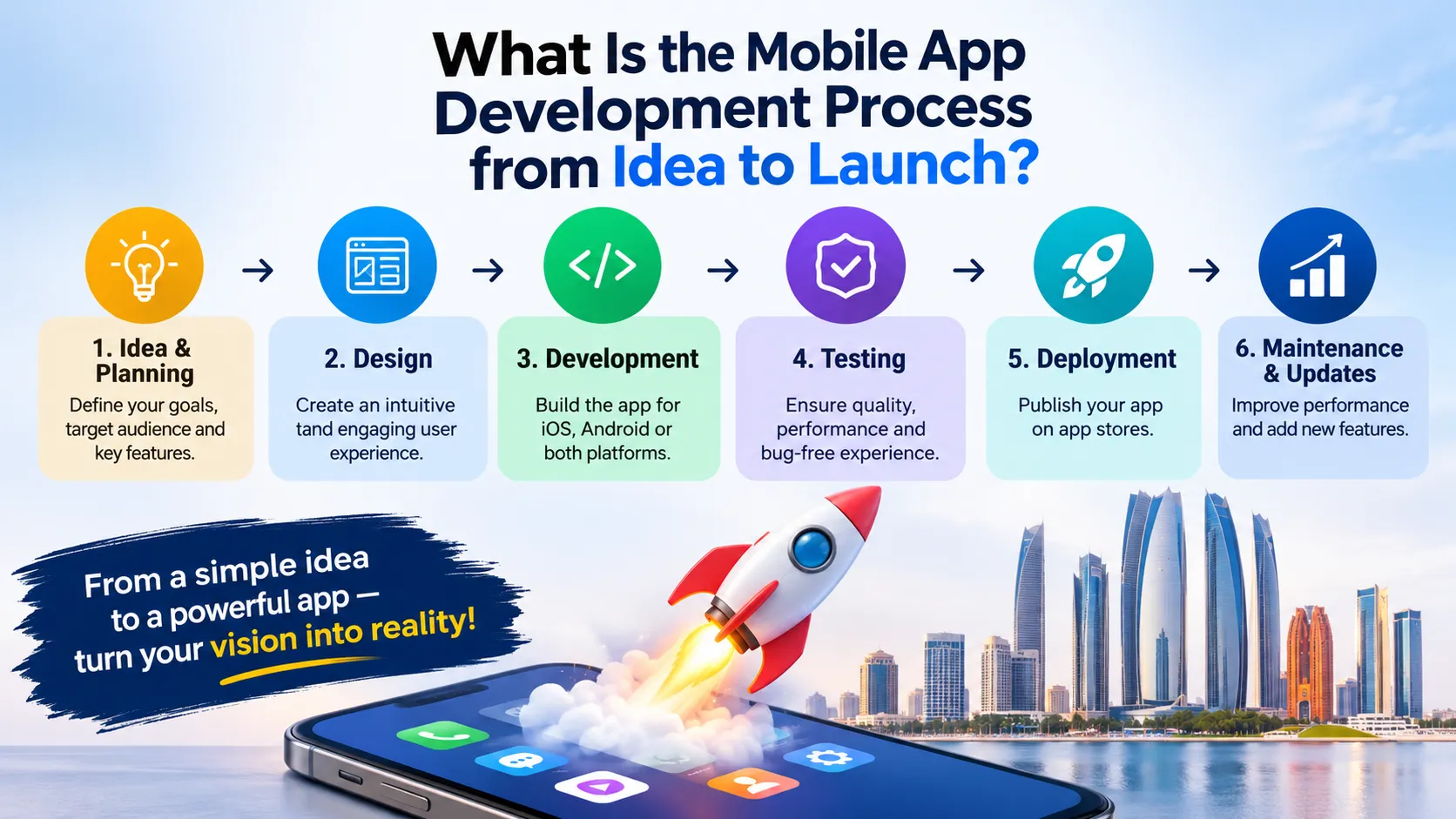
Building a mobile application involves more than writing code. It requires careful planning, market research, user-focused design, development, testing, and ongoing maintenance. Understanding the mobile app development process from idea to launch helps businesses make informed decisions, manage budgets, and create applications that solve real customer problems.
Whether you are a startup developing your first product or an established business expanding its digital services, following a structured development process can reduce risks and improve the chances of a successful launch.
What Is the Mobile App Development Process?
The mobile app development process is a series of stages involved in transforming an initial business idea into a fully functional application. It typically includes discovery, planning, UI/UX design, development, testing, deployment, and post-launch support.
Each stage has a specific purpose, ensuring the application meets user expectations, business objectives, and technical requirements.
7 Key Stages of Mobile App Development from Idea to Launch
1. Idea Validation and Market Research
Every successful application starts with a clearly defined problem. Before investing in development, businesses should understand what users need and whether the proposed application offers a practical solution.
Important activities include:
- Identifying the target audience.
- Researching market demand.
- Analyzing competing applications.
- Understanding customer pain points.
- Evaluating potential revenue models.
For example, a startup planning a food delivery application should research customer preferences, restaurant requirements, delivery workflows, and existing market solutions.
Market research helps businesses validate their ideas before committing significant development resources.
2. Project Planning and Feature Selection
Once the idea is validated, the next step is creating a detailed development plan. This includes defining the project scope, selecting platforms, estimating costs, and prioritizing features.
Common features may include:
- User registration and login.
- User profiles and dashboards.
- Push notifications.
- Payment gateway integration.
- Location tracking.
- Search and filtering.
- Admin dashboard.
- Analytics and reporting.
Startups can begin with a Minimum Viable Product (MVP), focusing on essential features before introducing advanced functionality.
3. UI/UX Design and Prototyping
Design plays an important role in how users interact with an application. A well-designed interface should make navigation simple, provide clear information, and help users complete actions without confusion.
The design stage generally involves wireframes, visual layouts, interactive prototypes, and user journey planning.
Before development begins, businesses should review the prototype to identify usability issues and make necessary improvements. This can prevent expensive design changes later.
4. Mobile App Development
After approving the design, developers begin building the application. This stage involves frontend development, backend development, database configuration, and third-party integrations.
Businesses must choose an appropriate development approach:
- Native development: Separate applications are built for iOS and Android.
- Cross-platform development: A shared codebase supports multiple platforms.
- Hybrid development: Web technologies are used within a mobile application framework.
The right approach depends on performance requirements, functionality, budget, and long-term business plans.
Businesses exploring mobile application development in San Francisco should also evaluate the development team's experience with relevant technologies, APIs, cloud infrastructure, and security practices.
5. Testing and Quality Assurance
Before launch, the application must be tested to ensure it works as expected across supported devices and operating systems.
Important testing activities include:
- Functional testing.
- Performance testing.
- Security testing.
- Device compatibility testing.
- User acceptance testing.
- Usability testing.
Testing helps identify technical issues, improve application stability, and create a smoother experience for users.
6. App Launch and Deployment
Once the application passes testing, it is prepared for release. Depending on the platform, businesses may need to follow Apple's App Store or Google's Play Store submission requirements.
The launch stage includes store listing preparation, application descriptions, screenshots, privacy information, and release configuration.
A successful launch also requires a marketing plan. Businesses can use social media, email campaigns, search engine optimization, and existing customer networks to generate awareness and encourage downloads.
7. Maintenance and Continuous Improvement
Launching an application does not mean development is complete. User expectations, operating systems, security requirements, and business needs continue to change.
Post-launch activities may include:
- Fixing bugs and technical issues.
- Improving application performance.
- Releasing new features.
- Updating security measures.
- Monitoring user feedback.
- Analyzing application performance.
Regular maintenance helps businesses keep their applications relevant, secure, and reliable.
How Much Does Mobile App Development Cost?
The cost of developing a mobile application depends on its complexity, features, design, integrations, platform selection, and development team's experience.
The following figures are illustrative project budgeting estimates, not verified San Francisco market averages.
| Application type | Estimated cost (USD) |
|---|---|
| Basic application | $15,000–$40,000 |
| Mid-level application | $40,000–$100,000 |
| Complex application | $100,000–$250,000+ |
Factors That Affect Development Costs
- Features and functionality: Advanced features require additional development and testing.
- Platform selection: Building separate native iOS and Android applications can increase costs.
- UI/UX design: Custom interfaces and complex user journeys require additional design work.
- Backend infrastructure: Servers, databases, APIs, and cloud services affect the overall budget.
- Third-party integrations: Payment gateways, CRM systems, and external tools add complexity.
- Maintenance: Hosting, monitoring, security updates, and future improvements create ongoing expenses.
Businesses should request a detailed estimate covering development, testing, deployment, and post-launch support before selecting a development partner.
How to Choose a Mobile App Development Company in San Francisco
Choosing the right technology partner can influence the quality, delivery timeline, and long-term success of your application.
When comparing a mobile app development company in San Francisco, consider the following:
- Portfolio and experience: Review previous projects and relevant industry expertise.
- Technical capabilities: Check experience with iOS, Android, cross-platform technologies, and backend development.
- Development methodology: Understand how the company manages planning, communication, testing, and delivery.
- Security standards: Ask about data protection, authentication, and secure development practices.
- Pricing transparency: Request a clear breakdown of costs and project milestones.
- Post-launch support: Confirm how updates, bug fixes, and maintenance will be handled.
For example, Apptunix is one of the development providers businesses may evaluate when researching application development capabilities and comparing project delivery approaches. The final selection should always depend on project requirements, relevant experience, and the proposed solution.
Frequently Asked Questions
1. How long does it take to develop a mobile application?
A basic application may take 2–4 months, while a mid-level application can require 4–8 months. Complex applications may take 8–12 months or longer, depending on features and integrations.
2. What is the first step in mobile app development?
The first step is idea validation and market research. Businesses should identify their target audience, understand customer problems, and evaluate market demand before beginning development.
3. Should I build an MVP before developing a complete application?
Yes, an MVP can be a practical approach for startups. It allows businesses to launch essential features, collect user feedback, validate demand, and make improvements before investing in a larger product.
4. Is native or cross-platform app development better?
Native development is suitable for platform-specific functionality and performance requirements. Cross-platform development can be more cost-effective when businesses want to launch on multiple platforms with a shared codebase.
5. What happens after a mobile app is launched?
After launch, businesses should monitor performance, collect user feedback, fix technical issues, release updates, and introduce improvements based on customer needs.
Final Thoughts
The mobile app development process from idea to launch requires a clear strategy, careful planning, and consistent execution. Each stage, from market research and design to testing and maintenance, contributes to building an application that delivers real value.
Businesses planning mobile app development services in San Francisco should prioritize user needs, choose suitable technologies, establish a realistic budget, and work with a development partner that understands their objectives.
Planning to turn your app idea into a working product? Start by defining your business requirements, identifying essential features, and discussing your project with an experienced development team. A well-planned approach can help you move from an initial idea to a reliable application ready for the market.





Sign in to leave a comment.