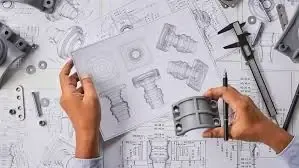

Product Design and Development Services are not just a fancy upgrade of old-school engineering. They’re a different mindset entirely. If you’ve worked around engineers long enough, you can feel the difference almost instantly. One is about building things right. The other is about building the right thing in the first place.
And yeah, that distinction matters more than most people admit.
Traditional engineering has its roots in precision, rules, structure. It’s about making sure a system works, that calculations are correct, that tolerances are tight, and failure is minimized. Solid stuff. No argument there.
But Product Design and Development Services? That’s a broader game. It starts way before engineering even kicks in. It’s about figuring out what should exist, why it should exist, and who actually cares if it does.
That’s where things start to split.
The mindset shift between building and creating
Traditional engineering usually walks into a problem that’s already defined. Someone says, “We need this machine to do X,” and the engineer figures out how to make it happen safely and efficiently. It’s structured. Linear. Predictable.
Product design and development doesn’t wait for that clarity. It creates it.
You’re dealing with messy early ideas. Half-baked concepts. Market guesses. Sometimes just frustration from users who can’t explain what they want properly. And you still have to shape that into something real.
It’s less like solving a puzzle and more like designing the puzzle while people are still arguing about the picture on the box.
And honestly, that’s where a lot of traditional engineering teams struggle when they step into product work. They want clean inputs. Product work rarely gives that luxury.
Why user thinking changes everything
Here’s where the biggest gap shows up.
Traditional engineering focuses heavily on systems, performance, and constraints. That’s not wrong. But it can sometimes forget there’s a human on the other side of the machine or product.
Product Design and Development Services start with that human.
What do they need? What frustrates them? What are they trying to do when they abandon your product after two minutes?
These questions sound simple, but they change everything. Suddenly you’re not just optimizing a mechanism. You’re shaping an experience.
And experience is messy. It doesn’t follow equations cleanly. People behave irrationally, skip steps, misunderstand instructions, or use products in ways nobody predicted. Good product teams design for that chaos instead of ignoring it.
Traditional engineering usually tries to control variables. Product development learns to accept that some variables are just… human.
Iteration is not optional anymore
In traditional engineering, there’s often a strong push to “get it right the first time.” Designs are reviewed, validated, tested, and finalized before production. That works when systems are stable and requirements don’t shift much.
But in Product Design and Development Services, that approach doesn’t survive reality.
You build something. You test it with users. It breaks in unexpected ways. You fix it. You test again. Then you realize the original assumption was off entirely.
So you pivot.
It’s uncomfortable for engineers trained in precision-driven environments. But iteration is not a sign of failure here. It’s the system itself.
And yeah, sometimes it feels inefficient on paper. But in real-world markets, it actually saves you from building the wrong thing at scale. Which is way worse.
The blurry line between design and engineering
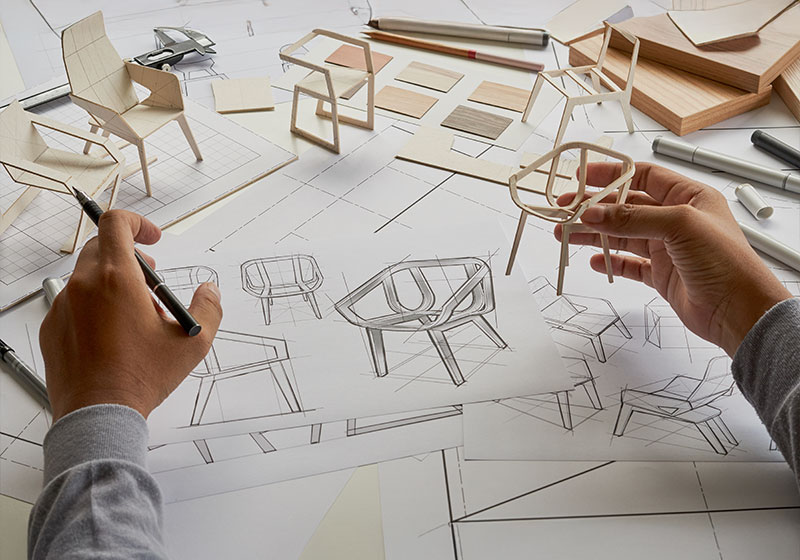
In traditional setups, design and engineering are separate departments. Designers sketch. Engineers build. There’s a handoff. Clean boundaries.
Product Design and Development Services blur that line completely.
A designer might adjust a flow based on technical constraints. An engineer might rethink architecture based on user feedback. Everyone overlaps. Everyone interferes a little.
And honestly, that’s not chaos—it’s necessary friction.
Because if design and engineering don’t talk early and often, you end up with beautifully engineered products that nobody wants, or amazing ideas that are impossible to build.
That gap is where a lot of projects quietly die.
Speed matters, but not the way people think
People assume product development is just about moving fast. That’s not really true.
Traditional engineering can be slow because it’s trying to eliminate uncertainty upfront. That makes sense in safety-critical systems or infrastructure.
But Product Design and Development Services move differently. They’re not rushing blindly. They’re trying to reduce wasted effort by validating ideas earlier.
So speed here is not about cutting corners. It’s about avoiding deep investment in the wrong direction.
Sometimes that means building a rough prototype in days instead of perfecting a spec for weeks. Then throwing it at users who will immediately tell you what you got wrong.
It’s humbling. Also efficient in a slightly brutal way.
Risk looks different in both worlds
In traditional engineering, risk is mostly technical. Will it fail structurally? Will it break under load? Will it meet standards?
In product development, risk is more existential.
Will anyone even use this thing?
That’s a different kind of uncertainty. And it changes how decisions get made. You’re not just asking “Can we build it?” You’re asking “Should we build it at all?”
That second question saves companies from spending months or years perfecting something that has no real demand.
And yeah, sometimes that realization comes late. But good Product Design and Development Services try to surface it early, before things get expensive.
Collaboration isn’t optional anymore
Traditional engineering can sometimes operate in silos. Mechanical team here, electrical team there, software somewhere else. As long as interfaces are defined, things can move.
Product development doesn’t work that cleanly.
Everyone needs to talk. Constantly. Designers, engineers, product managers, sometimes even marketing and customer support.
Because feedback loops are fast and messy. A tiny UX issue might require structural changes. A technical limitation might reshape the entire user journey.
It’s not always comfortable. Meetings get longer than anyone wants to admit. But without that cross-talk, the product just fragments.
Real-world constraints hit earlier in product development
Here’s something people don’t talk about enough.
In traditional engineering, constraints are usually introduced after the concept is fairly stable. You design something, then test it against manufacturing, safety, cost.
In Product Design and Development Services, those constraints show up immediately.
Cost matters from day one. Manufacturing feasibility matters early. User behavior matters before anything is finalized.
So instead of designing freely and then adjusting, you’re constantly balancing ideas with reality.
It feels restrictive at first. But over time, it actually produces more grounded outcomes. Less fantasy, more usable products.
Why traditional engineering still matters
Let’s be honest here. Traditional engineering is not outdated. Not even close.
When things need to be reliable, safe, and predictable—engineering discipline is everything. Bridges, medical devices, aerospace systems… you don’t “iterate quickly” on those in the same way.
But where it falls short is in early-stage uncertainty. That’s where Product Design and Development Services step in and fill the gap.
One doesn’t replace the other. They just operate at different layers of the problem.
The friction happens when people try to force one mindset into the other.
The messy middle where most innovation happens
If you zoom out, the interesting stuff happens in the overlap between engineering and product thinking.
That messy middle where ideas are still forming, assumptions are being tested, and nothing is fully stable yet.
Traditional engineering tends to clean that up too quickly. Product design leans into it longer.
And that’s where breakthroughs usually come from. Not in perfect plans, but in adjusted ones.
You rarely see it from the outside. It just looks like iteration. But inside, it’s constant negotiation between “what we want” and “what actually works.”
Conclusion
At the end of the day, Product Design and Development Services are less about replacing engineering and more about expanding what engineering can touch. They bring uncertainty into the process earlier, force decisions around real users, and accept that failure is part of getting it right.
Traditional engineering still does what it does best—precision, reliability, structure. But it’s not designed for the chaos of early ideas.
That’s where Product Design and Development steps in, bridging the gap between imagination and reality, sometimes clumsily, sometimes beautifully, but always with the goal of making something people actually use.
And if you’ve worked in both worlds, you already know this: the tension between them is not a problem to solve. It’s the engine that drives better Product Design or Development.
























Sign in to leave a comment.