
Choosing the right wire is not just a technical decision anymore, it directly affects many key factors like performance, safety, and long term costs. Many buyers compare multiple options, too, without fully understanding the difference between pure copper and copper clad wire, and that often leads to poor outcomes.
Ask yourself a few questions before making your decision.
Is a lower price really worth the compromise? Or does material quality make a measurable difference over time?
This guide will break it down in a way that helps you choose with clarity and confidence.
Understanding the Real-World Challenge
In real buying situations, the decision often comes down to cost. You compare copper vs. copper clad wire, and the price difference stands out immediately. Copper clad options seem attractive, especially for bulk purchases.
But what happens after installation?
You may notice voltage drops and heating issues, which lead to reduced efficiency. These problems are not always visible at the start on a large scale, yet they affect the entire system over time.
This confusion usually comes from a lack of clarity around the difference between copper and CCA wire. On paper, both may look similar. In practice, their performance can vary significantly.
Why Wire Material Choice Matters More Than Ever
Electrical systems today are more demanding than ever. From smart homes to industrial automation, the load on wiring infrastructure continues to grow. This makes the choice of electrical wiring materials more critical.
Safety is a factor that cannot be overlooked. In India, compliance with home wiring safety standards and the use of ISI certified wires india are essential for ensuring reliability. Poor material choices increase risks such as overheating and energy loss.
Buyers are also growing more and more aware of the type of wiring used. More people now compare options through detailed electrical copper wire comparison rather than relying only on one factor, that is, price. This shift reflects a deeper understanding that performance and safety go hand in hand.
Breaking Down Pure Copper and Copper-Clad Wires
Before comparing performance, it helps to understand what each type of wire actually is.
What is Pure Copper Wire
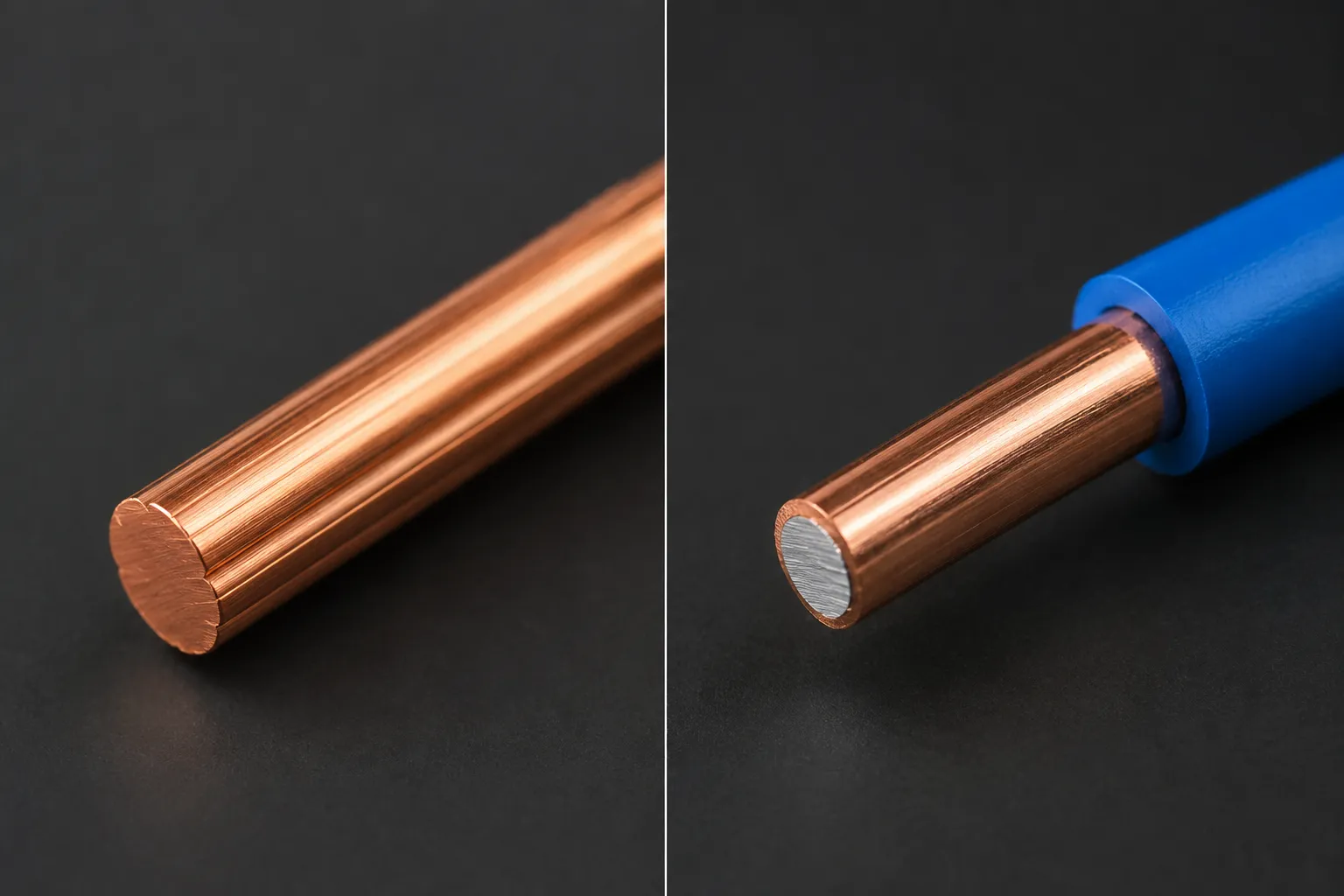
Pure copper wire is made entirely from copper, which is known for its excellent conductivity. In fact, copper is rated at 100% on the International Annealed Copper Standard. This high electrical conductivity copper makes it ideal for applications where efficiency and reliability matter.
It is widely used in residential wiring, industrial systems, and automotive applications where consistent performance is required and there is no room for any type of congestion.
What is Copper-Clad Wire
Copper clad wire, often referred to as CCA, consists of an aluminium core coated with a thin layer of copper. This structure is effective in many ways, for example, it reduces cost and weight, making it suitable for applications that demand reliability and affordability.
When comparing copper clad aluminum wire vs copper, the main difference lies in the core material. Aluminium has lower conductivity, which directly impacts performance.
Core Differences That Matter
When you look at pure copper wire vs. CCA wire, the differences become clearer.
- Pure copper offers higher conductivity and lower resistance.
- CCA wires are lighter but less efficient
- Copper provides better durability and longer service life.
- CCA may show performance limitations under higher loads
This sets the stage for a deeper performance comparison.
Performance Comparison That Impacts Your Operations
Understanding performance is where the real decision becomes easier.
Electrical Conductivity and Efficiency
Copper has significantly higher conductivity than aluminium. According to the International Copper Association, aluminium operates at around 61% of copper’s conductivity.
This means systems using pure copper deliver better efficiency. When doing an electrical copper wire comparison, this factor alone can influence energy usage and system stability.
Resistance and Heat Generation
Resistance directly affects heat generation. Higher resistance leads to more heat, which can reduce lifespan and increase safety risks.
CCA wires can have up to 20% to 30% higher resistance compared to copper. This is an important factor in any wire resistance comparison, especially for applications that run continuously.
Current Carrying Capacity
Another key factor is the current carrying capacity of the wire. Copper wires can carry up to 40 %more current than aluminium wires of the same size, based on electrical code references.
This means you may need thicker CCA wires to match the performance of copper. That can offset the initial cost advantage.
Cost vs Long-Term Value
At first glance, CCA appears more economical. However, when you evaluate copper vs. CCA wire price and performance, the picture changes.
Copper offers better efficiency, with its lower maintenance and, most importantly, longer lifespan. Over time, this leads to better value despite a higher upfront cost.
Durability and Reliability
Durability plays a major role in long-term performance. Copper is more resistant to corrosion and mechanical stress. It also maintains its properties over time.
CCA wires, on the other hand, can face issues such as breakage or reduced conductivity if the copper layer wears off. These are common copper clad wire disadvantages that buyers often overlook.
Practical Buying Considerations for Different Applications
Not every application requires the same type of wire. The right choice depends on how and where the wire will be used.
Residential Wiring
For homes, safety and reliability are the top priorities. When considering the best wire for home wiring, copper or CCA, pure copper is usually the preferred choice.
It offers stable performance, reduces risks, and complies better with safety standards.
Industrial and Automotive Use
Industries demand high and stable performance under continuous load. Automotive systems, in particular, require wires that can handle vibration, heat, and electrical stress.
In such cases, pure copper provides the reliability needed for consistent operation.
Cost-Sensitive Projects
There are situations where budgets are tight. In such cases, CCA may be considered for low-load or temporary applications.
However, it is important to clearly understand the trade-offs before making this decision.
Making the Right Choice
If you are still wondering which is better, pure copper or copper clad wire, the answer depends on your priorities.
If performance, safety, and long-term value matter, pure copper stands out. If cost is the only concern, CCA may seem suitable, but it comes with limitations.
Tips and Mistakes to Avoid
Making the right choice becomes easier when you avoid common mistakes.
- Do not select wires based only on price.
- Always check certifications, such as ISI compliance.
- Understand your load requirements before buying.
- Avoid compromising on quality for short-term savings.
- Evaluate pure copper vs. CCA wire for electrical wiring based on actual usage.
- Work with trusted manufacturers who offer tested and certified products.
These small checks can prevent larger issues later.
Final Thoughts with Expert Guidance
The comparison between pure copper vs copper clad wire goes beyond basic specifications. It is about choosing the right solution for performance, safety, and long-term reliability.
Copper delivers consistent results, better efficiency, and peace of mind. CCA may offer initial savings, but it requires careful consideration of its limitations.
If you are planning a project and need reliable wire solutions, it is worth consulting with experts who understand your application.
Reach out to our team to explore premium quality cable solutions designed for durability and performance.
FAQs
What is the main difference between copper and CCA wire?
The main difference lies in conductivity, durability, and performance under load. Copper performs better in all three areas.
Which is better, pure copper or copper clad wire?
Pure copper is generally better for most applications due to higher efficiency and reliability.
Is copper clad wire safe for home wiring?
It can be used in limited cases, but pure copper is recommended for better safety and compliance.
Why is pure copper wire more expensive?
It offers higher conductivity, better durability, and longer lifespan, which increases its value.
How does copper wire compare to aluminium wire?
In a copper wire vs. aluminium wire comparison, copper provides better conductivity, lower resistance, and improved performance.



























Sign in to leave a comment.