What Really Happens When a Tooth Cracks


A cracked tooth is one of the most confusing dental problems to live with. The pain comes and goes. It shows up when you bite into something and then disappears for days. Many people decide it's a sinus issue or a sensitive spot and wait it out. The trouble is that a crack doesn't heal on its own, and most get worse over time.
Why cracks are hard to spot
A crack is often too thin to see in a mirror. Many don't show up on a regular X-ray either, because the line runs in a direction the X-ray can't pick up. Dentists usually find them with a close exam under magnification and a bite test on each part of the tooth. Sometimes a bright light shone through the tooth makes the line visible.
Signs a tooth may be cracked
- Sharp pain when you bite down, or more often when you let go of the bite
- A quick sting from cold drinks or sweet food that fades within seconds
- Pain you can't pin to one exact tooth
- Sore gums around a single tooth
The pain when you let go of a bite is a classic sign. Under pressure the two sides of the crack spread apart slightly. When you release, they snap back, and that movement irritates the nerve inside the tooth.
What causes a tooth to crack
Biting hard things like ice or popcorn kernels is a common cause. Clenching and grinding at night put steady stress on the teeth. Large old fillings weaken the walls of a tooth over time. A blow to the face from a fall or a sport can also crack a tooth outright.
The types of cracks and what each one needs
Cracks differ in how deep they go, and the depth decides the treatment.
Craze lines. These are tiny lines in the outer enamel. They are common in adult teeth and usually cause no pain, so most need no treatment.
Fractured cusp. A piece of the chewing surface breaks off, often around a large filling. It rarely reaches the nerve, and a new filling or a crown usually fixes it.
Cracked tooth. The crack runs from the chewing surface down toward the root. If it's caught early, a crown can hold the tooth together. If the crack has already reached the nerve, root canal treatment comes first and the crown follows.
Split tooth. This is an untreated crack that has gone all the way through and divided the tooth into separate pieces. Part of the tooth can sometimes be saved, but extraction is often needed.
Vertical root fracture. This one starts in the root and works its way up. The symptoms are mild, so it's often found only after the gum or bone around it gets infected. Treatment usually means removing the tooth or the affected root.
What happens at the appointment
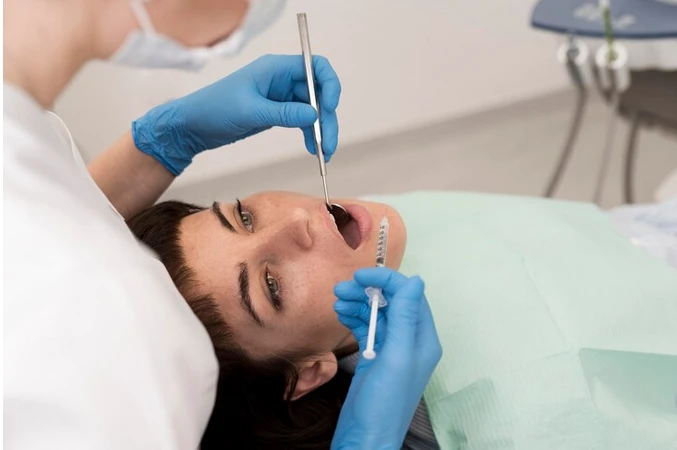
The dentist will ask where it hurts and what triggers it. Then they'll look at the tooth under magnification and have you bite on a small instrument that presses on one cusp at a time. A sharp twinge on one spot usually points to the crack. X-rays check the root and the surrounding bone for signs of infection.
A small crack can often be repaired with bonding in a single visit. Most cracked tooth repair cases on back teeth end with a crown. The crown covers the whole tooth and stops the pieces from flexing apart when you chew. A temporary crown protects the tooth while the final one is made.
Does a cracked tooth need a root canal?
Only when the crack has reached the pulp. One sign is pain from hot or cold that lingers after the drink is gone. Another is pain that wakes you at night. Swelling near the tooth is a third warning sign. In those cases root canal treatment removes the inflamed nerve, and a crown then holds the tooth together. Many cracked teeth never need one, which is a good reason to get the tooth checked before the crack spreads.
What to do until you see a dentist
Chew on the other side of your mouth and stay away from very hot or very cold food. A cold compress on your cheek can ease soreness. Over-the-counter pain relief taken as the label directs can take the edge off. If your face swells or you get a fever, call an emergency dentist the same day.
Why waiting makes it worse
A crack only moves one way. Every time you chew, the two sides flex a little and the line creeps deeper. A crack a crown could fix this month can split the tooth next year, and a split tooth often can't be saved. Getting it treated early usually means a simpler repair and a better chance of keeping your natural tooth.
Preventing the next crack
If you grind or clench, a custom night guard spreads the force across your teeth while you sleep. Skip chewing ice and hard candy, and wear a mouthguard for contact sports. Regular checkups let your dentist catch worn fillings and early cracks before they start to hurt.
Dr. Dorar Abudaqa is a dentist at Smile Point Dental on Cornwall Road in Oakville.




Sign in to leave a comment.