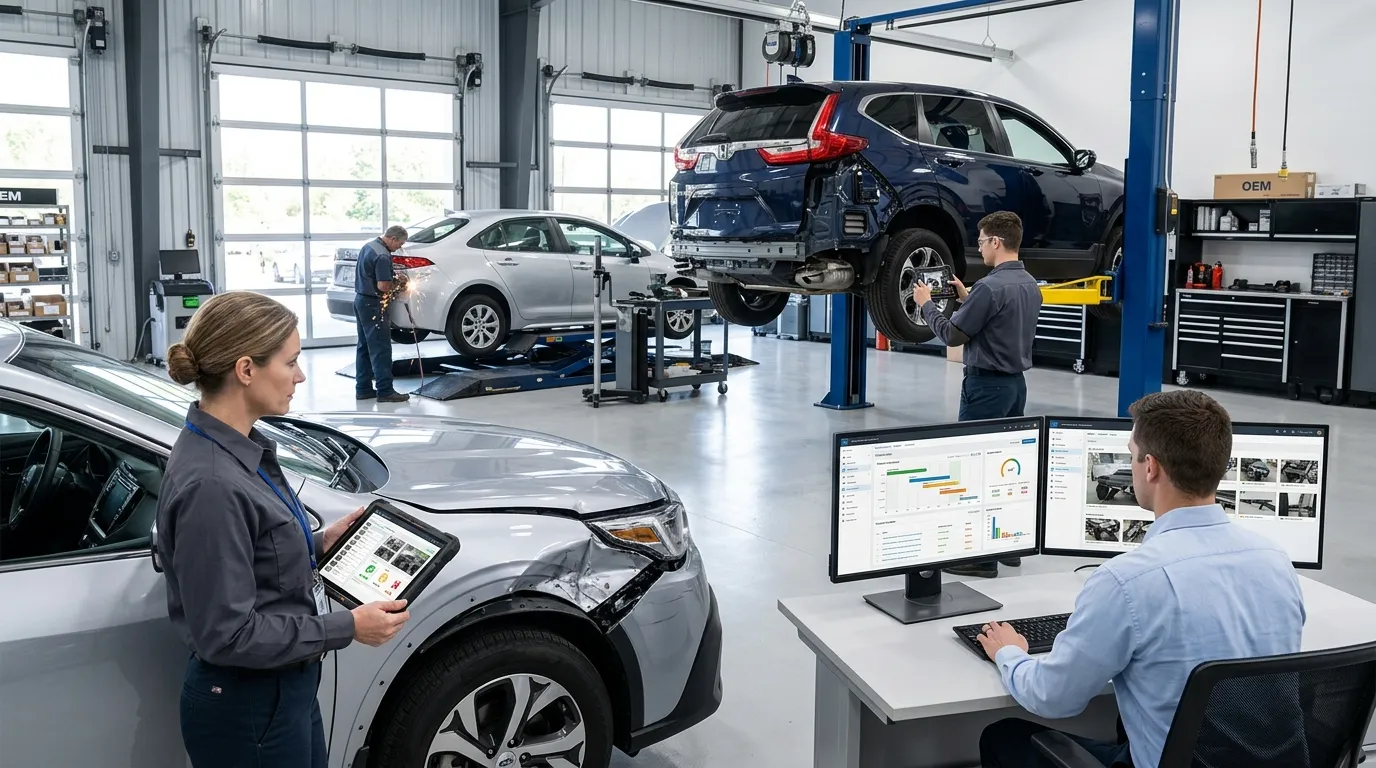

Every repair shop wants repairs to move quickly, but one delayed message from an insurance company can turn a simple repair into days of waiting. If you have ever wondered why a vehicle stays in the shop longer than expected, the answer is often hidden in the communication process rather than the repair itself.
Insurance communication is one of the most important parts of collision repair. When information flows smoothly between repair shops, insurers, adjusters, and customers, everyone benefits. But when communication breaks down, delays, misunderstandings, and frustrated customers quickly follow. Understanding what causes these slowdowns can help repair businesses improve efficiency while giving customers a better experience.
Why Insurance Communication Matters
Modern repair shops do much more than repair damaged vehicles. Every repair often requires multiple conversations with insurance companies, documentation reviews, photo uploads, estimate approvals, supplements, and payment confirmations.
When any step takes longer than expected, the entire repair schedule is affected.
As management expert Peter Drucker once said, "The most important thing in communication is hearing what isn't said." In repair operations, timely communication often matters just as much as the repair work itself.
A fast repair depends on everyone sharing the right information at the right time.
Incomplete Documentation Creates Delays
One of the biggest reasons communication slows down is missing or incomplete documentation.
Insurance companies typically require detailed information before approving repairs. If a repair shop submits estimates without enough supporting photos or forgets important paperwork, the insurer usually requests additional information before moving forward.
Common documentation issues include
- Missing damage photos
- Incomplete repair estimates
- Incorrect vehicle information
- Missing customer signatures
- Unclear repair supplements
Every additional request adds another round of emails, phone calls, or system updates that could have been avoided.
Manual Processes Slow Everything Down
Many repair shops still depend on manual communication methods.
Staff members often spend hours every week
- Answering phone calls
- Sending emails
- Updating spreadsheets
- Following up with adjusters
- Tracking claim approvals
While these methods work, they consume valuable time that technicians and service advisors could spend helping customers.
When communication relies entirely on manual effort, small delays quickly become larger scheduling problems.
Digital Workflows Reduce Waiting Time
Digital communication systems allow repair shops to share estimates, updates, supplements, and approvals much faster than traditional methods.
If your shop wants to reduce unnecessary back and forth with insurers, using modern tools for insurance communication can simplify the entire workflow while keeping everyone informed throughout the repair process. This allows teams to spend less time chasing updates and more time completing quality repairs.
Repair Supplements Often Create Bottlenecks
Hidden damage is common during collision repairs.
Once technicians begin disassembly, they frequently discover additional repairs that were impossible to identify during the initial estimate.
At this point, the shop must
- Document the additional damage
- Update the repair estimate
- Submit supplements
- Wait for insurance approval
If supplement requests take several days, technicians may be forced to pause repairs until authorization arrives.
Although supplements are unavoidable, faster communication significantly reduces downtime.
Too Many Communication Channels
Another common challenge is scattered communication.
Many repair shops communicate through
- Phone calls
- Emails
- Text messages
- Claim management software
- Customer portals
When information is spread across several platforms, important updates can easily be overlooked.
Employees often spend extra time searching for messages instead of working on repairs.
Centralized communication keeps every conversation organized in one place and reduces confusion for everyone involved.
Customer Updates Are Sometimes Forgotten
Customers expect regular updates while their vehicle is being repaired.
Unfortunately, when staff members are busy handling insurance communication, customer updates sometimes become a lower priority.
This creates unnecessary frustration because customers begin wondering
- Has the insurance company approved my repair?
- Is my vehicle finished?
- Why has nobody contacted me?
- Is something wrong?
Even when repairs are progressing normally, poor communication creates the impression that nothing is happening.
Keeping customers informed builds trust throughout the repair process.
Simple Status Updates Make a Difference
Customers appreciate brief updates, even if there is no major news.
A quick notification explaining that insurance approval is still pending is often enough to reduce anxiety and improve satisfaction.
Staffing Challenges Affect Response Times
Many repair facilities operate with lean administrative teams.
One employee may handle
- Customer service
- Insurance claims
- Scheduling
- Billing
- Parts ordering
When workloads increase, communication naturally slows.
Calls go unanswered.
Emails remain unread.
Claim updates take longer.
As repair volume grows, communication processes need to scale alongside daily operations.
Otherwise, delays become increasingly common.
Lack of Standardized Procedures
Every repair shop has its own workflow.
Without standardized communication procedures, employees may submit information differently each time.
One advisor might send detailed estimates immediately.
Another might wait until the end of the day.
Someone else may forget to attach supporting documents.
Consistent internal processes reduce unnecessary delays and improve communication with insurance partners.
Technology Gaps Between Systems
Insurance companies and repair shops often use different software platforms.
When these systems cannot exchange information efficiently, employees must manually transfer data from one platform to another.
Manual data entry increases
- Processing time
- Human error
- Duplicate work
- Missing information
Technology integration continues to improve across the repair industry, but many businesses still experience delays caused by disconnected systems.
Building Better Communication Habits
Improving insurance communication does not always require major operational changes.
Small improvements often produce noticeable results.
Good communication habits include
- Responding to insurer requests promptly
- Double checking estimates before submission
- Uploading complete repair photos
- Keeping customers informed regularly
- Organizing claim information in one location
- Following consistent internal workflows
These practices reduce confusion while helping repairs move more efficiently from estimate to delivery.
Final Thoughts
Insurance communication is one of the most important factors affecting repair timelines. While technicians focus on restoring vehicles safely and accurately, efficient communication keeps approvals moving, customers informed, and repair schedules on track.
Many repair delays are not caused by complex repairs but by missed messages, incomplete documentation, manual processes, and fragmented workflows. By improving communication practices and adopting smarter digital solutions, repair shops can reduce delays, strengthen relationships with insurers, and provide a better customer experience from start to finish.
For repair businesses looking to improve workflow efficiency, insurance communication solutions can help streamline collaboration between repair shops and insurers while reducing unnecessary administrative delays.
































Sign in to leave a comment.