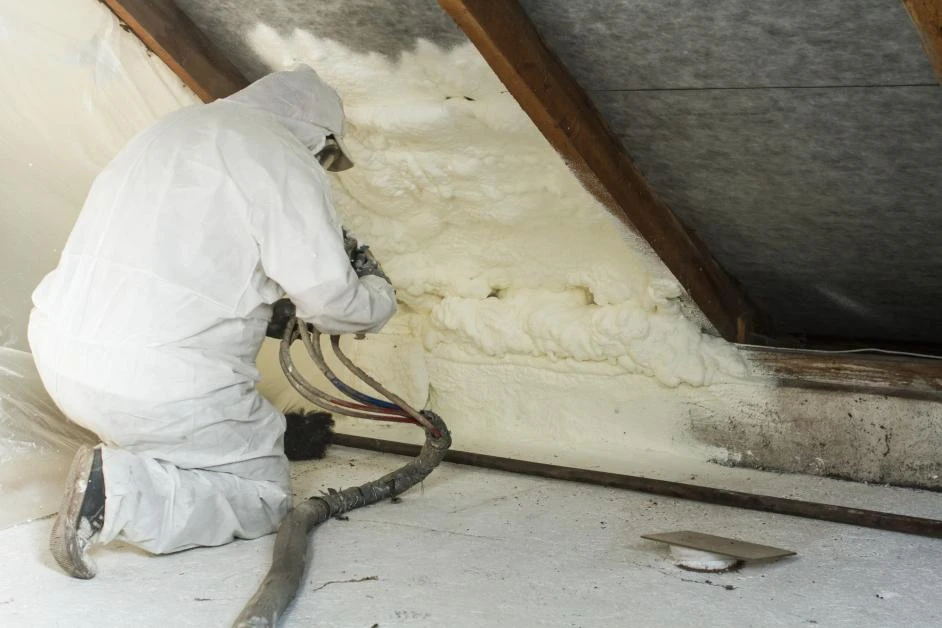
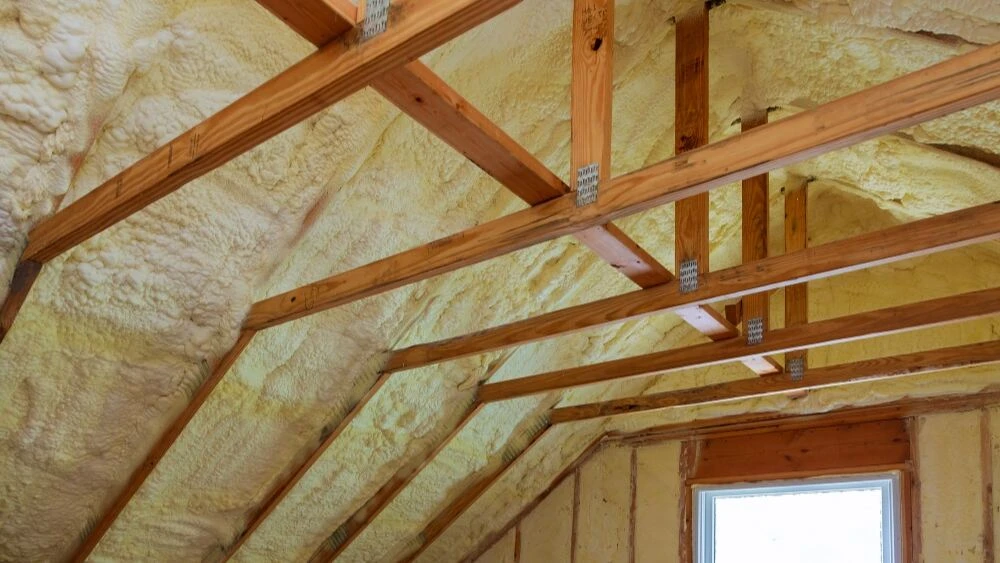
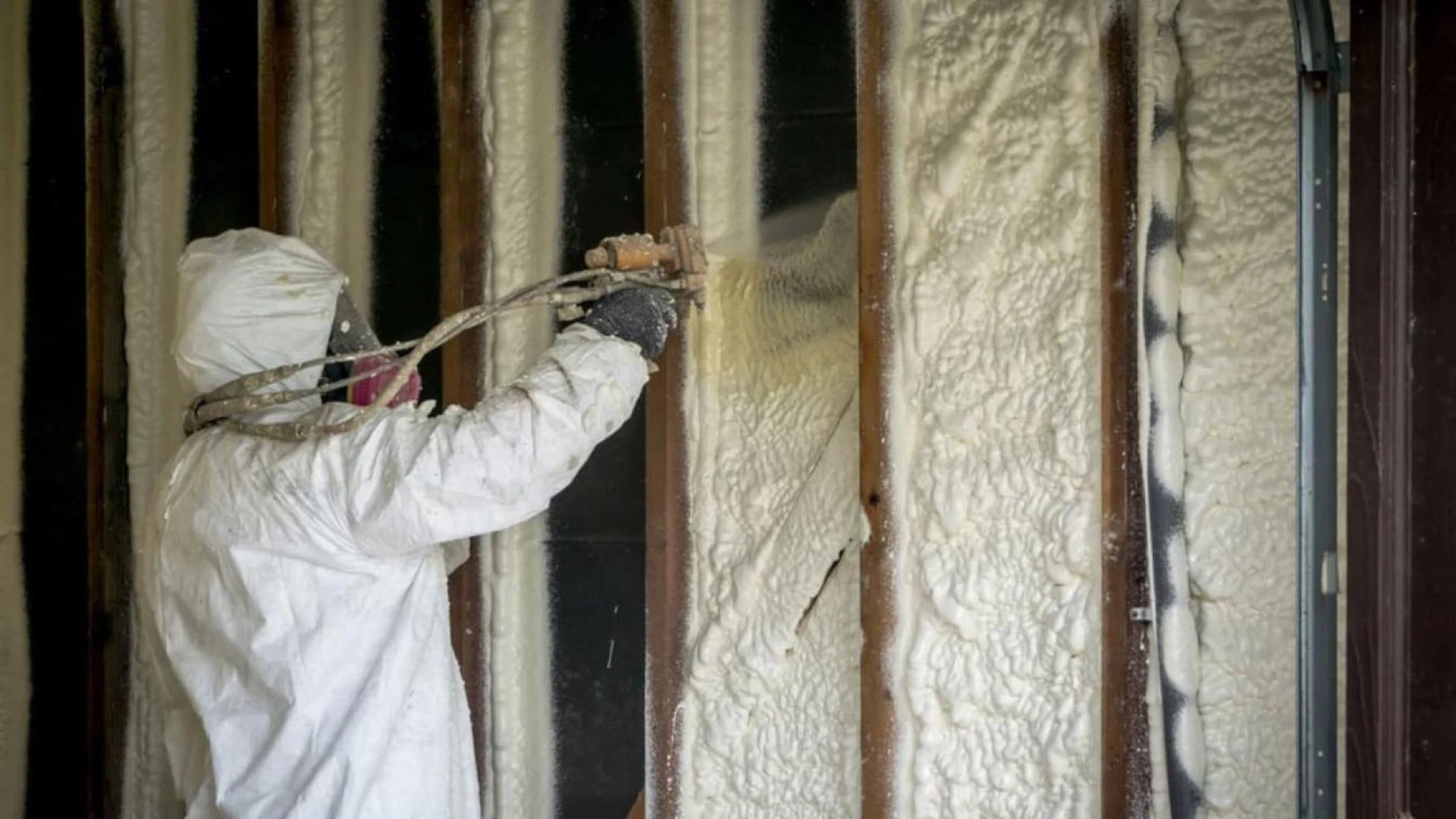
Spray foam insulation is often applied in pole barns without heating or cooling systems, where temperature swings can be intense. Whether used for storage, livestock, or workshops, these structures demand insulation materials that can handle everything from summer highs to winter lows—without degrading or compromising performance.
This article covers how spray foam insulation responds to extreme conditions in unconditioned pole barns. You’ll learn about its temperature handling capabilities, long-term durability in unregulated spaces, and how it compares with other common insulation methods. This guide is built for property owners, builders, and contractors seeking reliable, experience-based answers for cold and hot climate zones alike.
Thermal Range Spray Foam Can Handle
Closed-Cell vs. Open-Cell Spray Foam in Temperature Variations
Closed-cell spray foam is more common in unconditioned pole barns because it offers a higher R-value and moisture barrier in a compact application. It has a dense structure that allows it to withstand a broader temperature range.
Closed-cell spray foam typically performs reliably in temperatures as low as -40°F and as high as 180°F once fully cured. Its cellular rigidity prevents air and moisture penetration, helping maintain interior stability in barns that experience wide seasonal shifts.
Open-cell spray foam, though less expensive and more flexible, has lower thermal resistance and can degrade faster in consistently cold environments. It’s generally not recommended for unconditioned agricultural buildings exposed to freezing winters or high humidity.
Impact of Seasonal Extremes on Spray Foam Performance
Unconditioned pole barns can see interior temperatures ranging from below freezing in the winter to over 100°F in the summer, depending on location. Spray foam retains its insulating value during these shifts because of its low thermal conductivity.
The polyurethane structure of spray foam doesn’t become brittle in the cold, and it doesn't melt or sag in the heat—two characteristics that help it outperform traditional insulation under stress. Still, application temperature matters. While cured spray foam resists heat and cold well, applying it in temperatures below 40°F can affect expansion and adhesion unless winter-specific formulations are used.
Environmental Factors Affecting Spray Foam in Pole Barns
Humidity, Moisture, and Condensation
In unconditioned barns, condensation is a significant concern—especially on metal surfaces. Closed-cell spray foam provides a moisture barrier that can prevent condensation buildup, protecting equipment, feed, and structural components. It’s impermeable once applied, making it a strong candidate for high-humidity environments.
Ultraviolet (UV) Exposure and Spray Foam Degradation
When used on interior surfaces, spray foam isn’t exposed to direct sunlight. However, if portions of the foam are exposed near open doors or windows, UV rays can degrade it over time. A protective coating or covering is recommended for any areas where sunlight enters, even briefly, to prevent surface chalking or structural breakdown.
Performance Over Time in Unregulated Spaces
Longevity in Harsh Conditions
Spray foam insulation is chemically stable once cured. Closed-cell types maintain their structure and R-value for 30 years or more, even when exposed to fluctuating conditions typical in barns with no heating or cooling. Temperature swings don’t cause shrinkage, cracking, or separation from framing, which is often seen in batt or board insulation.
Pest Resistance in Unconditioned Structures
Pole barns in rural or agricultural settings often face issues with rodents and insects. Spray foam, particularly closed-cell, doesn’t serve as nesting material or food, making it a deterrent for pest activity. Its continuous application seals gaps and entry points more effectively than segment-based insulation methods.
Spray Foam vs. Other Insulation Options for Pole Barns
A side-by-side comparison helps clarify how spray foam stacks up in real-use scenarios:
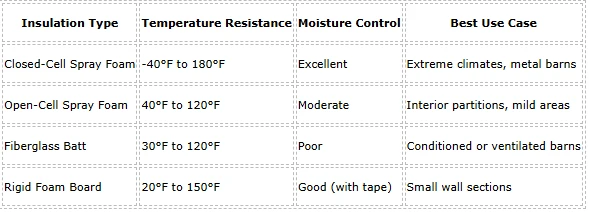
Closed-cell spray foam stands out as the most adaptable option for buildings that experience heavy seasonal variation.
Common Questions
How does spray foam react to sub-zero temperatures?
Once fully cured, closed-cell spray foam maintains its structure and insulation properties even at -40°F. It doesn’t crack or become brittle like some rigid insulations, making it dependable in frigid environments.
Can spray foam be applied during winter construction?
Yes, but temperature during application must be considered. Special winter blends or heated application equipment are needed for consistent adhesion and curing when outside temperatures are below 40°F.
Does heat in summer degrade spray foam insulation in barns?
No. Fully cured spray foam resists high heat up to 180°F. It doesn't slump or release off-gases in unventilated barns, unlike some traditional insulations exposed to prolonged heat.
Is spray foam still effective if the barn isn’t climate-controlled?
Yes. Spray foam is one of the few insulation types that maintains consistent performance in both hot and cold unconditioned spaces, without requiring internal HVAC to be effective.
Conclusion
Spray foam insulation, especially closed-cell, is well-suited for unconditioned pole barns exposed to significant temperature swings. It handles extremes from sub-zero winters to triple-digit summer days without structural compromise. Its moisture resistance, long-term stability, and pest deterrence make it a reliable choice for barns that aren't climate-controlled.
Understanding how spray foam behaves across temperature ranges helps property owners choose an insulation method that matches their needs—not just for today but for the decades ahead. Its proven durability in unregulated spaces makes it a top contender for agricultural and utility buildings in all regions.
FAQs
Can spray foam insulation handle freezing temperatures in pole barns? Yes, closed-cell spray foam performs well in freezing conditions, maintaining insulation value and structure down to -40°F.
Will summer heat cause spray foam to degrade in unconditioned barns? No. Once cured, spray foam resists temperatures up to 180°F and won’t slump or break down in high-heat environments.
Is it safe to leave spray foam exposed inside a barn? Yes, but exposed areas subject to sunlight should be covered with a UV-resistant coating or sheathing to prevent surface damage.
Does spray foam help control condensation in metal pole barns? Closed-cell spray foam acts as a vapor barrier, helping prevent interior condensation common in unventilated barns.
Can spray foam prevent pests in unconditioned barns? It doesn’t attract rodents or insects and can help seal gaps and entry points that pests use to enter.
Reviewer: Grace Walker has been in the spray foam business for 9 years and provided suggestions that helped refine this article’s focus on brand development and simple, consistent marketing efforts.



























Sign in to leave a comment.